
The Bowflex PR1000 home gym review verdict is direct: this machine works, it's practical, and for most home gym users it delivers genuine results. If you've been exploring the sport and fitness category trying to decide whether this is the right strength trainer for your space and goals, here's everything you need to make a confident call.
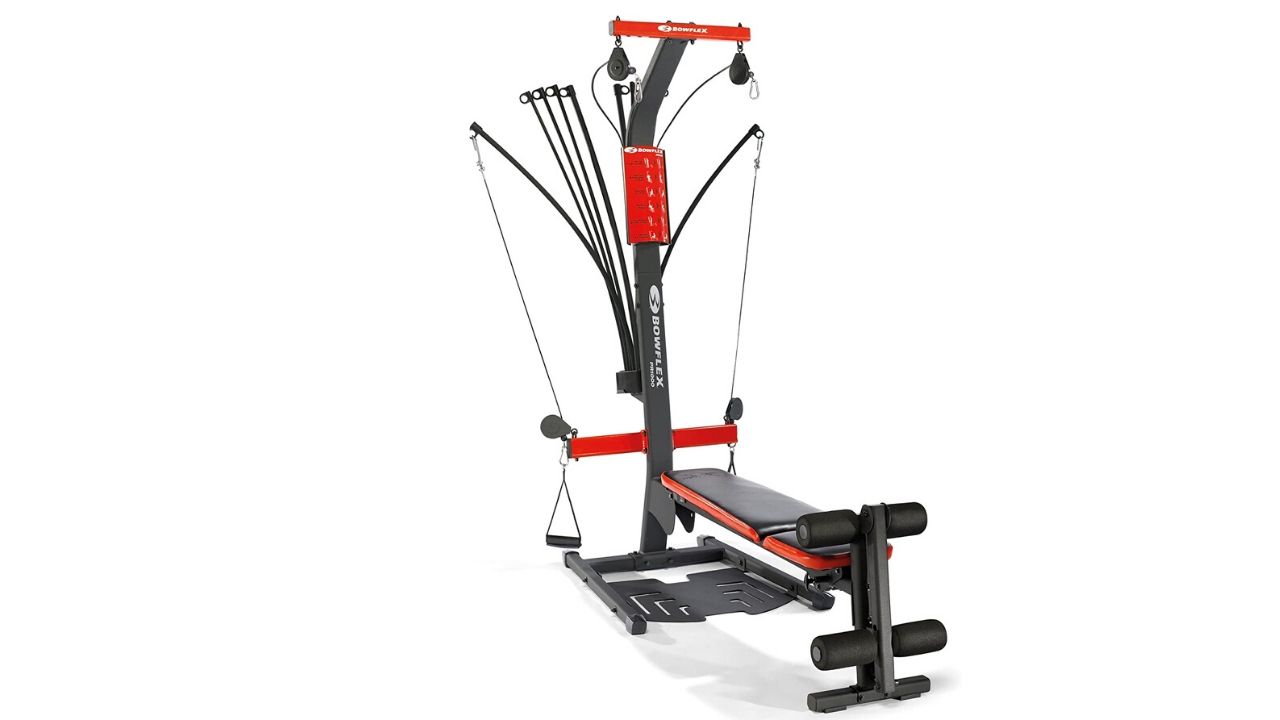
The PR1000 uses Bowflex's power rod resistance system — flexible composite rods that bend under tension rather than iron plates relying on gravity. That distinction matters because the resistance stays consistent through your entire range of motion. You don't hit a dead zone mid-rep the way you can with free weights. That constant tension is what drives real muscle adaptation, and it's also what makes the system notably easier on your joints.
Out of the box, you get 210 lbs of resistance, 30 exercises, a built-in rowing station, and a multi-position adjustable bench — all within a 52" × 38" footprint. That's a complete training setup in the space of a large armchair.
Contents
The power rods are the core of everything this machine does. Each rod is a flexible composite bar rated to a specific resistance level, connected to a cable-and-pulley system routed through the lat tower, low pulley, and bench attachment points. You select your resistance by choosing which rods to engage. The standard setup gives you 210 lbs of working resistance — enough to challenge every major muscle group through dozens of movement patterns. If you progress past that ceiling, Bowflex sells an upgrade kit that brings you to 310 lbs.
Thirty exercises are available without any additional purchases. The included attachments — a lat bar, two hand grips, and an ankle cuff — cover the fundamentals: lat pulldowns, seated rows, chest press, shoulder press, bicep curls, tricep pushdowns, leg curls, and leg extensions. Here's a full look at the core specifications:
| Feature | Specification |
|---|---|
| Resistance Type | Power Rod (composite) |
| Starting Resistance | 210 lbs |
| Maximum Resistance (upgrade) | 310 lbs |
| Number of Exercises | 30 |
| Assembled Dimensions | 84" L × 38" W × 82" H |
| User Weight Capacity | 300 lbs |
| Bench Positions | Flat, Incline, Decline |
| Included Attachments | Lat Bar, Hand Grips, Ankle Cuff |
| Built-In Rowing Station | Yes |
| Frame Warranty | 3 years |
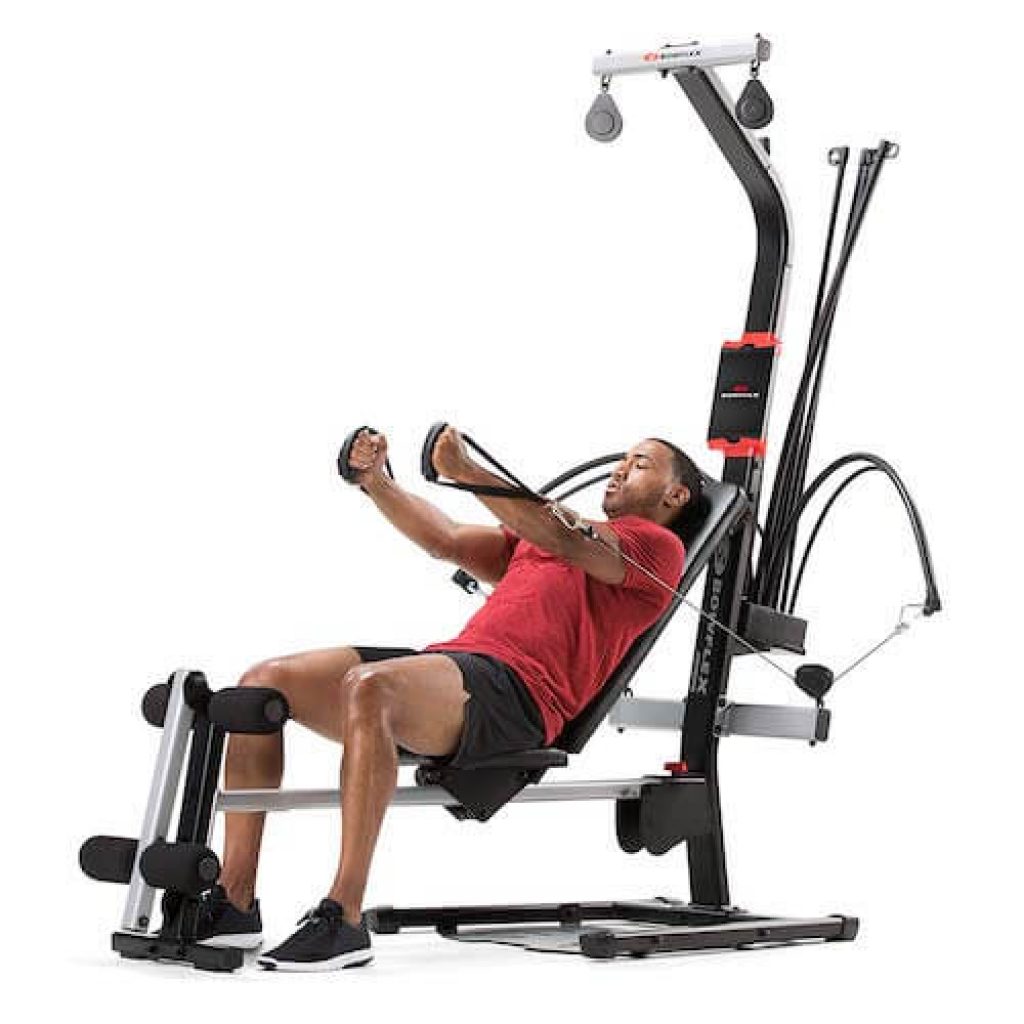
Space efficiency is where this machine genuinely excels. A traditional home setup — power rack, barbell, and a weight plate collection — demands 50 to 80 square feet. The PR1000 fits in 14. That's not a minor difference; for an apartment or a home without a dedicated workout room, it's the difference between having a home gym and not having one at all.
The power rod resistance is also notably joint-friendly. Because the rods build tension gradually from the start of each movement, your joints don't absorb a sudden jolt of load. That smooth loading curve matters if you're managing shoulder impingement, knee inflammation, or any chronic joint pain. You're still training hard — you're just not hammering your connective tissue the way heavy barbell work can.
The 210-lb starting ceiling is the most honest limitation. If you're already an intermediate or advanced lifter, you'll hit that ceiling on your stronger exercises — chest press and lat pulldowns especially — within months. The upgrade to 310 lbs buys more time, but this machine isn't designed for people already pressing or pulling heavy loads. Advanced lifters will find the PR1000 a useful supplement, not a complete replacement, for their training.
The power rod strength curve also differs from free weights. Because rod resistance peaks at mid-range rather than following a gravity-based curve, the stimulus feels different from iron. For general fitness goals, this is irrelevant. If you're training specifically for a barbell sport, the carryover is limited.
Most users plateau not because they've maxed the machine but because they've run out of ideas for progression. Before reaching for heavier rods, slow your rep tempo down. A controlled four-second lowering phase — called the eccentric — at moderate weight produces more muscle stimulus than a sloppy heavy rep. Add a one-second pause at the point of peak tension. Increase your working sets from three to four or five. These adjustments extend your effective resistance range by months without touching the rod settings.
Slow your lowering phase to two to four seconds on every rep — this single change dramatically increases muscle activation and protects your joints without raising the resistance setting at all.
The rowing station is the most overlooked feature on this machine. Rowing engages your legs, hips, core, back, and arms in a single continuous stroke — it's one of the most complete full-body movements you can do at home. A 15-minute rowing session after your strength work functions as a complete cardiovascular workout. If you want additional low-impact cardio alongside the PR1000, read about the benefits of recumbent exercise bikes — they make an excellent complement for a well-rounded home training setup.
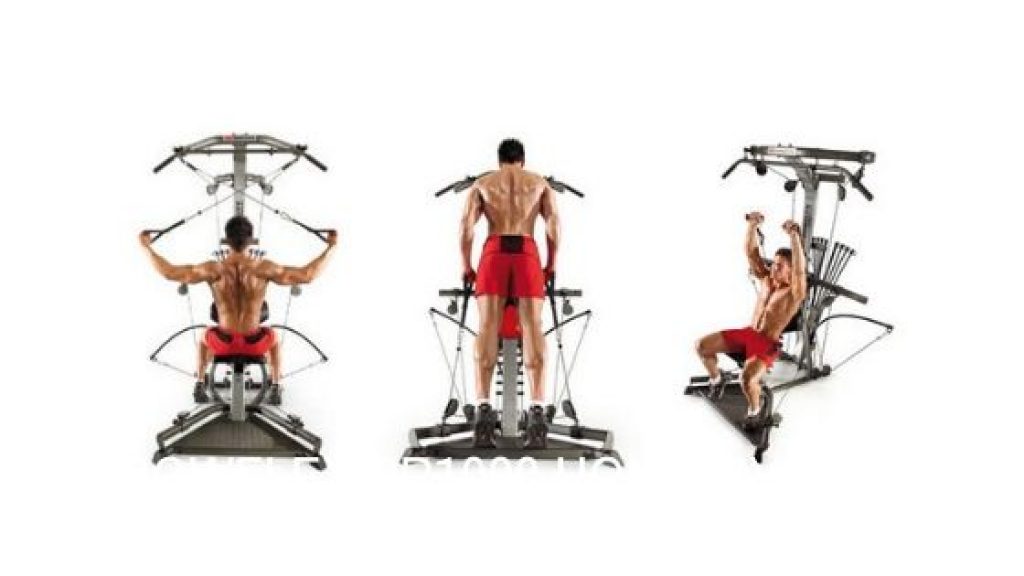
Power rod resistance doesn't eliminate injury risk — it reduces it compared to free weights. You still need to warm up. Spend five to eight minutes on light dynamic movements before you touch the machine: arm circles, shoulder rotations, hip hinges, and gentle spinal mobilization. This matters especially if you deal with upper back tension or neck pain that radiates into your head, since exercises like lat pulldowns and seated rows place direct load on the cervical and thoracic spine.
Form discipline matters more than resistance level on cable machines. The most common dangerous error on the PR1000 is pulling the lat bar behind the neck rather than to the upper chest. That position compresses the cervical spine and can cause real nerve damage over time. Always pull to your collarbone, elbows driving down and back.
Three full-body sessions per week with rest days between them is a solid, sustainable training structure for most people. Each muscle group needs at least 48 hours before you load it again. If foot discomfort becomes an issue during standing cable movements, targeted support helps — the best plantar fasciitis socks provide arch and heel support that makes prolonged standing exercises noticeably more comfortable, especially during higher-rep sets.
Using momentum instead of muscle is the number one training error on cable machines. On the PR1000, it shows up as swinging during bicep curls, jerking the lat bar down, or bouncing the chest press off the bottom. Momentum doesn't build muscle — controlled, deliberate tension does. Keep every rep intentional: two seconds on the exertion phase, two to four seconds on the return. If you can't do that at your current resistance, lower the load.
Most PR1000 owners run through upper body exercises and ignore the ankle cuff for leg curls and extensions entirely. That's a significant mistake. Your lower body contains the largest muscle groups in your body. Training them increases your metabolic rate, improves joint stability, and builds the functional strength you use constantly in daily life. For dedicated low-impact lower-body cardio to pair with your PR1000 strength work, the top recumbent bikes for home use offer excellent complementary training with minimal joint stress.
This claim circulates in gym culture and it's wrong. Muscle hypertrophy — the biological process of muscle growth — requires progressive mechanical tension applied to muscle fibers over time. Power rods create that tension. Research consistently shows that elastic and rod-based resistance produces comparable muscle activation to free weights when training volume and load are matched. The mechanism is different; the physiological response to the muscle is not.
Your muscles don't have sensors that distinguish a barbell from a power rod. They respond to tension, time under load, and progressive overload. The resistance medium is irrelevant — the training principle is what drives adaptation. Thousands of people have built substantial, visible muscle using cable-based systems as their only strength tool. The PR1000 is a legitimate muscle-building instrument when you approach it with consistency and progression. If you're also evaluating other home equipment options, both the best treadmills under $1,000 and top ellipticals under $1,000 serve different training goals that the PR1000 isn't designed to cover.
This machine is an excellent fit if you're a beginner to intermediate trainee who wants a complete strength training solution in a small space. It's also well-suited for people managing joint pain, arthritis, or recovering from soft tissue injuries — the smooth resistance curve is significantly gentler on connective tissue than iron loading. If you deal with back pain or spinal tightness, pairing the PR1000 with a recovery tool like the Chirp Wheel gives you both the training and the daily maintenance in one compact home setup.

Advanced lifters who need more than 310 lbs of resistance will outgrow this machine — it simply isn't designed for that load range. Powerlifters and Olympic-style athletes need free weights and sport-specific loading patterns, and there's no substitute for that. If your primary goal is pure cardiovascular training rather than strength, a dedicated cardio machine will serve you better. And if significant mobility limitations or balance issues make standing exercise impractical, exploring how mobility aids improve daily function may be a more appropriate starting point before progressing to equipment like the PR1000.

The assembled machine measures 84 inches long, 38 inches wide, and 82 inches tall. The partial fold-up feature reduces the floor footprint when the machine isn't in use. Realistically, plan for a dedicated 7-foot by 5-foot area plus clearance on the sides and adequate ceiling height for standing exercises.
Yes. The power rod system creates genuine mechanical tension throughout the full range of motion, which is the primary driver of muscle growth. Beginners and intermediate trainees consistently report significant strength and lean muscle gains using this machine as their primary training tool.
In most cases, yes — with appropriate exercise selection. The smooth resistance curve places far less abrupt stress on joints than free weight loading. Avoid exercises that force spinal flexion under load. If you have a diagnosed disc condition or chronic injury, clear any new training routine with your doctor before starting.
The PR1000 wins on space efficiency, joint-friendliness, and cable movement variety within a single footprint. Free weights win on maximum load potential and direct sport-specific carryover to barbell movements. For general home fitness goals, the PR1000 is the more practical and accessible choice for most people.
The best home gym is the one small enough to actually have and consistent enough to actually change you — the PR1000 is both.


About Mehnaz
Mehnaz is the founder and editor of RipPain, a health resource site dedicated to helping readers navigate pain management, recovery, and medical device research. Her work on the site is driven by personal experience caring for seriously ill family members, which led her to study evidence-based guidance from physicians, pain specialists, and published medical research. She curates and summarizes expert medical insights to make credible health information accessible to everyday readers.
You can get FREE Gifts. Or latest Free phones here.
Disable Ad block to reveal all the info. Once done, hit a button below
 Mehnaz