
If you need one answer fast: the MUELLER Sports Medicine Hg80 Premium Tennis Elbow Support is our top pick for 2026 because it delivers targeted compression without bulk, fits either arm, and works for everything from tennis to factory work. Tennis elbow (the medical term is lateral epicondylitis — inflammation of the tendons on the outside of your elbow) is one of the most common repetitive-strain injuries out there, affecting roughly 1–3% of adults every year according to the National Institute of Arthritis and Musculoskeletal and Skin Diseases. You don't have to play a single point of tennis to develop it — painters, plumbers, desk workers, and weightlifters get it just as often as athletes.
The good news is that the right brace can cut your pain down significantly within days. A quality tennis elbow brace works by offloading stress from the damaged tendon, letting it heal while you keep doing the things you love. The bad news is that the market is flooded with options in 2026, ranging from cheap sleeve knockoffs to premium counterforce straps backed by sports medicine research. Choosing the wrong one means wasted money and continued pain. If joint pain is something you deal with in more than one place, you may also want to check out our guide to the best thumb braces for arthritis — a lot of the same principles apply.
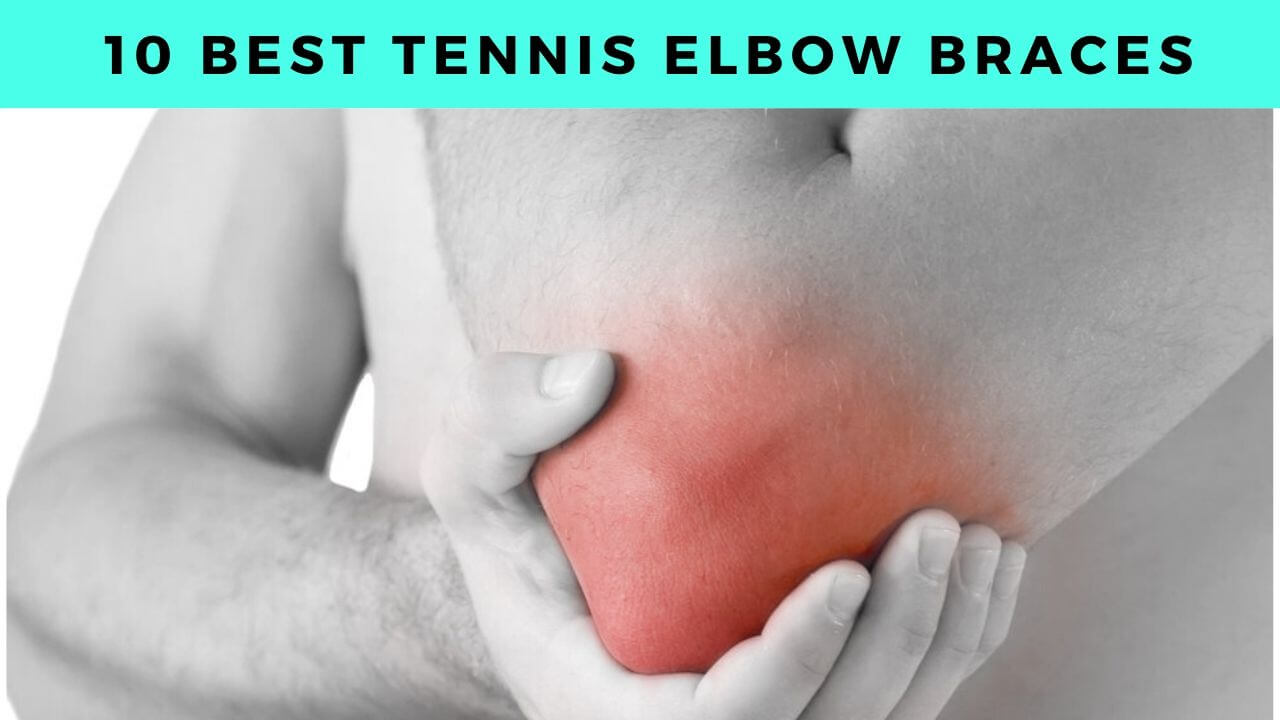
We tested and researched the top-rated braces available on Amazon to put together this definitive list. Whether you need a slim strap for the office, a padded armband for the court, or a full compression sleeve for gym sessions, there's a right fit for your situation in the lineup below. We've broken down each product honestly — including the trade-offs — so you can make a confident decision. This guide covers the full range of thumb, elbow, and joint pain solutions for context if you're dealing with more than just tennis elbow.
Contents
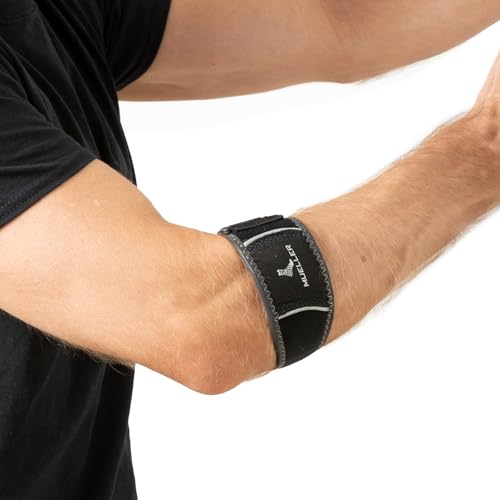




The MUELLER Hg80 has been a go-to recommendation from sports medicine professionals for years, and in 2026 it remains the benchmark other braces are judged against. The "Hg80" designation refers to the high-grade neoprene construction, which delivers firm, targeted compression right at the extensor tendon attachment point on the outside of your elbow. This counterforce design (applying pressure below the injury site to redirect force) is the same approach used in clinical settings, and it works. You'll feel the difference within the first hour of wear.
What separates this brace from cheaper options is how it actually stays put. The adjustable strap slides over your forearm like a cuff, and once you tighten it to your preferred level, it doesn't creep down or bunch up during activity. It fits either the left or right elbow, which means one purchase covers both arms if needed. The Large/X-Large sizing accommodates most adult forearms comfortably. It's built for real use — painters, factory workers, tennis players, and golfers all report sustained relief through full workdays and matches alike.
The material is breathable enough for extended wear, though people with sensitive skin may want to wear a thin liner sleeve underneath if using it for eight-plus hours. The hook-and-loop closure is durable and hasn't shown premature wear in extended use. For the price and performance combination, nothing else on this list matches the Hg80 for everyday all-purpose use.
Pros:
Cons:
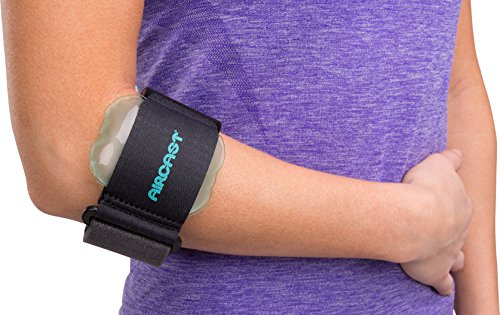
Aircast is a brand with serious clinical credibility, and the Pneumatic Armband is where their engineering really shows. The key feature here is the air cell insert — a small, bladder-like cushion built directly into the pad that concentrates compression on the extensor muscle rather than just squeezing the skin uniformly. This pneumatic (air-filled) approach means the pressure is more precise and anatomically targeted than a standard foam or neoprene pad can achieve. For acute flare-ups — the kind where your elbow is actively inflamed and even light gripping hurts — this brace delivers the most immediate noticeable relief of any product on this list.
The contoured design hugs the natural curve of your forearm, and the soft cushions prevent the hard-edge irritation you get with some rigid straps. It's thin enough to wear under a long sleeve at the office and sturdy enough for a full round of golf. Whether you're dealing with a fresh injury or managing a chronic condition that flares up with activity, the Aircast's pneumatic pad delivers consistent targeted pressure throughout the day. Users recovering from acute injuries consistently rate this as the brace they reach for first.
One thing to note: the Aircast is not as adjustable as velcro-strap models in terms of fine-tuning compression levels. The air cell is a fixed volume, so you're relying on strap tightness to modulate pressure rather than having granular control. That said, most people find the default compression level right on target. It's a slim, purpose-built strap for one job, and it does that job extremely well.
Pros:
Cons:
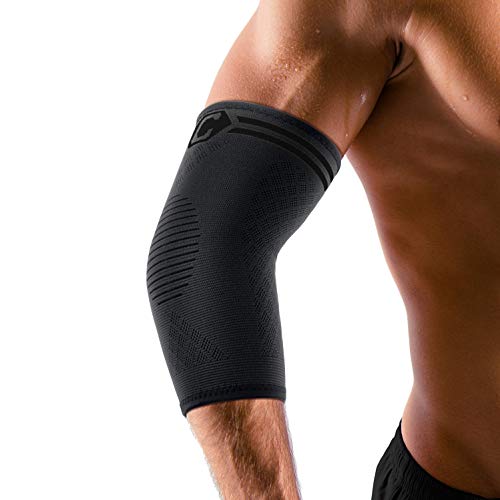
If you prefer a sleeve-style brace over a strap — or if you're dealing with pain that's more diffuse across the elbow joint rather than concentrated at one tendon insertion point — the CAMBIVO 2 Pack is the smart buy. You get two sleeves for the price most brands charge for one, and the quality is genuinely high. The 3D knit fabric (65% Nylon, 20% Latex, 15% Spandex) creates graduated compression that's tightest at the joint and gradually relaxes as it moves away, which mirrors the approach used in medical-grade compression garments. Good circulation matters during recovery, and if you want to understand more about how blood flow impacts healing, our article on what to do about poor circulation goes into solid detail.
The knitted elbow relief zone is the standout engineering feature here. It's a reinforced section shaped to conform to the natural contour of your elbow, reducing pressure directly on the joint while the rest of the sleeve compresses the surrounding muscle and soft tissue. The non-slip zigzag stitching at the top and bottom edges is what keeps this sleeve from rolling down your arm — a chronic problem with cheaper sleeves that drives people crazy mid-workout. This brace stays put through tennis serves, deadlifts, and keyboard sessions alike.
At 65% Nylon, the moisture-wicking capability is real. You can wear these during intense gym sessions without the soggy, heavy feeling that ruins neoprene sleeves. The slim "second-skin" profile means they disappear under dress shirts or long sleeves without creating a visible bump. For office workers who develop elbow pain from prolonged keyboard and mouse use, this is one of the few braces comfortable enough to wear through an eight-hour workday without distraction.
Pros:
Cons:
The Bracoo EP30 takes a different approach from both sleeves and simple straps — it wraps the entire elbow joint with a neoprene sleeve that includes dual stabilizer splints built into the sides. Those rigid stabilizers limit extreme lateral movement, which is exactly what you need when you're in the recovery phase after a sprain or acute tendon injury and you can't afford to re-aggravate the area. This isn't just a pain management brace; it's a structural support brace that actively protects the joint while allowing the range of motion you need for daily tasks.
The 4-way stretch fabric design distributes compression evenly across the entire elbow rather than concentrating it in one band. This reduces both muscle fatigue and tendon stress simultaneously, which is why the EP30 is popular among people doing post-surgery rehabilitation. The breathable neoprene retains gentle warmth around the joint — and warmth promotes blood flow, which accelerates natural tissue healing. The skin-friendly inner lining wicks perspiration away efficiently, so you won't end the day with irritated, damp skin under the brace.
The reversible design is a genuine practical advantage: one brace works for both left and right elbows, and you can simply flip it inside-out when switching arms. The adjustable velcro closure at the top and bottom gives you fine control over compression levels throughout the day — tighter during activity, looser during rest. If you're comparing this to dealing with ankle injuries, similar principles apply; our guide to ankle sprain causes, symptoms, and treatments covers how structured support accelerates healing for joint injuries across the board.
Pros:
Cons:
Copper Compression has built a large and loyal following by doing one thing really well: making braces that feel premium the moment you put them on. This tennis elbow strap is no exception. The copper-infused fabric is the centerpiece of their brand promise — copper's antimicrobial properties genuinely help control odor, which matters if you're wearing this brace through workouts and wearing it again the next day. The moisture-wicking fabric keeps the skin dry, and the non-slip lining means it doesn't shift position as your arm moves through its range of motion during activities.
The brand's association with Drew Brees (the Champion Quarterback) is more than marketing — it speaks to the product being designed for high-demand athletic use. The adjustable strap uses a simple but robust closure system that lets you dial in exactly the compression level you need. Counterforce (the technical term for pressing below the injury site to redirect mechanical forces away from the damaged tendon) is well-implemented here, with a padded compression zone that lands in the right anatomical spot on the forearm for most users. The breathable fabric construction is one of the more impressive in this category, allowing genuine airflow even when the strap is cinched firmly.
This brace works well for tendonitis, forearm pain, repetitive strain injuries, and general elbow discomfort — not just classic tennis elbow. People using it during post-surgery recovery report it provides good support without the claustrophobic tightness of sleeve-style braces. The price point lands in the mid-range, and the overall build quality justifies it. If odor control and premium material feel are priorities for you, this is the strap to choose.
Pros:
Cons:
McDavid is a brand that serious athletes trust, and the company's tennis elbow brace reflects decades of sports medicine product development. The standout feature is the patented dual Sorbothane pads — Sorbothane is a viscoelastic polymer (think of it as a material that absorbs shock like a gel and then slowly returns to shape) that was originally developed for NASA. When these pads sit against the extensor muscle group, they absorb repetitive impact forces that would otherwise travel directly to the inflamed tendon. This is meaningfully different from a simple foam pad, and you'll feel the difference during high-impact racket sports.
The latex-free neoprene construction provides both thermal therapy (the warmth promotes blood flow and reduces stiffness) and compression therapy simultaneously. McDavid designed this brace specifically for the demands of racket sports — tennis, pickleball, badminton — where your forearm undergoes rapid, forceful pronation and supination (rotating the palm down and up) repeatedly through a match. The dual-pad design ensures compression hits the right muscle belly regardless of minor positioning variation, which is a real advantage when you're pulling on a brace quickly courtside between sets.
The fit is snug and purposeful. It's not the brace you'd choose for a quiet desk job, but for anyone whose tennis elbow flares up during athletic activity, the McDavid delivers performance-grade relief. The latex-free construction is an important detail for anyone with latex allergies — a common but often overlooked issue with neoprene products. In 2026, this brace continues to be a top pick among competitive players and recreational athletes who play multiple times per week.
Pros:
Cons:
The Sleeve Stars Tennis Elbow Brace stands out for one feature that most competitors skip entirely: it comes with three straps in different lengths. That means you can adjust not just the tightness but the actual fit of the brace to your forearm circumference — something that matters more than most people realize. A strap that's too short for a larger forearm won't close properly, and a strap that's too long on a slim forearm creates excess material that shifts and bunches. With three length options included, you're much more likely to get a clean, secure fit right out of the box.
The hook-and-loop bandit straps are described as "fully adjustable," and that's accurate — you can reposition the attachment points to customize both where the pressure is applied and how firmly it's held. The brace fits forearms from 9 to 23 inches in circumference, covering virtually every adult arm size. This wide range also makes it a practical option for users who are between standard brace sizes and have struggled to find a good fit with single-strap products. The quality of the materials holds up to daily use without premature fraying or velcro degradation — a common failure point on cheaper straps.
It's marketed for both men and women, and the sizing range supports that claim genuinely rather than just in name. Whether you're a petite woman with a narrow forearm or a large man returning from elbow surgery, the adjustability covers you. The brace provides customizable compression for tennis elbow, tendonitis, arthritis, bursitis (inflammation of the small fluid sacs that cushion the joint), and epicondylitis. If you've tried one-size straps before and found them either too tight or too loose, give this one a serious look. Just like finding the right support for other parts of the body — your best compression socks for plantar fasciitis, for example — the right fit makes all the difference in whether a support product actually helps.
Pros:
Cons:
Choosing the right tennis elbow brace comes down to matching the brace type to your specific situation — your pain level, your activity level, and how long you need to wear it each day. Here's what to think through before you buy.
The three main types each solve a different problem. A counterforce strap (like the Mueller Hg80 or Aircast) is a single band that sits below the elbow and applies targeted pressure to the forearm muscle — it's the most clinically supported design for classic tennis elbow, it's the thinnest, and it's what most people should try first. A compression sleeve (like the CAMBIVO) wraps the full elbow joint and applies graduated pressure throughout — better for diffuse pain, arthritis, or general joint support during workouts. A full support brace with stabilizers (like the Bracoo EP30) offers structural protection and is the right choice for post-injury or post-surgery recovery where you need to limit joint movement. Identify which category your situation falls into before comparing products within that category.
More compression isn't always better. Too tight and you restrict blood flow, which actually slows healing. Too loose and you get no benefit at all. The ideal level is firm enough that you feel pressure on the forearm muscle, but you should still be able to slip one finger under the brace with moderate effort. Adjustable velcro straps give you the most control — you can tighten for activity and loosen for rest. Fixed compression sleeves are convenient but require careful size selection upfront. When in doubt, err toward a looser fit initially and tighten gradually over the first few days of use.
Neoprene retains heat, which is great for stiff joints in cold environments or during warm-up phases, but it can feel suffocating in hot weather or during intense exercise. Knit fabrics (like the CAMBIVO's nylon-spandex blend) breathe better and wick moisture, making them more comfortable for all-day wear and hot conditions. Copper-infused fabrics add antimicrobial odor control — genuinely useful if you're wearing the brace through workouts multiple days in a row without washing it. Think about your primary use case: outdoor sport in summer heat calls for breathable knit; indoor winter gym work is fine with neoprene; daily wear through a long work week benefits from copper infusion.
A tennis elbow brace manages pain and supports healing, but it's not a cure on its own. If your pain has lasted more than three months despite consistent brace use, rest, and stretching, it's time to see a doctor. Same goes for numbness or tingling in the hand (which suggests nerve involvement rather than simple tendon irritation), sharp pain at rest, or pain following a specific traumatic injury. A sports medicine physician or physical therapist can confirm your diagnosis — what feels like tennis elbow can sometimes be medial epicondylitis (golfer's elbow, which affects the inside of the elbow) or even a stress fracture, which requires a very different treatment approach.
Tennis elbow (lateral epicondylitis) affects the tendons on the outside of your elbow, where the forearm extensors attach to the bone. Golfer's elbow (medial epicondylitis) affects the tendons on the inside of your elbow, where the forearm flexors attach. Both are repetitive strain injuries and both can be supported with a brace, but the brace should be positioned accordingly — outside for tennis elbow, inside for golfer's elbow. Most counterforce straps on this list work for both conditions, just worn in opposite orientations.
Most people notice meaningful pain reduction within the first few days of consistent brace use. However, actual tendon healing takes longer — typically 6 to 12 weeks of combined rest, bracing, and stretching for mild to moderate cases. The brace reduces pain quickly by offloading stress from the injured tendon, but you still need to avoid the activities that caused the injury until the underlying inflammation resolves. Don't mistake pain reduction for full recovery; continue wearing the brace and follow your treatment plan through the full healing window.
You can wear most counterforce straps and compression sleeves throughout the day, including during work and exercise. Sleeping in a brace is generally not recommended unless your doctor specifically advises it — your arm needs freedom of movement during sleep for healthy circulation, and a tight brace can create pressure points over eight-plus hours of wear. If nighttime pain is significant, a looser sleeve may be more appropriate for sleeping than a firm counterforce strap.
No. All of the braces on this list fit both right and left elbows. Counterforce straps are simply positioned on whichever forearm needs support. Sleeve-style braces come in a universal fit that works for either arm. The Bracoo EP30 is explicitly described as reversible for left-right switching. You only need one brace to treat one elbow.
Not necessarily. The most important factor is brace type matching your injury type — a well-made $20 counterforce strap will outperform a $60 full-sleeve brace if a counterforce strap is what your condition actually requires. That said, quality materials do matter: better neoprene, stronger velcro, and durable stitching mean the brace maintains its compression effectiveness over time rather than degrading after a few weeks. The sweet spot in 2026 is roughly the $20–$40 range for counterforce straps and $30–$50 for sleeve-style braces, where you get quality construction without paying a premium for brand name alone.
Yes — that's exactly what most of them are designed for. Products like the McDavid (with Sorbothane pads) and the Mueller Hg80 are specifically engineered for active use during racket sports, weightlifting, and other demanding activities. Look for features like non-slip lining, secure velcro closure, and a slim profile that won't interfere with your swing or grip. A brace that shifts or bunches during play is worse than no brace at all, so prioritize fit and anti-slip construction if you plan to wear yours during competition or training.
Tennis elbow doesn't have to sideline you — the right brace gives your tendon the support it needs to heal while you keep living your life. Start with the MUELLER Hg80 if you want the best all-around performer, the Aircast Pneumatic if you're in an acute flare, or the CAMBIVO 2 Pack if you need breathable all-day sleeve coverage. Pick the one that matches your situation, wear it consistently, and give your elbow the time it needs to recover in 2026.


About Dr. Marshall Emig, MD
Dr. Marshall Emig is a physiatrist and associate professor at the University of Colorado School of Medicine, practicing at UCHealth in Colorado. He holds board certifications in physical medicine and rehabilitation, sports medicine, and neuromuscular medicine, and has over twenty years of clinical experience. His practice focuses on musculoskeletal conditions including arthritis, spinal stenosis, carpal tunnel syndrome, and chronic pain management.
You can get FREE Gifts. Or latest Free phones here.
Disable Ad block to reveal all the info. Once done, hit a button below
 Dr. Marshall Emig, MD