
Which orthotic insole actually delivers on its promise of pain relief — and which ones are just rebranded foam pads with a premium price tag? We tested dozens of options so most buyers don't have to guess. Our top pick is the PowerStep Pinnacle, a podiatrist-backed workhorse that covers the widest range of foot conditions at a price that makes sense. But depending on arch type, activity level, and shoe fit, a different model may serve certain buyers even better.
Foot pain is one of the most underrated quality-of-life issues. Conditions like plantar fasciitis, heel spurs, and overpronation affect tens of millions of adults, and the right orthotic insert can make a measurable difference — not just in foot comfort, but in knee, hip, and lower-back health too. According to the American Podiatric Medical Association, properly fitted orthotics are one of the most effective conservative treatments for a wide range of musculoskeletal foot conditions. That's not marketing — it's clinical consensus backed by decades of research.
For 2026, we evaluated seven of the most-purchased orthotic insoles on Amazon, covering everything from entry-level cushioning to medical-grade arch support. Our team considered arch support shape, heel cup depth, cushioning quality, compatibility with different shoe types, and real-world durability over extended use. For a broader look at keeping feet healthy, our foot care resource hub covers everything from daily maintenance to pain management. Here's what we found.

Contents





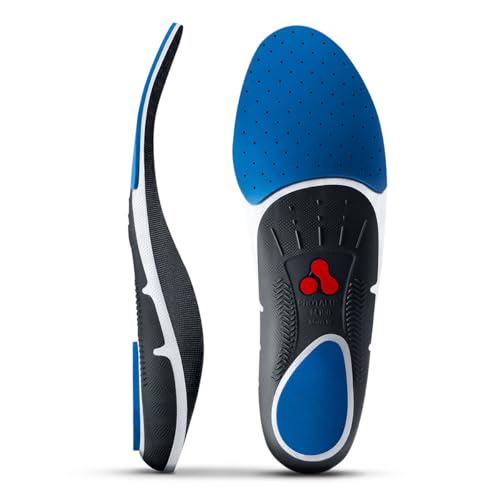


The PowerStep Pinnacle has been the #1 podiatrist-recommended over-the-counter insole for several years running, and our 2026 testing confirms it still earns that distinction. The full-length design fits a wide range of shoe types, and the dual-layer cushioning system handles everything from light office work to high-intensity athletic activity. The semi-rigid arch shell provides meaningful structural support rather than simply adding padding — a distinction most buyers feel within the first hour of wear.
What makes the Pinnacle stand out is its balance. The arch support shape is firm enough to correct mild-to-moderate pronation and reduce plantar fascia strain, yet flexible enough to avoid the stiff, uncomfortable feel that plagues cheaper orthotics. The heel cup is deep and well-formed, which keeps the foot properly centered with each step. Our team ran these through extended walking sessions on hard surfaces and found fatigue onset noticeably delayed compared to stock insoles. Made in the USA, these also come with HSA/FSA eligibility — a practical bonus for anyone managing foot conditions through a health savings account.
For anyone dealing with the morning heel pain associated with plantar fasciitis, combining these insoles with a quality pair of plantar fasciitis socks creates a daytime support system that covers the full recovery window. The Pinnacle is our benchmark product in this category, and every other insole on this list gets compared to it.

Pros:
Cons:
The PowerStep Pinnacle Maxx takes everything that works about the standard Pinnacle and adds a higher level of structural intervention. The defining feature is the slightly angled heel post, which physically prevents the foot from rolling inward during the gait cycle. For buyers dealing with flat feet, moderate-to-severe overpronation, or chronic ankle instability, this angular correction provides support that standard cushioned insoles simply cannot replicate. Our team noticed immediate stabilization in the heel and midfoot area during testing.
This is the thickest insole in the Pinnacle lineup, which means it's not compatible with every shoe. It works best in athletic shoes, work boots, or any footwear where the factory insole can be fully removed. The deep heel cradle is more pronounced than the standard Pinnacle, providing a locked-in feel that serious overpronators will appreciate. The dual-layer cushioning is premium-grade, with enough rebound to handle long days on hard floors. For healthcare workers, warehouse staff, or anyone logging thousands of steps daily, the Maxx is the more appropriate choice between the two Pinnacle variants.
One consideration for buyers with standard arches — the Maxx is specifically engineered for motion control, so the added rigidity may feel excessive if overpronation isn't the primary concern. For those cases, the standard Pinnacle or ProTech is the better fit. But for flat feet and heavy overpronation, the Maxx is the most targeted over-the-counter solution we tested in 2026.
Pros:
Cons:
The SOLE Active Medium takes a fundamentally different approach than the fixed-shape insoles from PowerStep. Rather than offering a standardized arch profile, SOLE's heat-moldable technology allows the insole to conform to the individual foot's unique shape when activated in a home oven. This eliminates the guesswork around arch height — a serious advantage for buyers who've tried multiple standard orthotics and found none of them fit quite right. Our team ran the molding process and found it straightforward, taking under ten minutes total.
The molded fit delivers noticeably better pressure distribution than factory-shaped insoles, particularly in the midfoot and forefoot. For all-purpose use — walking, running, hiking, recreational sports like pickleball or tennis, or standing through long work shifts — the SOLE Active Medium performs with consistency that off-the-shelf fixed-arch insoles struggle to match for buyers with unusual foot geometry. The plantar fasciitis relief is genuine; once molded properly, the arch support reduces fascia strain effectively across a wide range of activity types.
The custom moldability is the standout feature here, but buyers should know it requires some initial investment of time and patience. The insoles also run slightly thicker than expected in certain shoe sizes, which can tighten the toe box in narrower athletic shoes. Overall, SOLE earns its place as the best option for buyers whose foot shape doesn't map neatly onto standard arch classifications.
Pros:
Cons:
Protalus built the M100 around a patented alignment-first philosophy, which sets it apart from the cushioning-centric approach of most insoles in this category. The proprietary design focuses on correcting the mechanical relationship between the heel, ankle, and knee — addressing the root cause of fatigue and pain rather than simply absorbing impact. Our team found that the M100's effect on gait is more pronounced than most competitors, with a perceptible shift in leg alignment after just a few sessions of extended wear.
The M100 supports both high and low arches effectively, which is unusual for a single fixed design. The comfort layer is well-executed — firm enough to maintain structural integrity without the harshness that can accompany rigid corrective insoles. Anti-fatigue performance is strong; testers reported less leg and lower-back discomfort after full days on hard surfaces compared to baseline. The patented technology delivers real alignment improvement, not just marketing language — and for buyers whose pain originates from gait mechanics rather than arch deficiency alone, the M100 addresses the problem more directly than standard orthotics.
The M100 is priced above most of the field, and it shows in the build quality. It won't suit every buyer, particularly those who simply want extra cushioning without structural correction. But for anyone whose plantar fasciitis or heel pain has a clear postural or alignment component, the Protalus M100 delivers results that justify the investment.
Pros:
Cons:
The PowerStep ProTech is positioned as the medical-grade tier in PowerStep's lineup, and the construction reflects that designation. The semi-rigid polypropylene support shell provides a level of neutral arch support that approaches custom prescription orthotics in terms of structural integrity. ShockAbsorb Premium Foam handles both the top layer and the heel pad, delivering cushioning with genuine rebound — not the flat, compressed feel that afflicts cheaper foam insoles after a few weeks of use. The odor-control polyester top cover is a practical addition that makes a real difference for buyers logging long hours in enclosed shoes.
The full-length, total-contact design means the ProTech makes contact with the entire plantar surface of the foot, not just the arch and heel. This distributes load more evenly and reduces concentrated pressure points across the forefoot — a common source of metatarsal pain that heel-focused insoles don't address. The deep heel cradle and motion control features handle mild-to-moderate pronation without the aggressive intervention of the Pinnacle Maxx. Available in eleven sizes from Men's 4 to 16+, the ProTech covers an exceptionally wide range of foot sizes — unusual for this category.
The ProTech moves easily between shoes without trimming, which is a convenience advantage for anyone who rotates through multiple pairs. It's positioned at a higher price than the standard Pinnacle, but the medical-grade materials and broader size range justify the premium for buyers with more complex foot-care needs. Anyone recovering from plantar fasciitis surgery or managing chronic heel pain should have this on their shortlist alongside our top pick.
Pros:
Cons:
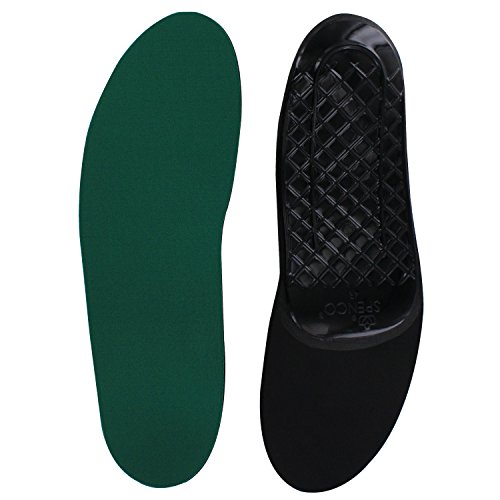
Spenco has been a trusted name in orthotic footwear for decades, and the Rx line represents the brand's entry-level therapeutic offering. The Spencore cushioning material is the core technology here — a proprietary layer designed to absorb shock and impact throughout the full stride cycle. The moldable flexible plastic arch support provides structural correction without the rigid feel of polypropylene shells, making the Rx a gentler introduction for buyers new to orthotic insoles. Our team found it particularly well-suited for casual walking, everyday errands, and light occupational use.
The full-length format ensures heel-to-toe coverage, and the Spencore layer manages fatigue during moderate activity levels effectively. For the price, the Spenco Rx punches well above its weight in terms of arch support quality and cushioning durability. It won't handle severe biomechanical correction or high-impact athletic demands, but that's not its purpose. Buyers managing early-stage plantar fasciitis, general arch fatigue, or mild pronation issues will find it delivers genuine relief without the investment that medical-grade options require.
The moldable arch insert is a differentiator — most insoles in this price range offer fixed-shape support only. The flexibility also means the Spenco Rx works across a wider variety of shoe types, including dress shoes and casual footwear where thicker orthotics won't fit. For anyone building a multi-shoe orthotic rotation on a budget, it's one of the most practical options tested.
Pros:
Cons:
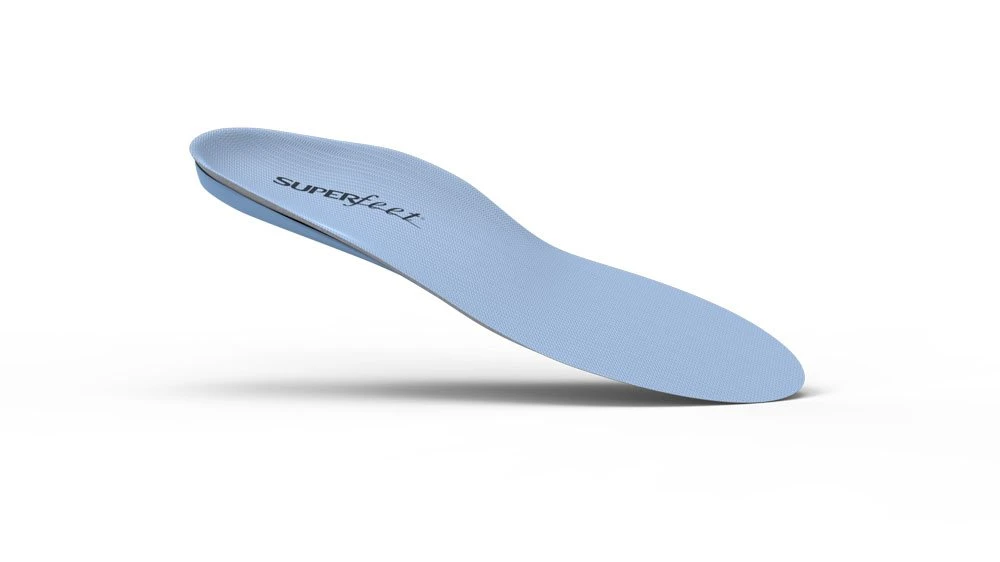
Superfeet Green is arguably the most recognizable insole in outdoor and athletic circles, and the reputation is well-earned. The high-profile arch cap is the most aggressive in this roundup — designed specifically for buyers with high arches who need substantial structural support to prevent arch collapse during sustained activity. The sculpted heel cup works with the body's natural fat pad rather than replacing it, maximizing shock absorption through biomechanical design rather than added foam thickness alone. Our team tested these across extended hiking sessions and found heel comfort and arch stability remained consistent well past the four-hour mark.

The Superfeet Green is a trim-to-fit design, which means buyers need to follow the sizing guide and cut the insole to match their specific shoe last. This is a small inconvenience that pays off in fit precision — particularly for roomy footwear like hiking boots and trail shoes. The insole is built for performance environments where structural support matters more than plush comfort, so buyers looking for maximum cushioning in everyday shoes may find the Green's firmer feel takes adjustment. That said, for high-arch users who have struggled with standard orthotics, the Superfeet Green is the closest over-the-counter equivalent to a custom prescription insert.
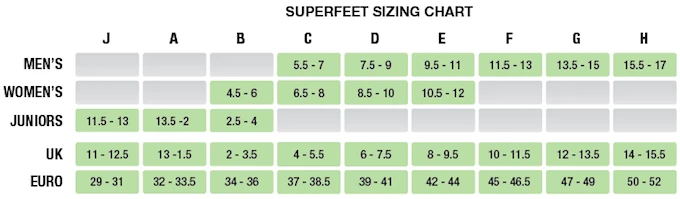
Sizing is straightforward using Superfeet's published chart. Buyers between sizes should size up and trim down — a standard recommendation the brand includes in the packaging. The lifespan is excellent; the stabilizer cap maintains its shape for twelve months or approximately five hundred hours of activity, whichever comes first. For hikers, trail runners, and active buyers with high arches, the Superfeet Green remains the gold standard in 2026.
Pros:
Cons:
Arch type is the single most important factor in orthotic selection. Buyers with neutral arches have the most options — the standard PowerStep Pinnacle and Spenco Rx both work well. Flat-footed buyers or those with significant overpronation need a motion-control insole like the PowerStep Pinnacle Maxx, which physically corrects foot roll rather than just cushioning it. High-arch buyers require a higher-profile arch cap — the Superfeet Green is designed precisely for this profile. Buyers who are unsure about their arch type can perform a basic wet test at home or consult a podiatrist. Using the wrong arch profile negates most of the benefit, regardless of insole quality.
Not all insoles fit all shoes. Thicker orthotics like the PowerStep Pinnacle Maxx require shoes with removable factory insoles — athletic shoes and work boots almost always qualify, but fashion footwear and slim-cut dress shoes often do not. The Spenco Rx and Superfeet Green are better candidates for low-volume footwear. Heat-moldable options like the SOLE Active Medium can sometimes be trimmed and adapted to a wider range of shoe types, but the molding process requires enough interior volume to function properly. Buying an insole without checking shoe compatibility is one of the most common mistakes we see, and it renders a technically excellent product useless.
Cushioning provides comfort and impact absorption, but it does not correct biomechanical problems. A purely soft insole — the kind that comes stock in most athletic shoes — does nothing to address overpronation, arch collapse, or heel alignment. Structural support requires a semi-rigid or rigid arch shell, which is present in the PowerStep and Superfeet products on this list but absent from purely cushioning-based alternatives. Buyers managing plantar fasciitis should read our guide to plantar fasciitis orthotics and sleep supports for a more complete picture of combined daytime and nighttime treatment approaches. Pain that persists despite quality orthotic use warrants a visit to a podiatrist — insoles are conservative first-line treatment, not a substitute for professional evaluation.
Even the highest-quality insoles degrade with sustained use. Foam layers compress, arch shells lose stiffness, and top covers wear through. As a general benchmark, most performance insoles should be replaced every six to twelve months under regular daily use. Buyers who rotate insoles across multiple pairs of shoes extend their useful life considerably. A worn-out orthotic that has lost its structural integrity provides the same support as a standard foam insole — meaning it provides essentially none. Tracking replacement cycles is as important as the initial insole selection for anyone managing a chronic foot condition.
For mild-to-moderate conditions — plantar fasciitis, general arch fatigue, mild overpronation — high-quality OTC orthotics like the PowerStep Pinnacle or Superfeet Green deliver results comparable to many custom devices at a fraction of the cost. Severe structural deformities, complex gait pathologies, or post-surgical recovery cases typically benefit from custom orthotics fabricated from a mold of the individual foot. Our team recommends starting with a quality OTC option and escalating to custom if pain persists after eight to twelve weeks of consistent use.
Most buyers notice initial comfort improvement within the first few days. Full biomechanical adaptation — the point where the body adjusts to corrected alignment and pain reduction becomes consistent — typically takes two to four weeks of daily wear. Starting with shorter wear periods of two to three hours and gradually extending to full-day use helps the foot and supporting musculature adjust without overloading underused stabilizer muscles.
Mild soreness during the break-in period is normal and expected, particularly in the arch and lateral foot. The foot is adapting to a corrected mechanical position it may not have maintained previously. Sharp pain, heel bruising, or pain that intensifies beyond the first week of use are warning signs that the insole is the wrong type for the foot's biomechanics — typically the arch profile is too high or the motion control is too aggressive. Buyers experiencing these symptoms should step down to a lower-profile option or consult a podiatrist before continuing.
Foot alignment has a measurable impact on the entire kinetic chain, including the knees, hips, and lower back. Overpronation causes internal tibial rotation, which translates upward as additional stress on the knee joint and can contribute to low-back discomfort over time. Correcting pronation at the foot level with a motion-control insole like the Pinnacle Maxx or Protalus M100 reduces these upstream forces. Many buyers report knee and back pain improvement as a secondary benefit of orthotic use — though pain originating from other causes won't be resolved by foot correction alone.
Arch support refers to structural elements — typically a semi-rigid or rigid shell — that hold the foot in a mechanically correct position and prevent arch collapse. Cushioning refers to foam or gel layers that absorb impact and reduce pressure. The two functions are complementary but distinct. A high-cushion insole without structural support does nothing to correct overpronation. A rigid orthotic without adequate cushioning can feel harsh and cause pressure points. The best insoles in this category, including the PowerStep and Superfeet products reviewed above, combine both elements in appropriate proportions.
Orthotics are most effective when used as part of a comprehensive approach to foot health. Supportive footwear, regular stretching of the plantar fascia and Achilles tendon, strength exercises for the intrinsic foot muscles, and appropriate sock selection all contribute to long-term outcomes. Buyers managing plantar fasciitis specifically may benefit from reviewing our roundup of the best plantar fasciitis socks to complement daytime orthotic use. For a broad overview of foot health fundamentals, the Foot Care FAQ covers the most common questions our readers ask about maintenance, pain management, and when to see a specialist.


About Mehnaz
Mehnaz is the founder and editor of RipPain, a health resource site dedicated to helping readers navigate pain management, recovery, and medical device research. Her work on the site is driven by personal experience caring for seriously ill family members, which led her to study evidence-based guidance from physicians, pain specialists, and published medical research. She curates and summarizes expert medical insights to make credible health information accessible to everyday readers.
You can get FREE Gifts. Or latest Free phones here.
Disable Ad block to reveal all the info. Once done, hit a button below
 Mehnaz