
If you're only going to read one recommendation, make it this one: PowerStep Pinnacle Insoles deliver the best combination of podiatrist-backed arch support, dual-layer cushioning, and everyday wearability of any insole on the market in 2026. Plantar fasciitis is relentless — that stabbing heel pain the moment your feet hit the floor in the morning is something millions of people deal with daily — and the right insole can cut that suffering dramatically. Whether you're a runner, a nurse clocking 12-hour shifts, or someone who simply stands too long, this guide cuts through the noise and gives you the seven best plantar fasciitis insoles reviewed in detail, plus an honest buying guide so you pick the right one for your feet.
Plantar fasciitis occurs when the thick band of tissue running across the bottom of your foot — the plantar fascia — becomes inflamed. According to the National Institute of Arthritis and Musculoskeletal and Skin Diseases, it's one of the most common causes of heel pain, affecting roughly two million Americans each year. The right insole won't replace plantar fasciitis treatment, but it will provide structural support that takes stress off the fascia with every single step. If you've been living with chronic foot pain, learning about curing foot arch pain is a smart starting point alongside choosing the right insole.
We evaluated seven of the top-selling options across comfort, arch support design, durability, and real-world use cases. From budget-friendly 3/4-length gel inserts to medical-grade full-length orthotics, there's a clear winner for every foot type and lifestyle. Browse our health tips section for more foot care content, and keep reading for the full breakdown.

Contents







PowerStep Pinnacle has been the #1 podiatrist-recommended insole for years, and after extended testing in 2026 it's not hard to see why. The full-length design covers heel to toe, and the semi-rigid arch support shell is firm enough to provide genuine biomechanical correction without feeling like you're walking on plastic. The dual-layer cushioning system — a ShockAbsorb foam top layer over an EVA base — absorbs impact at the heel while keeping the midfoot stable throughout your stride.
What separates Pinnacle from cheaper alternatives is the quality of the arch contour. It sits precisely under the plantar fascia, reducing the stretching and micro-tearing that cause that classic morning pain spike. These are made in the USA, and the construction consistency reflects that — no uneven edges, no foam that collapses in three weeks. For athletes, runners, and anyone logging serious mileage on their feet, this is the insole that delivers day after day.
They fit full-size and half-size shoes for both men and women, and they move shoe to shoe without trimming. If you're new to orthotic insoles and want a proven starting point, the Pinnacle is the safest, most effective choice on this list.
Pros:
Cons:
Dr. Scholl's markets these as the only clinically proven insole to prevent plantar fasciitis from returning, and the design logic holds up under scrutiny. The shock-absorbing deep heel cup is the standout feature — it cradles and stabilizes the heel, managing inflammation directly at the source rather than just adding padding on top. The pressure-distribution geometry spreads load from the forefoot all the way to the heel, eliminating the localized stress that keeps plantar fasciitis from healing.
The arch support component is specifically shaped to prevent overstretching of the plantar fascia, which is the actual mechanical cause of the condition. Unlike generic insoles that simply add cushion, this one actively changes how load travels through your foot. Clinical validation gives it a credibility edge, especially for users who have tried multiple insoles without success. You'll notice a difference in heel strike quality within the first few steps.
These are designed for men and come in standard sizes. They fit well in sneakers, work boots, and casual shoes, though the heel cup adds some height so very tight shoes may need a size check. For anyone dealing with recurring heel spurs alongside plantar fasciitis, this is the most targeted solution available in an over-the-counter format.
Pros:
Cons:
The Pinnacle Maxx is PowerStep's heavy-duty answer for people with flat feet, severe overpronation, or more serious biomechanical issues. The distinguishing feature is the angled heel post — a slightly tilted base that physically prevents the foot from rolling inward during the gait cycle. This is a meaningful functional difference from the standard Pinnacle, and it matters enormously if overpronation is the root cause of your plantar fasciitis.
At the thickest point in the PowerStep lineup, the Maxx requires shoes where you can remove the factory insole. That's non-negotiable — trying to layer these over existing insoles will make the fit unbearable. But in a shoe with removable insoles, the fit is excellent, and the deep heel cradle combined with the angled post creates a level of motion control that comes close to custom orthotics at a fraction of the price. The dual-layer cushioning is premium grade, providing bounce-back energy rather than just dead compression.
These are HSA and FSA eligible, which makes them a smart buy for anyone with a health savings account. If you're dealing with both overpronation and plantar fasciitis simultaneously — a very common pairing — the Maxx is the specific tool for that job. Made in the USA, like all PowerStep products.
Pros:
Cons:
The Sof Sole Plantar Fascia insole takes a targeted 3/4-length approach that makes it one of the most versatile options on this list. Because it doesn't extend to the toe box, it fits inside an enormous range of footwear — including shoes where a full-length insole simply won't go. The Plantar Relief Bridge is the structural centerpiece: a rigid arch support that spans the length of the arch and holds the plantar fascia from underneath, preventing the stretching that leads to pain.
The gel in the heel is a well-placed feature. Rather than gelling the entire insole (which often just delays foam compression), Sof Sole concentrates gel exactly at the heel strike zone. This directly addresses the heel spur pain that frequently accompanies plantar fasciitis. The result is a lightweight insert that handles two of the biggest pain triggers without adding bulk. FSA and HSA eligible, making it an accessible option at a lower price point than full-length orthotics.
For men who want plantar fasciitis relief across multiple types of shoes without buying separate insoles for each pair, the Sof Sole is a practical, effective solution. It slides in and out in seconds and requires zero trimming.
Pros:
Cons:
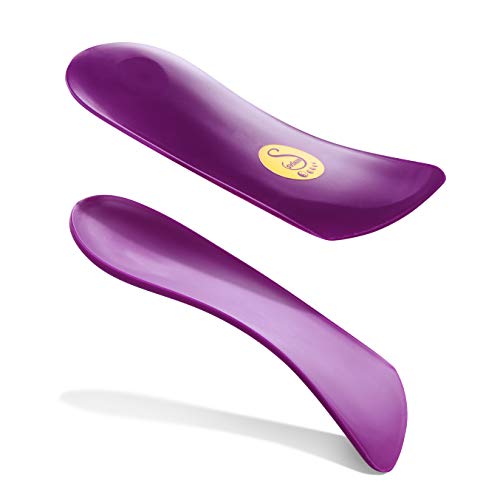
Samurai Insoles take a fundamentally different approach from every other product on this list. Instead of foam and gel, the Ninjas are made from polypropylene — the same material used in professional orthotic labs. This isn't cushioning. This is structural engineering. The springy, rigid arch support doesn't compress under body weight; it holds its shape indefinitely, which is why these insoles outlast foam-based alternatives by years, not months.
The philosophy behind the design is sound: plantar fasciitis is a structural problem, not a cushioning deficiency. What your foot needs is a firm, properly contoured surface that stops the arch from collapsing on each step. The Ninjas deliver exactly that. They slide under your existing insoles (3/4 length), so you keep whatever toe-box cushioning your shoe already provides. No soggy foam, no odor buildup, no gradual loss of effectiveness. These are podiatrist-designed and orthotic-lab manufactured in the USA.
For runners who've tried foam insoles without success, or anyone who wants a durable solution that won't need replacing every six months, the Samurai Ninjas represent a different category of relief. They're particularly effective for heel pain, bunion discomfort, and shin splints alongside plantar fasciitis. Understanding how to reduce foot pain holistically will help you get the most out of these.
Pros:
Cons:
SOLE's Active Thick insole is the only heat-moldable option on this list, and that single feature changes the entire value proposition. Every other insole here assumes your arch profile falls within a standard range. SOLE assumes nothing. You bake the insoles in an oven (or wear them as they warm to body heat), and the thermoplastic base conforms to the exact shape of your foot. High arches, flat arches, asymmetrical feet — the Active Thick handles all of them with a precision that pre-shaped insoles can never match.
The Active Thick profile is SOLE's maximum cushioning offering — thick enough for high-impact activities like running and hiking, structured enough for long working shifts. It's genuinely all-purpose: walking, running, hiking, pickleball, basketball, and long-shift work are all cited use cases, and the design holds up across all of them. Arch support is built in and customized by the molding process, and the heel cup provides solid plantar fasciitis relief from day one.
The custom-fit angle makes this insole a particularly smart choice for anyone who has tried several standard orthotics without finding relief. Sometimes the issue is that the arch support hits slightly wrong — the SOLE eliminates that variable entirely. If you're also dealing with aging foot issues, this level of personalized support pairs well with the advice in foot care tips for seniors.
Pros:
Cons:
The PowerStep ProTech sits at the top of the PowerStep lineup and brings medical-grade construction to an over-the-counter format. The semi-rigid polypropylene support shell provides neutral arch support, while a dedicated ShockAbsorb Premium Foam heel pad — separate from the dual-layer cushioning stack — adds an extra layer of protection at the heel strike zone. This layered approach means the ProTech isn't just comfortable; it's engineered with redundancy for high-demand use cases.
The odor-control polyester top fabric is a practical feature that makes a real difference in daily wear, particularly in athletic shoes or work boots where moisture builds up. The full-length total contact design stabilizes the entire foot from the moment you step, and the motion control is calibrated for mild to moderate pronation — enough to correct gait mechanics without the aggressive tilt of the Pinnacle Maxx. Available in eleven sizes ranging from men's 4 to 16+, making it one of the most size-inclusive options on this list.
No trimming required, moves shoe to shoe effortlessly, and made in the USA. For serious athletes, healthcare workers, or anyone who needs maximum support across an entire working day, the ProTech delivers a level of biomechanical engineering that most over-the-counter insoles simply can't match in 2026.
Pros:
Cons:
This is the single most important factor. Plantar fasciitis almost always involves inadequate arch support that allows the plantar fascia to overstretch. You need to match the insole's arch height and firmness to your specific foot profile. There are three arch types: low (flat foot), medium (neutral), and high.
If previous insoles haven't worked, arch height mismatch is usually the culprit. Either the support sat too low (no contact with arch) or too high (painful pressure on arch). A heat-moldable insole like the SOLE Active Thick solves this directly.
The heel cup is what makes or breaks an insole for plantar fasciitis sufferers. A deep, well-formed heel cup does three things:
Shallow heel cups provide minimal control. Look for insoles that explicitly describe a "deep heel cradle" — this is measurable in how the insole walls rise around the sides of your heel. The Dr. Scholl's and PowerStep Maxx both excel here. For severe heel spur pain, a gel-padded heel cup like the Sof Sole provides direct localized cushioning on top of structural containment.
Length choice comes down to your shoe type and whether you want arch-only support or total-foot cushioning.
If you only buy one pair to use across multiple shoes, 3/4 length is more versatile. If you're buying for a specific pair of athletic or work shoes, full-length provides superior overall foot management.
Not all cushioning is equal, and in the insole category, price often tracks directly with material quality and longevity:
For plantar fasciitis specifically, durability matters because you're wearing these insoles every day. An insole that loses its arch shape in three months provides progressively less support — and your pain returns. Investing in higher-quality materials upfront saves money over repeated cheap replacements.
Insoles don't cure plantar fasciitis on their own, but they're one of the most effective tools for managing and preventing it. By providing proper arch support and heel cushioning, insoles reduce the mechanical stress that causes plantar fascia inflammation. Combined with stretching, rest, and appropriate footwear, most people see significant improvement within weeks. Severe or chronic cases may still require physical therapy or medical intervention alongside insole use.
Most users notice reduced pain within the first few days of consistent use, particularly in the morning when the condition is most acute. Full improvement typically develops over 4 to 8 weeks as the plantar fascia heals with reduced daily stress. The key is consistency — wearing the insoles every day in all footwear, not just when pain flares. Switching back to unsupported shoes intermittently delays healing significantly.
It depends on the insole type and shoe construction. Full-length orthotics work best in athletic shoes and work boots with removable factory insoles. The 3/4-length format is more universally compatible, fitting in dress shoes, loafers, and casual footwear where full-length insoles won't fit. Very flat or thin-soled footwear like flip-flops and ballet flats aren't compatible with any structured insole. If you need relief in formal shoes, the Sof Sole or Samurai Ninjas are your best options.
Custom orthotics are prescribed and manufactured from individual foot casts or 3D scans by a podiatrist. They're precisely calibrated to your foot's exact geometry and gait pattern, and typically cost $300–$600 or more. OTC insoles are pre-shaped to standard arch profiles and are considerably more affordable. For most people with plantar fasciitis, high-quality OTC insoles like the PowerStep Pinnacle or SOLE Active Thick provide 80–90% of the functional benefit at a fraction of the cost. Custom orthotics are recommended when OTC options fail after a genuine trial period.
Foam-based insoles typically need replacement every 6 to 12 months depending on activity level and body weight. Once the arch support loses its shape or the cushioning no longer bounces back, the insole is no longer providing therapeutic benefit even if it still looks intact. Polypropylene insoles like the Samurai Ninjas last significantly longer — often several years — because the structural material doesn't compress. A good rule of thumb: if your pain is returning despite regular insole use, replacement is due before anything else.
Many plantar fasciitis insoles qualify as FSA (Flexible Spending Account) and HSA (Health Savings Account) eligible medical expenses because they treat a diagnosed condition. The PowerStep Pinnacle Maxx, Sof Sole Plantar Fascia, and SOLE Active Thick all explicitly carry FSA/HSA eligibility. Check the product listing for confirmation before purchase, as eligibility can vary by product and retailer. Using pre-tax health savings dollars effectively reduces the out-of-pocket cost by your marginal tax rate.
Every insole on this list will outperform whatever flat factory insert came in your shoes — but the right pick depends on your specific foot type, shoe wardrobe, and severity of symptoms. Start with the PowerStep Pinnacle if you want the most proven all-around performer in 2026, move to the Pinnacle Maxx if overpronation is your primary issue, or go with the SOLE Active Thick if previous insoles have missed the mark on arch fit. Pick the one that matches your profile, commit to wearing it consistently, and give it the full 6 to 8 weeks your plantar fascia needs to heal properly — your feet will thank you.


About Mehnaz
Mehnaz is the founder and editor of RipPain, a health resource site dedicated to helping readers navigate pain management, recovery, and medical device research. Her work on the site is driven by personal experience caring for seriously ill family members, which led her to study evidence-based guidance from physicians, pain specialists, and published medical research. She curates and summarizes expert medical insights to make credible health information accessible to everyday readers.
You can get FREE Gifts. Or latest Free phones here.
Disable Ad block to reveal all the info. Once done, hit a button below
 Mehnaz