
The Bowflex Xtreme 2 SE home gym is one of the most capable single-station machines you can buy for serious full-body strength training without leaving your house. If you are exploring the sport and fitness category for a compact, versatile resistance trainer, this unit deserves your full attention before you spend a dollar anywhere else.
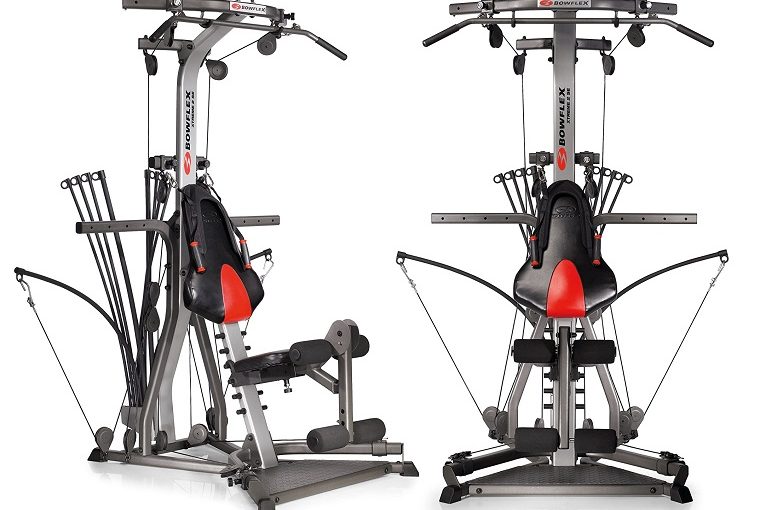
Bowflex built this machine around their proprietary Power Rod technology, which gives you a cable-based resistance system that feels fundamentally different from stacked weight plates — and for many people, especially those managing joint sensitivity or recovering from injury, that difference matters enormously. You get smooth, consistent tension throughout every rep, which reduces the ballistic loading that causes most gym injuries in the first place, making this a genuinely smart choice for pain-aware fitness training.
This review covers everything you need to make a confident decision: the specs, how to set it up correctly, who it is actually built for, and the mistakes that will stall your progress if you are not careful from the start. Whether you are comparing this against the Bowflex PR1000 or evaluating the Xtreme 2 SE as your first serious home gym investment, you will have a clear picture by the end.
Contents
Bowflex's Power Rod system uses flexible composite rods rather than steel weight plates, and the mechanics work decisively in your favor. As you move through a range of motion, resistance increases progressively — a behavior that closely mirrors how muscle fibers naturally recruit and produce force under load. According to CDC guidelines on physical activity for adults, resistance training performed with consistent, controlled tension is one of the most effective strategies for building functional strength across all age groups and fitness levels.
The standard Xtreme 2 SE ships with 210 lbs of resistance, and optional rod pack upgrades take that to 310 lbs or 410 lbs, meaning this machine can grow with you through multiple years of training progression without requiring a separate purchase decision somewhere down the road.
| Feature | Specification |
|---|---|
| Standard Resistance | 210 lbs (upgradable to 310 or 410 lbs) |
| Exercise Count | 70+ gym-quality exercises |
| Footprint | 100" L × 78" W × 83" H |
| User Weight Capacity | 300 lbs |
| Cable System | Dual pulley with lat tower and low row |
| Warranty | 7-year frame, 2-year parts, 1-year cables |
| Included Attachments | Lat bar, rowing bar, ankle cuffs, single cable handles |
That footprint is worth pausing on: 100 inches long by 78 inches wide is genuinely manageable for a spare bedroom or single-car garage, especially considering you are replacing what would otherwise require a squat rack, cable machine, lat pulldown station, and chest press bench combined into one coherent training space.
Assembly runs approximately two to three hours with one partner and basic hand tools — do not attempt this solo unless you have a clear workspace and plenty of patience, because several components are unwieldy even though they are not especially heavy. Follow this sequence to avoid backtracking and misalignment:
If you skip the final pre-torque step and tighten bolts as you go, you will create frame misalignment that produces noise and instability under load — a completely avoidable problem that costs you a full disassembly later to correct.
Your first session should be a movement familiarization workout, not a max-effort strength day. Use no more than 30–40% of your working resistance and cycle through each major station:
Three sets of 12 reps at light resistance for each movement gives you a complete machine orientation without accumulating enough fatigue to mask form errors in the later exercises of the session.

The smooth, rod-based resistance is a genuine clinical advantage if you are dealing with joint conditions like osteoarthritis, recovering from rotator cuff injury, or managing chronic lower back pain. Unlike free weights, the cable system lets you control the exact angle and path of resistance, which means you can work around pain-sensitive positions rather than forcing your joints through a fixed movement arc dictated by a barbell or dumbbell.
Users dealing with lumbar or pelvic instability will find that the padded seat rail provides more adjustable positioning than most bench-based exercises allow. If you are managing persistent tailbone pain when sitting and standing, exercises performed in the standing cable position rather than fully seated give you a productive training option while you address that condition separately.
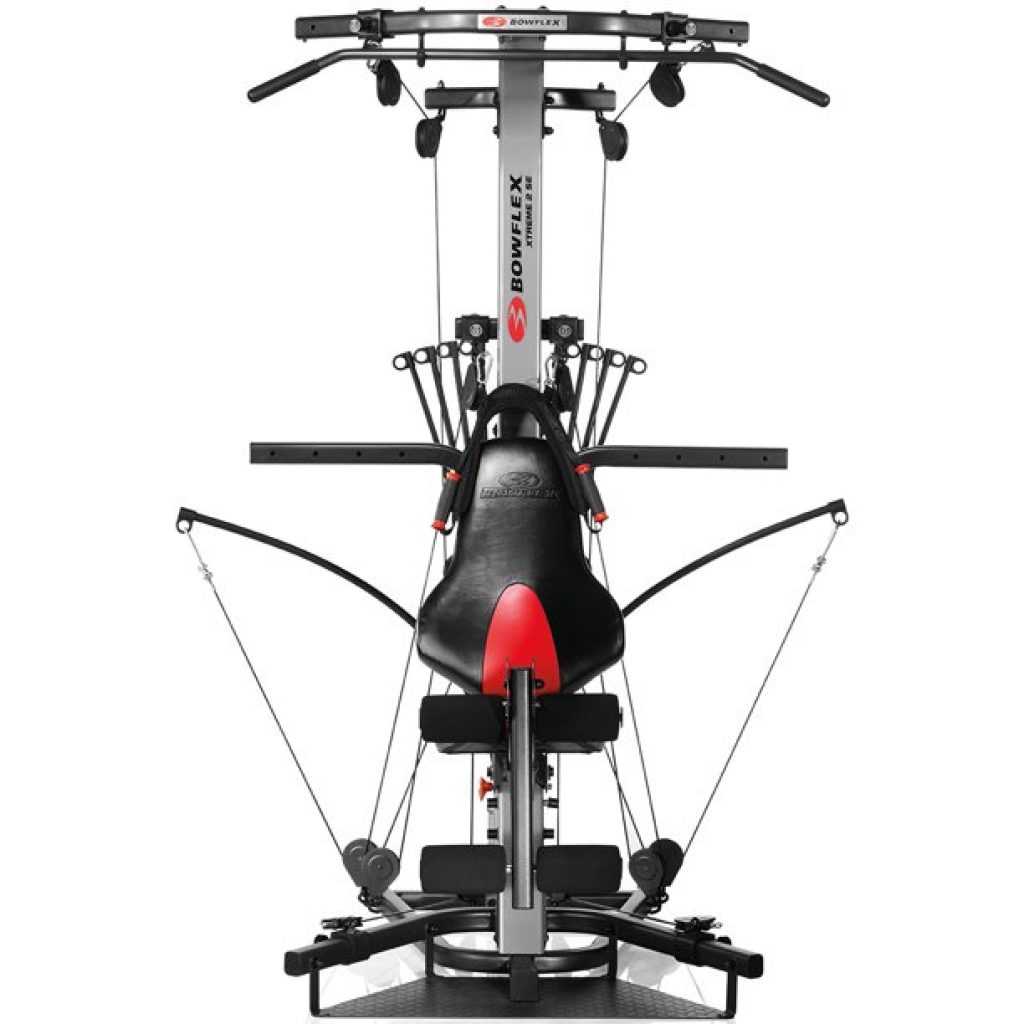
If you have been weighing the Bowflex Xtreme 2 SE home gym against dedicated cardio machines, consider what each option actually delivers per square foot of floor space. A treadmill or rowing machine gives you a single movement pattern; this machine gives you 70-plus exercises in the same footprint, which is a fundamentally different value proposition for anyone working with one dedicated training room or a shared garage space.
Your training goal determines how you use the resistance system, and conflating the two produces mediocre results in both directions. Apply these parameters based on what you are actually trying to achieve:
Rotate between these training tracks every 4–6 weeks to prevent adaptation plateaus, and log your resistance rod selection for each exercise so you have an objective record of progression rather than relying on subjective effort perception alone.
Strength training on the Xtreme 2 SE pairs most effectively with low-impact cardio options, particularly if you are managing any joint or chronic pain conditions alongside your fitness goals. The Schwinn 230 Recumbent Bike is an excellent complement because it provides cardiovascular conditioning without any axial loading on the spine — you can run a 20-minute recumbent session as a warm-up or active recovery cooldown without compressing the joints you just worked on the cable machine.
The pairing works because both platforms share a core philosophy: continuous, controlled tension over ballistic, momentum-driven movement. Building your home gym around that principle consistently protects joints and produces sustainable training results over the long term rather than boom-and-bust cycles of intense training followed by forced recovery from overuse injury.
Never add resistance rod packs until you can execute every core movement with clean form at your current setting — cable machines punish momentum-driven reps with joint strain rather than immediate failure, so the damage accumulates quietly before you notice it.
The most damaging form patterns specific to this machine are:
Beyond form, these programming errors will waste months of genuine effort if you do not identify and correct them early in your training:

Cable systems develop predictable failure patterns over time, and identifying the source early prevents minor annoyances from becoming structural problems that interrupt your training for weeks:
Rattling, rocking, or squeaking during exercises has specific causes that each have direct fixes — do not tolerate these as normal machine behavior:

Yes, but you need to be selective about exercises and conservative with resistance progression. The cable-based system lets you work in pain-free movement ranges, and exercises like the lat pulldown, seated row with braced core, and standing cable curl can all be performed without compressing or loading the spine inappropriately. Avoid any movement where lumbar flexion under load is unavoidable, and consult your physiotherapist before beginning any new resistance training program.
The machine footprint is 100 inches long by 78 inches wide, but you need additional clearance on all sides for safe movement during exercises. Plan for a total space of approximately 10 feet by 9 feet at minimum, with ceiling height of at least 7 feet to accommodate the lat pulldown arm when it is fully extended overhead.
For most people focused on functional strength, body composition, or rehabilitation, the answer is yes. The 70-plus exercises cover every major muscle group with enough variation to prevent adaptation plateaus for years of consistent training. What it does not replace is heavy barbell work — if powerlifting or Olympic lifting is your primary goal, this machine is a strong supplemental tool rather than a full replacement for a barbell platform.
Power Rod resistance increases progressively through the range of motion rather than remaining constant like a barbell, which means peak resistance occurs at the point of maximum muscle contraction. This creates a different training stimulus than free weights — not categorically better or worse, but particularly advantageous for joint-friendly training and isolation exercises where sustained tension throughout the full movement range drives the most effective hypertrophy response.
Inspect cables for fraying every three months, retorque all frame bolts every six months, and lubricate the seat rail and pulleys with silicone spray every 90 days of regular use. Cable replacement is typically needed every two to three years depending on training frequency, and Bowflex sells replacement cable sets directly — keeping one on hand means a snapped cable does not interrupt your training routine for weeks while you wait for a shipment.
The Bowflex Xtreme 2 SE home gym rewards the people who commit to it with patience and consistency — because a machine that grows with your strength and protects your joints is not a purchase, it is a long-term training partner.


About Mehnaz
Mehnaz is the founder and editor of RipPain, a health resource site dedicated to helping readers navigate pain management, recovery, and medical device research. Her work on the site is driven by personal experience caring for seriously ill family members, which led her to study evidence-based guidance from physicians, pain specialists, and published medical research. She curates and summarizes expert medical insights to make credible health information accessible to everyday readers.
You can get FREE Gifts. Or latest Free phones here.
Disable Ad block to reveal all the info. Once done, hit a button below
 Mehnaz