
The direct answer to whether do coronavirus masks really work is yes — but only when you use the right mask for the right situation, worn the right way. A properly fitted N95 respirator with a verified facial seal reduces your inhalation exposure to infectious aerosols by 95% or more. A surgical mask worn loosely under your nose provides near-zero inhalation protection. That gap between perception and reality is where most masking fails. For evidence-based guidance on respiratory protection and general health, explore RipPain's health tips resource.
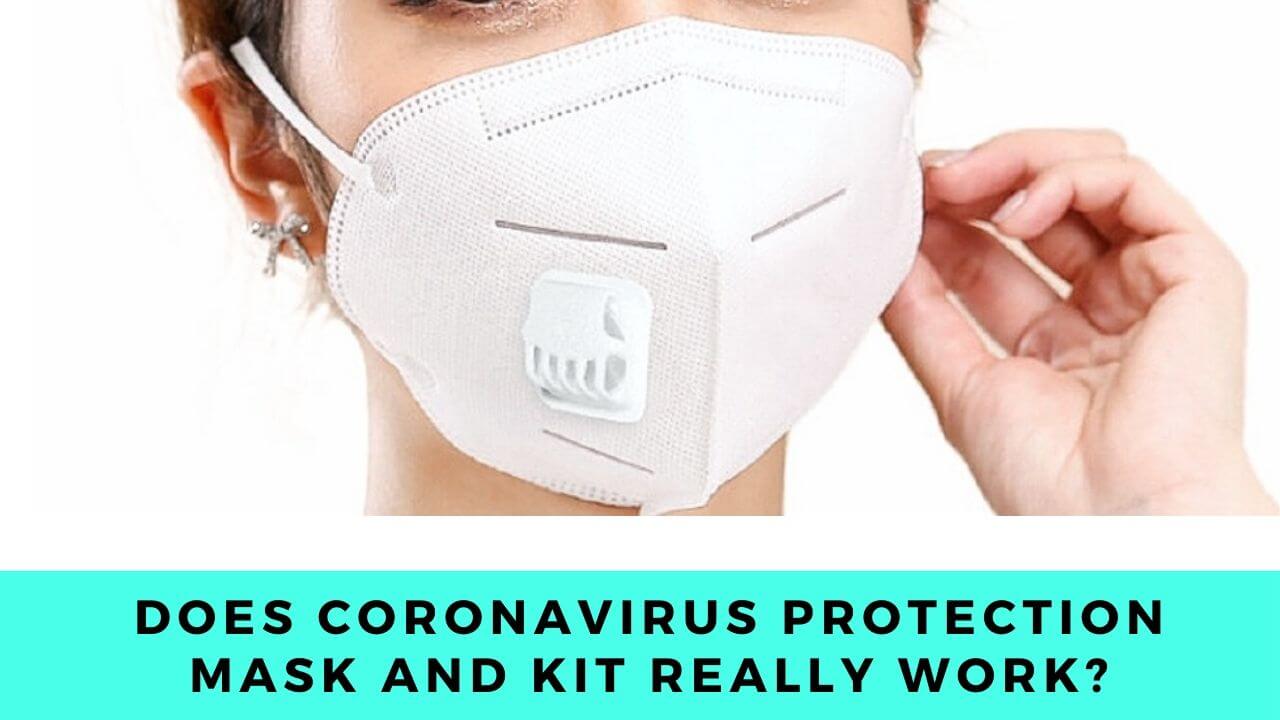
Coronaviruses spread primarily through respiratory droplets and fine aerosols released when an infected person breathes, speaks, coughs, or sneezes. Large droplets fall to surfaces within seconds. Fine aerosol particles — smaller than 5 microns — can remain suspended in stagnant indoor air for minutes, sometimes longer. Masks interrupt this transmission chain at both the source and the point of inhalation, but their effectiveness depends on filtration efficiency, particle size rating, and whether the mask forms a complete seal against your skin.
For anyone managing underlying health conditions, getting this right carries higher stakes. Chronic respiratory illness, immunosuppression, or systemic inflammatory disease can convert a moderate viral exposure into a serious medical event. If you've been watching worsening symptoms and asking yourself about how to tell if bronchitis is turning into pneumonia, you already know how quickly a respiratory infection can compound. Correct masking is one concrete, evidence-supported step in a broader respiratory protection strategy — not the whole answer, but a meaningful part of it.
Contents
When you ask do coronavirus masks really work, the answer shifts dramatically depending on which mask you're talking about. The consumer market spans paper surgical masks, multilayer cloth coverings, activated carbon units, and NIOSH-certified N95 respirators — and their protective capability differs by orders of magnitude. Understanding what each type actually filters, and under what conditions it fails, is the foundation of any honest assessment of mask effectiveness.
The N95 respirator is the civilian benchmark for meaningful respiratory protection. Its designation means the filter captures at least 95% of airborne particles at 0.3 microns — the particle size most challenging to filter because it sits at the threshold between two physical capture mechanisms: inertial impaction (larger particles) and Brownian diffusion (smaller particles). Particles near 0.3 microns slip past both mechanisms most easily, which is why NIOSH uses this size for certification testing. Passing at 0.3 microns means strong performance across the full spectrum of particle sizes you encounter in real-world air.

What distinguishes an N95 from every other consumer mask type is the perimeter seal. The respirator presses against the skin around the nose and mouth, eliminating the facial gaps that allow unfiltered air to bypass the filter on inhalation. That seal is the critical mechanism — without it, filtration efficiency is largely theoretical. N99 respirators filter 99% of particles — a marginal gain for most users, but at the cost of noticeably higher breathing resistance. For the vast majority of people, including those with chronic health conditions, the N95 is the practical optimum: high protection without imposing a respiratory burden that makes extended wear unrealistic.

Surgical masks are fluid-resistant barriers designed to protect the environment from the wearer's respiratory secretions — not the other way around. Because they sit loosely against the face, air follows the path of least resistance through the gaps along the cheeks, chin, and nose bridge on inhalation. Surgical masks protect the people around you far more reliably than they protect you from inhaling infectious particles. That asymmetric benefit is real and genuinely valuable in community settings — universal masking with surgical masks reduces aggregate community transmission — but you should hold accurate expectations about personal inhalation protection when you choose one over an N95.

Cloth masks range from nearly useless to reasonably effective depending entirely on construction. A single-layer polyester gaiter provides minimal filtration and no meaningful facial seal. A three-layer cotton mask with a meltblown polypropylene middle layer and a fitted nose wire performs substantially better — still below a surgical mask in clinical lab conditions, but enough to contribute meaningfully to community source control. The weave tightness, layer count, and nose wire quality all determine where a specific cloth mask lands on that spectrum. Fit is as important as material — a well-fitting cloth mask outperforms a loosely worn surgical one in real-world conditions.

Activated carbon masks add an adsorption layer effective for volatile organic compounds and odors, but carbon filtration alone does not capture viral-sized aerosol particles. The mechanical filtration layers above and below the carbon layer carry the protective load. Think of the carbon as a bonus for air quality comfort, not the primary protective mechanism for viral defense.
Context is everything when evaluating whether do coronavirus masks really work for a specific situation. A mask adequate for a brief outdoor errand may fall well short of what you need in a crowded, poorly ventilated indoor setting. Matching your mask type to your actual exposure risk — rather than defaulting to whatever is most convenient — is the practical skill that converts protective theory into real safety.
Medical facilities, crowded public transit, poorly ventilated retail environments, and care settings for immunocompromised or elderly individuals represent the highest-risk contexts for airborne pathogen exposure. In these situations, an N95 respirator with a verified perimeter seal is the appropriate tool. Research reviewed and published by the CDC's National Institute for Occupational Safety and Health (NIOSH) confirms that properly worn N95 respirators substantially reduce exposure to airborne pathogens compared to surgical masks or unstructured cloth coverings under real-world conditions.
Fit-testing your N95 once isn't enough — facial changes from significant weight loss, dental work, or even stubble growth can break the perimeter seal and eliminate most of the protection you believe you have.
For lower-risk everyday settings — grocery shopping, brief indoor stops, outdoor gatherings with adequate spacing — a well-fitted surgical mask or high-quality multilayer cloth mask meaningfully reduces your contribution to community transmission. The self-protection is asymmetric, but in a household where a vulnerable member is present, shielding others is precisely the goal. For these everyday scenarios, the incremental cost of wearing an N95 over a surgical mask may not be warranted unless you are personally in a high-risk category.

Outdoor environments generally provide sufficient ventilation to dilute exhaled aerosols rapidly. The case for masking outdoors is weak in low-density settings. Reserve your best mask for the highest-risk indoor moments, where viral particle concentration can accumulate and where your exposure duration is extended.
The mask you wore correctly all day can become a liability if you mishandle it afterward. Viral particles accumulate on the outer surface during wear. Touching that surface with bare hands and then touching your eyes, nose, or mouth bypasses every protective benefit the mask provided. Proper care and storage are not afterthoughts — they are the final step in effective masking, and skipping them negates the discipline you exercised during wear.
Wash cloth masks after every use in hot water — at least 60°C (140°F) — with standard household detergent, then dry completely before storing or reusing. A damp mask creates an accelerated microbial growth environment. This is a particular concern for anyone already managing upper respiratory irritation, chronic inflammation, or persistent nasal congestion. Readers dealing with ongoing sinus issues will find practical relief strategies in RipPain's guide on how to clear sinus congestion, which pairs directly with proper mask hygiene for a comprehensive respiratory management approach.
Never fold a used mask inward and drop it in your pocket — pathogens on the outer surface transfer directly to the inner surface, which is the surface you breathe through every time you wear it again.
Store clean masks in a paper bag or breathable container rather than a sealed plastic bag. Paper allows residual moisture to escape; plastic traps it. Label your bags if you're managing multiple masks for multiple household members — cross-contamination through shared masks is a straightforward mistake to avoid with a simple system.
N95 respirators are rated for single extended use, not indefinite reuse. Moisture from exhalation gradually degrades the electrostatic charge embedded in the meltblown filter media — the mechanism responsible for capturing sub-micron particles through attraction rather than simple physical sieving. Once that charge dissipates, filtration efficiency drops significantly even if the mask still appears intact and structurally sound. Replace your N95 when breathing through it becomes noticeably harder than when it was new, when the straps lose elasticity, when the nose bridge no longer molds correctly to your face, or when any part of the body or seal structure is visibly damaged.

When N95 availability is limited, three decontamination methods have been studied for efficacy without compromising filter integrity: UV-C irradiation at adequate dose, hydrogen peroxide vapor treatment, and dry heat at 70°C for 30 minutes. Each has specific equipment requirements and limitations on cycle count before filter performance degrades beyond safe use. Do not microwave, steam, or apply alcohol directly to filter material. Alcohol disrupts the electrostatic layer; steam introduces moisture that accelerates the charge degradation it's already experiencing from normal use; microwaving risks structural damage to the metal nose bridge and can create fire hazards.

Mask benefits are not distributed equally across all populations. Certain groups gain substantially more from consistent, correct mask use, while others face physiological trade-offs that influence which mask type is appropriate for them specifically. Knowing where you fall on this spectrum allows you to make a genuinely informed decision rather than following blanket recommendations that weren't written with your health profile in mind.
Immunocompromised individuals, adults over 65, people with chronic obstructive pulmonary disease, asthma, congestive heart failure, or active cancer treatment carry the highest risk of serious outcomes from respiratory viral exposure. For these groups, an N95 respirator is not overcaution — it is proportionate, evidence-based risk management. Household caregivers of vulnerable individuals belong in this same priority category. You represent a transmission bridge between community exposure and the high-risk person in your home, which means your mask choice affects their safety as much as your own.
People managing chronic pain conditions with a systemic inflammatory component — fibromyalgia, rheumatoid arthritis, lupus, or ankylosing spondylitis — often have immune profiles that warrant careful respiratory precautions even when they don't fall into a traditional "high-risk" clinical category. Systemic inflammation and certain immunomodulatory medications can impair viral clearance in ways that are not always reflected in standard risk stratification tools.
Advanced COPD or severe heart failure can make the increased breathing resistance of an N95 clinically problematic. In these cases, a correctly worn surgical mask is the appropriate compromise: reduced inhalation self-protection, but no exacerbation of existing cardiorespiratory compromise. Children under two years of age and individuals who cannot safely remove their own mask should not use tight-fitting respirators under any circumstances — the risk of impaired breathing outweighs the protection benefit in these populations.
Exercise introduces another variable. Wearing a high-resistance N95 during vigorous aerobic activity substantially increases perceived exertion and places unnecessary strain on respiratory muscles already working hard during intense cardio. For outdoor exercise where ventilation is ample, masking is rarely warranted. For crowded indoor gym settings, a loose surgical mask is the practical balance between source control and breathability. If you're managing a structured home fitness routine — whether on a recumbent bike or a treadmill — the controlled indoor environment of your own home generally does not require masking unless others in the space are unwell.
One of the clearest ways to address whether do coronavirus masks really work is to put the numbers directly side by side. Filtration efficiency, facial seal quality, self-protection capability, and appropriate use case differ enough between mask types that the same question has multiple valid answers depending on which mask you're evaluating. The table below gives you a direct comparison of the types covered in this guide.
| Mask Type | Filtration Efficiency | Facial Seal | Self-Protection | Source Control | Best Use Case |
|---|---|---|---|---|---|
| N99 Respirator | ≥99% at 0.3μm | Tight perimeter seal | Very High | Very High | Extreme-risk or industrial environments |
| N95 Respirator | ≥95% at 0.3μm | Tight perimeter seal | High | High | Medical settings, crowded high-risk indoor spaces |
| Surgical Mask | ~60–80% (lab conditions) | None — gaps at edges | Low | High | Source control, brief low-risk public exposure |
| 3-Layer Cloth Mask | ~50–70% (varies by construction) | Variable, fit-dependent | Low–Moderate | Moderate | General community settings, daily errands |
| Activated Carbon Mask | Moderate for VOCs; low for viruses | Variable | Low for viral aerosols | Moderate | Pollution, odor, or chemical vapor environments |
| Single-Layer Cloth or Gaiter | <20% | Poor | Minimal | Minimal | Not recommended for respiratory viral protection |
No single mask is the optimal choice for all situations. Match your mask to your risk level, your environment, and your personal health status — then maintain and replace it according to the type's requirements. A well-chosen, properly worn mask from the upper half of this table delivers genuine, measurable protection. A poorly chosen or incorrectly worn one from any row delivers primarily the appearance of protection.
Yes, but the level of self-protection depends entirely on mask type and fit. Only N95 or higher-rated respirators with a verified perimeter seal provide substantial inhalation protection for the wearer. Surgical masks and cloth coverings primarily protect others by reducing what the wearer expels into the air — their self-protection benefit is real but significantly lower than that of a fitted respirator.
An N95 is rated for single extended use, not indefinite reuse. The practical replacement indicators are increased breathing resistance, degraded strap elasticity, or visible structural damage to the body or nose bridge. Moisture from extended exhalation degrades the electrostatic filter layer over time, so masks used during high-activity or high-humidity situations should be retired more quickly than those used in sedentary, dry conditions.
Disposable surgical masks are engineered for single use. Reusing them risks transferring pathogens from the outer surface to the inner surface during storage, degrading the filtration material through handling and moisture, and compromising the nose bridge fit that makes the mask functional. If you must reuse one, handle it exclusively by the ear loops, allow it to air dry completely between uses, and store it in a paper bag — never a sealed plastic container.
For general community settings and low-risk daily activities, a well-constructed three-layer cloth mask with a nose wire contributes meaningfully to transmission reduction. For high-risk environments — crowded indoor spaces, medical settings, extended contact with someone who is ill, or any situation where you are personally immunocompromised — a cloth mask is not an adequate substitute for an N95 respirator. The filtration gap is too large to ignore in high-stakes exposures.
The mask you choose matters, but the mask you wear correctly — every time, in every high-risk moment — matters infinitely more.


About Mehnaz
Mehnaz is the founder and editor of RipPain, a health resource site dedicated to helping readers navigate pain management, recovery, and medical device research. Her work on the site is driven by personal experience caring for seriously ill family members, which led her to study evidence-based guidance from physicians, pain specialists, and published medical research. She curates and summarizes expert medical insights to make credible health information accessible to everyday readers.
You can get FREE Gifts. Or latest Free phones here.
Disable Ad block to reveal all the info. Once done, hit a button below
 Mehnaz