
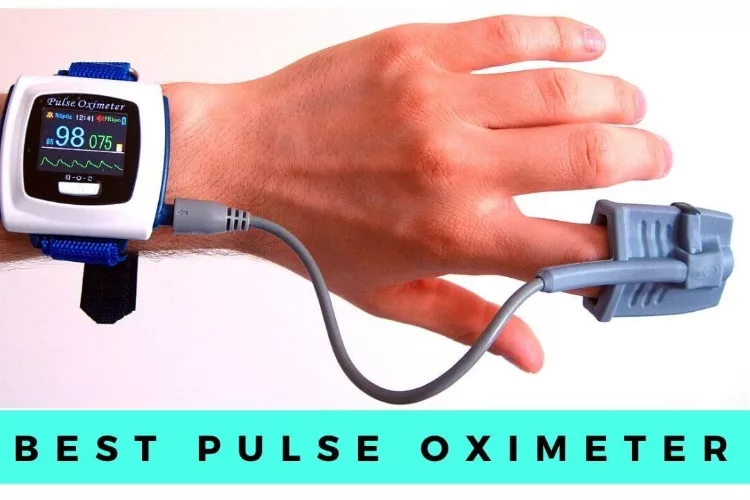
What's the best pulse oximeter you can buy right now, and is it actually worth the money? With dozens of options flooding the market in 2026, the answer isn't as obvious as it seems. After digging through the specs, clinical claims, and user feedback, one device consistently stands out — the Nonin TruO2 OTC Pulse Oximeter 3250. FDA-cleared, built on medical-grade technology, and accurate across all skin tones, it's the benchmark everyone else is measured against.
But the right pulse oximeter for you depends on what you actually need it for. Whether you're a marathoner tracking oxygen levels at altitude, a caregiver monitoring a family member with a respiratory condition, or someone who just wants peace of mind at home, there's a device on this list built exactly for that purpose. Pulse oximeters work by shining light through your fingertip to measure how much oxygen your red blood cells are carrying — a reading called SpO2 — and they do it in seconds without a blood draw. According to the U.S. Food and Drug Administration, these devices can be valuable tools for monitoring health at home, though understanding their limitations matters as much as knowing how to use them.
If you've been dealing with issues like poor circulation, you already know how important it is to monitor your body's oxygen delivery. A quality pulse oximeter gives you a real-time window into that process. In this guide, we've rounded up the 7 best options across every category — budget, medical-grade, wearable, and smart-connected — so you can make a confident, informed choice. Browse more tools in our medical instrument category for related health monitoring gear.
Contents





The Zacurate Pro Series 500DL punches well above its price class. It delivers your SpO2 reading and pulse rate in under 10 seconds, and the large LED display is genuinely easy to read — facing you directly so there's no awkward neck-craning to see the numbers. One feature that makes it stand out in its category: it's one of the only LED-based oximeters that can accurately read and display SpO2 all the way up to 100%, rather than capping at 99% like cheaper alternatives.
The silicone cover adds a grippy, protective layer that makes it feel more durable than its price suggests. It ships ready to use with batteries and a lanyard included. This is the go-to recommendation for hikers, skiers, and cyclists who need a quick spot-check at altitude without spending a lot. The display orientation means you can clip it on and read it without removing your gloves — a small detail that matters enormously in the field.
Battery life is solid for a device in this class, and the build quality is consistent. It's not a medical-grade device and shouldn't be used as one, but for healthy individuals monitoring during exercise or travel, it's more than adequate. The Royal Black colorway looks sharp, and the included carrying pouch keeps everything together.
Pros:
Cons:
The Innovo iP900AP is what you reach for when accuracy is non-negotiable. It consistently outperforms competing devices in clinical studies, and the reason is hardware: an upgraded LED and sensor that can pick up accurate SpO2 and pulse rate readings even at low blood perfusion — situations where budget devices simply fail. If your hands run cold, or if you're recovering from a procedure that affects circulation, this matters more than you might think.
The Plethysmograph waveform display and Perfusion Index give you more than just a number. The PI tells you the strength of the pulse signal at the measurement site — a reading above 0.2% means your data is reliable. Below that, you should reposition your finger. This kind of feedback eliminates guesswork and gives you confidence that the reading is real. The auditory alarm and pulse detection beeps are practical additions for caregivers who need to step away from a patient but still want an alert if readings drop.
Adjustable display brightness is a thoughtful touch, especially for nighttime monitoring. The hardware and software upgrades in the iP900AP model make the original iP900 feel outdated. This is a premium consumer device that approaches clinical territory in its measurement fidelity, without requiring a prescription or a clinic visit.
Pros:
Cons:
Every other device on this list is a fingertip clip you use for spot checks. The Wellue O2Ring is fundamentally different — you wear it. Designed as a soft, lightweight ring sensor worn on your finger, it tracks SpO2 and heart rate continuously throughout the night or during extended activity. This is the only option on this list that's truly built for overnight sleep monitoring, making it invaluable for people with suspected sleep apnea or those managing a condition that affects nighttime oxygen levels.
The Bluetooth connection feeds data to a free app and PC software that generate detailed reports — graphs, trends, and CSV exports that you can share with a doctor. The unusual data marking feature automatically flags moments when SpO2 drops below your preset threshold or your heart rate goes outside your set range, making it easy to identify exactly when and how often events occur. This is real clinical utility in a consumer wearable. If you already deal with issues like reduced circulation in your feet and ankles, tracking your overnight SpO2 can help you understand if vascular issues are affecting your breathing during sleep.
The ring is rechargeable, which eliminates battery replacement hassle entirely. It's designed to fit most fingers and is soft enough that most users forget they're wearing it. Battery life is strong enough for a full night of continuous monitoring. The PDF report generation means you walk into a doctor's appointment with objective data, not just a description of symptoms.
Pros:
Cons:
Nonin invented the fingertip pulse oximeter. That's not marketing copy — it's history. The company's engineers developed the original technology that every other device on this list is built on. The TruO2 OTC 3250 is their current FDA-cleared consumer model, and it carries that pedigree in every measurement it takes. This is the device hospitals trust, and now it's available over-the-counter without a prescription, using the same PureSAT technology deployed in clinical and military settings.
What genuinely sets the Nonin apart in 2026 is its accuracy across all skin tones. Independent studies have shown that many consumer pulse oximeters — and even some clinical devices — systematically over-read SpO2 in patients with darker skin tones, a serious patient safety issue. Nonin's PureSAT technology addresses this directly, delivering consistent accuracy regardless of skin tone or perfusion state. If you or someone you care for has darker skin, this is the device to choose. Apple Health compatibility makes it easy to log readings alongside your other health data.
The build quality reflects its medical heritage — this is a solid, precise instrument. It performs reliably even when fingers are cold or circulation is impaired, where consumer devices typically struggle. If accuracy is the single most important thing to you, the Nonin TruO2 is the definitive answer. No other device on this list carries the same level of clinical validation at the consumer level.
Pros:
Cons:
The ChoiceMMed C29 earns its place on this list primarily through its display. The large OLED screen is genuinely easier to read than the LED displays on budget models — colors are richer, contrast is sharper, and the 10 levels of adjustable brightness mean you can dial it in perfectly whether you're checking readings in a bright gym or a dim bedroom. The dual color display mode is a nice touch that makes reading orientation effortless.
One-button operation keeps the learning curve flat. Clip it on, press the button, and you have your SpO2, pulse rate, and pulse bar graph in 10 seconds. The bar graph is a practical indicator of pulse signal strength — if the bars are inconsistent, you need to reposition your finger before trusting the reading. This device suits all ages, from children to elderly users, because the large display removes any squinting or ambiguity. The included carrying case and lanyard make it portable and organized.
The battery-low indicator prevents you from being caught off-guard with a dead device when you need it. The build quality is sturdy without being heavy. It won't win a clinical accuracy competition against the Nonin, but for everyday household use and family monitoring, the ChoiceMMed C29 delivers clear readings in a package that's easy to use without any instruction.
Pros:
Cons:
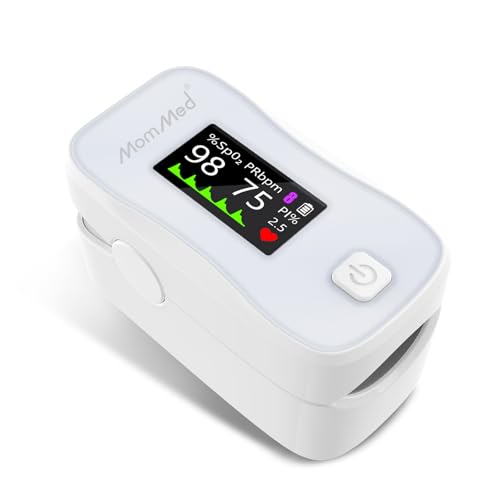
MOMMED's pulse oximeter is built around one goal: making it as easy as possible for anyone to check their oxygen levels quickly and confidently. The vivid color display shows SpO2, pulse rate, and pulse wave in real time, and the brightness adjustment means it works in any lighting condition. Results arrive in 6–8 seconds, which is among the fastest on this list, and the advanced sensor technology ensures those results are consistent across repeated measurements.
The Perfusion Index (PI) readout is a feature that separates this device from basic budget models. PI gives you a signal-quality confidence metric right on screen — you know immediately whether to trust the reading or reposition. This is the kind of feature that used to appear only on clinical or premium devices, and it's especially valuable for users who aren't experienced interpreting pulse oximeter feedback.
The one-button design is genuinely foolproof. It's appropriate for kids, seniors, fitness users, and aviation enthusiasts checking oxygen at altitude. The build is solid and compact, fitting easily in a gym bag, travel kit, or first aid box. For a household device that gets regular use across multiple family members, the MOMMED delivers reliable readings without any fuss or learning curve.
Pros:
Cons:
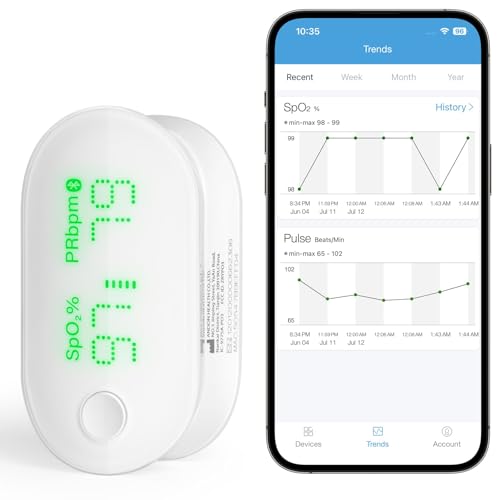
The iHealth AIR is the Bluetooth pulse oximeter that telemedicine programs across the U.S. actually use, and that endorsement carries real weight. When remote healthcare providers need to monitor patients at home, accuracy and app reliability are non-negotiable — and the iHealth AIR delivers on both. It pairs with the free iHealth MyVitals app to log readings for multiple users and track SpO2 and pulse rate trends by hour, day, week, and year. This is proper longitudinal tracking, not just a digital notepad.
The built-in rechargeable battery is one of the most practical design choices on this list. Three hours of charging gives you up to 300 uses — you're not hunting for AAA batteries when you need a reading. The included Micro-USB cable is universal. For a device that's used regularly over months and years, eliminating battery replacement is a genuine quality-of-life improvement, especially for elderly users or caregivers managing equipment for multiple patients.
The LED display shows SpO2, pulse rate, pulse strength, PI, and the plethysmograph waveform simultaneously. California-based customer service means support is accessible and responsive. If you already use a health app ecosystem and want your oxygen data integrated alongside other vitals, the iHealth AIR is the smartest investment on this list. It works on both iOS and Android, and the app's multi-user support makes it practical for the whole household.
Pros:
Cons:
Not all pulse oximeters are created equal. The $20 model at the pharmacy and the $120 medical-grade device both clip onto your finger and display a number — but what happens inside, and how reliable that number is, can vary dramatically. Here's what to look at before you buy.
This is the most important criterion, and the most misunderstood. In 2026, the FDA requires cleared medical devices to meet accuracy standards within ±2% SpO2 in the 70–100% range, but consumer devices sold as "wellness tools" aren't always held to the same standard. Look for FDA-cleared devices if you're using the oximeter for any health management purpose. The Nonin TruO2 is the gold standard here. If you or someone in your household has darker skin, accuracy across skin tones should be an explicit specification you verify — it's not a guarantee on most consumer models.
The Perfusion Index (PI) is your best tool for validating any individual reading. A reading taken at low PI may be inaccurate — always check this metric if your device displays it, and reposition your finger if the PI is below 0.2%.
Most pulse oximeters are designed for spot checks — you clip them on, get a reading, clip them off. That covers the majority of use cases: checking your SpO2 before and after exercise, during illness, or as part of a routine health check. But if you need overnight monitoring — for sleep apnea evaluation, COPD management, or continuous tracking — you need a wearable like the Wellue O2Ring. Standard fingertip devices aren't designed to be worn for extended periods, and the readings will degrade as you shift during sleep. Be honest about which category you fall into before you buy.
For a device you'll use in a hurry — when you're feeling unwell, when a child or elderly parent needs a check, or when you're at altitude and gloves are on — the display matters more than you might think. OLED screens like the ChoiceMMed C29 offer the best contrast and readability in varied lighting. LED displays are perfectly adequate for most conditions but can wash out in bright sunlight. Adjustable brightness is a meaningful feature for nighttime use. One-button operation is a genuine benefit over multi-button interfaces, especially for older users. If you also deal with hand stiffness or conditions like arthritis — and you might want to check our guide to the best thumb braces for arthritis for related support — prioritize a large display and easy clip-on mechanism.
If you're managing a chronic condition or working with a healthcare provider, data connectivity transforms a pulse oximeter from a spot-check tool into a proper health monitoring device. Bluetooth models like the iHealth AIR and Wellue O2Ring sync readings to apps that track trends over time, generate reports you can share with your doctor, and alert you when readings fall outside set parameters. If you only need occasional checks and don't care about trend data, connectivity adds cost without much practical benefit. Match the feature set to how you'll actually use the device.
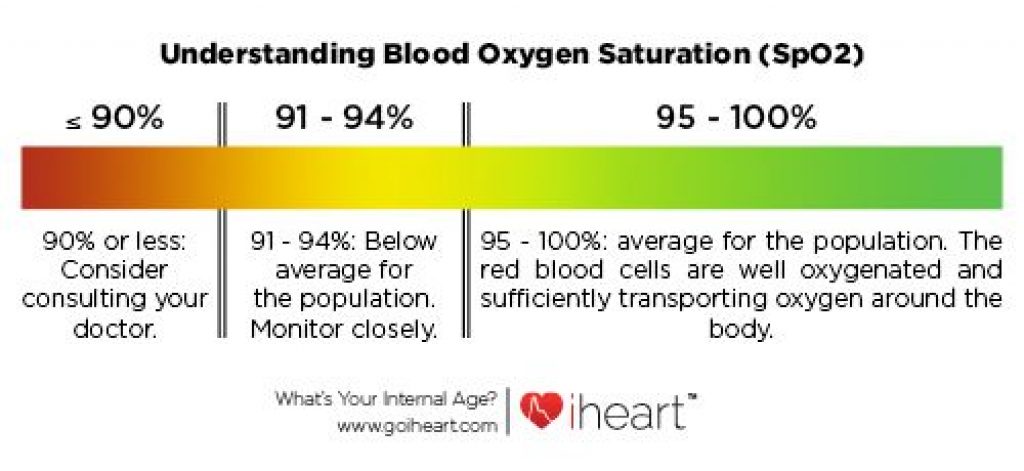
A normal SpO2 reading for a healthy adult is between 95% and 100%. Readings between 91% and 94% indicate mild hypoxemia and warrant medical attention. Anything below 90% is considered low oxygen saturation and requires immediate evaluation by a healthcare provider. Athletes at altitude may see readings in the 92–94% range temporarily during exertion, which is generally not dangerous, but should return to normal at rest.
Accuracy depends heavily on the device. FDA-cleared medical-grade devices like the Nonin TruO2 achieve accuracy within ±2% SpO2, which is clinically meaningful. Consumer wellness devices without FDA clearance may have wider error margins. Accuracy is also affected by poor circulation, cold fingers, nail polish, and darker skin tones. For the most reliable reading, make sure your hand is warm, your finger is still, and the Perfusion Index (if displayed) is above 0.2%.
Dark nail polish — particularly black, blue, green, and dark red — can interfere with the light sensor and produce inaccurate readings. Clear, light pink, and light beige polish generally don't cause significant interference. The most reliable solution is to remove nail polish from one finger (usually the index or middle finger) and use that for measurements. Acrylic nails can also reduce accuracy and should be avoided as a measurement site.
Most modern pulse oximeters produce a stable reading within 6–15 seconds. The MOMMED Pulse Oximeter delivers results in 6–8 seconds, while most other devices on this list take 10 seconds or less. If the reading takes significantly longer or fluctuates without stabilizing, it usually means perfusion at the measurement site is low — try warming your hand, using a different finger, or sitting still for a moment before taking another measurement.
This is a well-documented limitation of many pulse oximeters. Independent research published in the New England Journal of Medicine found that some devices systematically over-read SpO2 in patients with darker skin tones by as much as 3–4%, potentially masking low oxygen levels. In 2026, the FDA has pushed manufacturers to test and certify accuracy across a range of skin tones. The Nonin TruO2 specifically addresses this with its PureSAT technology and is the safest choice for users with medium to dark skin tones.
Contact a doctor if your SpO2 reads consistently below 95% at rest when you are not at altitude and are not exercising. Seek emergency medical attention if readings fall below 90%, especially if accompanied by shortness of breath, confusion, rapid heart rate, or bluish discoloration of the lips or fingertips (cyanosis). A single low reading caused by poor sensor placement is not a cause for alarm — take two or three readings after repositioning your finger before acting on the result.
The best pulse oximeter in 2026 is the one that matches your specific needs — whether that's the clinical-grade accuracy of the Nonin TruO2, the continuous overnight monitoring of the Wellue O2Ring, or the straightforward everyday reliability of the Zacurate or MOMMED. Take a look at the options above, pick the one that fits your use case and budget, and start monitoring your SpO2 with confidence — your health is worth the investment.


About Mehnaz
Mehnaz is the founder and editor of RipPain, a health resource site dedicated to helping readers navigate pain management, recovery, and medical device research. Her work on the site is driven by personal experience caring for seriously ill family members, which led her to study evidence-based guidance from physicians, pain specialists, and published medical research. She curates and summarizes expert medical insights to make credible health information accessible to everyday readers.
You can get FREE Gifts. Or latest Free phones here.
Disable Ad block to reveal all the info. Once done, hit a button below
 Mehnaz