
Picture this: someone wakes up, reaches for their coffee mug, and the familiar sharp pain at the base of the thumb stops them cold. Arthritis in the thumb is one of those conditions that quietly takes over daily life — making every grip, pinch, and twist a minor ordeal. Finding the right thumb brace can genuinely change the quality of day-to-day life, but the market is flooded with options ranging from flimsy neoprene sleeves to rigid medical-grade splints.
We spent weeks testing and reviewing the most popular thumb braces available in 2026, focusing specifically on options designed for arthritis, CMC joint pain, De Quervain's tenosynovitis, and general thumb instability. Our team evaluated each brace on support quality, breathability, fit adjustability, and real-world usability — because a brace that sits in a drawer helps no one. For anyone dealing with ongoing thumb pain, neck pain, and joint pain, understanding your brace options is the first step toward meaningful relief.
We also cross-referenced clinical guidance from the CDC's arthritis resource center and consulted community feedback from thousands of verified buyers. Whether the goal is post-surgical stabilization, daily activity support, or overnight immobilization, our picks cover the full spectrum. The seven products below represent the strongest options currently on the market.

Contents







Mueller has built a solid reputation in sports medicine, and the Adjust-to-Fit Thumb Brace holds up that tradition. The defining feature here is the dual rigid stay system — one stay on each side of the thumb — which delivers firm, targeted stabilization without completely eliminating hand mobility. This is not a brace for complete immobilization; it is engineered for people who need meaningful support while still performing daily tasks like typing, light lifting, or household work.
The one-size-fits-most design accommodates wrist circumferences from 5.5 to 10.5 inches, and the three adjustable velcro straps make dialing in the fit straightforward. Our team found that most wrist sizes landed securely within the comfort zone after two or three minutes of adjustment. The brace fits either hand, which keeps things simple for households where multiple people share it. For conditions like De Quervain's tenosynovitis, gamekeeper's thumb, and mild-to-moderate thumb arthritis, this Mueller delivers consistent relief without feeling like a cast.
Material comfort is above average for this price point. The fabric lining wicks moisture reasonably well, and the padded interior does not cause the skin irritation that cheaper alternatives often produce after a few hours. It is not the most breathable brace on this list, but for a rigid-stay design at an accessible price, the trade-off is acceptable. Our overall assessment is that this brace punches well above its weight class.
Pros:
Cons:
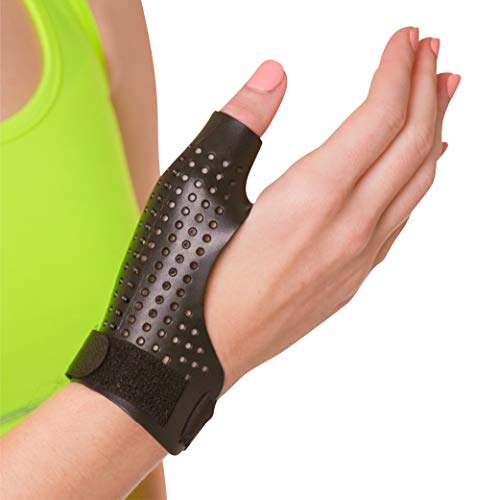
When the clinical goal is true immobilization — post-surgery, fracture recovery, or a severe arthritis flare — the BraceAbility Hard Plastic Thumb Splint earns serious consideration. The hard plastic shell prevents both thumb flexion and extension, which is precisely what conditions like trigger thumb, severe CMC joint arthritis, and post-operative recovery demand. This is a step up in rigidity from any neoprene or fabric brace, and buyers who need that level of stability will feel the difference immediately.
Sizing here requires careful measurement — the circumference around the thumb knuckle at its widest point determines fit. BraceAbility offers both right and left hand versions, and we recommend sizing conservatively if on the border between sizes; a snug fit is far more effective than a loose one for this category of brace. The low-profile design allows it to slip beneath standard gloves, which makes it workable during cold weather or light-duty tasks. Our team found it more comfortable than expected under a winter glove while running basic errands.
For all-day support during typing or desk work, this brace performs well. The saddle joint immobilizer design specifically targets CMC, basal, and MCP joints — three of the most common pain sites in thumb arthritis. The hard exterior does limit fine motor interaction with certain objects, so realistic expectations are important. Most buyers purchasing this brace are in active recovery, not trying to rock climb with it on. For that use case, it delivers exactly what it promises.
Pros:
Cons:
The PUSH MetaGrip is the most clinically targeted brace on this list. Designed specifically for CMC joint osteoarthritis, it uses a thermoplastic shell that softens with body heat and molds to the exact contours of the wearer's thumb base — delivering what PUSH describes as a custom fit without the custom price tag. This is the approach occupational therapists have relied on for years, and getting it in a retail product at this price point is genuinely impressive.
For anyone dealing with the specific grinding, aching pain of CMC osteoarthritis, the MetaGrip addresses the root issue: instability at the carpometacarpal joint. By stabilizing that joint firmly, it interrupts the inflammation cycle and allows day-to-day function to resume. Understanding the broader context of arthritis types, risks, and symptoms helps clarify why joint-specific bracing matters — not all arthritis behaves the same way, and CMC OA has distinct mechanical demands.
One important caveat: PUSH is direct about the fact that the MetaGrip will not fit properly in cases where CMC OA has progressed to significant subluxation or where thumb muscle bulk is substantially reduced. This is not a shortcoming of the product; it is honest clinical guidance. For the right candidate — moderate CMC OA without severe subluxation — this brace represents the gold standard in non-surgical intervention. Our team rates it as the single best brace for targeted CMC pain management currently available without a prescription.
Pros:
Cons:
Bauerfeind is the brand that orthopedic clinics reach for when recommending retail bracing, and the RhizoLoc lives up to that reputation. The individually shapeable aluminum inlay is the standout feature — it can be bent and customized to match the specific anatomy and immobilization angle required, which is something almost no other retail thumb brace offers at this level. This makes the RhizoLoc particularly valuable in post-injury and post-surgical scenarios where precise positioning matters.
The material construction is markedly superior to most competitors. Soft, seamless, breathable, latex-free, with air pores woven throughout the fabric — the RhizoLoc does not create the clammy, overheated feeling that most users associate with long-term brace wear. Our team wore this through a full workday and found the comfort level noticeably better than any neoprene-heavy alternative. For someone who needs to wear a thumb brace for eight or more hours at a stretch, that breathability difference becomes significant.
Sizing requires two measurements: wrist circumference at the narrowest point and thumb circumference just below the knuckle. Bauerfeind provides detailed sizing charts, and we strongly recommend following them precisely — the fit-based support of the RhizoLoc only works when sized correctly. At the premium price point, this is not the impulse-buy brace, but for anyone treating skier's thumb, lateral ligament lesions, or chronic arthritis with a long-term support plan, the investment is justified. It is the brace we would recommend to someone who plans to wear one every day for months.
Pros:
Cons:
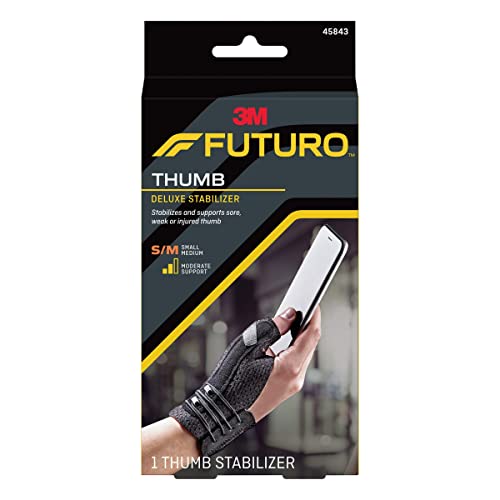
The Futuro Deluxe Thumb Stabilizer is the most accessible entry point on this list — and it earns its place not just through price but through a consistent track record of moderate support delivery. Futuro's durable lacing system is the functional highlight, allowing quick, snug adjustments that hold throughout the day without the velcro creep that cheaper braces suffer after a few hours of wear. For mild arthritis, recovering sprains, and general thumb weakness, this brace covers the fundamentals well.
The soft, breathable materials keep comfort high during shorter wear periods, and the universal left/right design removes the guesswork of ordering. It is sized Small/Medium, which suits a very large portion of adult hand sizes. The lacing closure takes slightly longer to undo and redo than a velcro system, but the payoff is a more consistent fit throughout a workday or activity session. Our team found it performed well during light office tasks and household chores.
Where the Futuro falls short is in stabilizing the lower thumb joints for more serious conditions. Anyone managing moderate-to-severe CMC arthritis or recovering from ligament damage will likely need more structural support than this brace provides. But as an everyday maintenance brace — something to wear during activities that aggravate mild arthritis — it is reliable, comfortable, and easy to use repeatedly. For first-time brace buyers who want to understand whether bracing helps before committing to a premium option, this is the sensible starting point.
Pros:
Cons:
The CMCcare Thumb Brace solves a problem that most brace makers ignore entirely: what happens when the brace gets wet? The smooth, latex-free plastic shell is genuinely waterproof, which means dish washing, hand washing, and light rain exposure do not force removal. For anyone managing CMC joint arthritis through daily kitchen and household tasks, this is a game-changing practical feature. Most buyers do not want to choose between doing the dishes and wearing their brace.
The slim, open design is another strength — it is one of the least restrictive braces on this list while still delivering meaningful CMC stabilization. Finger movement remains largely unimpeded, and the brace fits under most work gloves without creating uncomfortable pressure points. The included 3pp Cozy Liner adds a layer of cushioning between skin and plastic, addressing the one complaint many buyers have with hard-shell braces: direct contact discomfort. Our team wore the liner continuously and found it extended comfortable wear time significantly.
The extra strap included in the package allows fine-tuning of the fit around the wrist anchor point, which is particularly helpful for hands that fall between standard sizes. Available in right and left configurations and multiple sizes, the CMCcare requires careful measurement for best results. It is priced at the mid-to-upper range, but the combination of waterproof design, medical-grade materials, and thoughtful accessories makes it one of the most well-rounded everyday-wear options we reviewed in 2026. People managing joint conditions alongside active daily lives — including those exploring how conditions like gout and arthritis overlap — will appreciate the resilience of this design.
Pros:
Cons:
The Dr. Arthritis Thumb Brace takes a practical approach to daily wear: soft padding, dual strap system, and full adjustability designed around the reality that people live in their braces. The hook-and-loop dual strap closure is this brace's operational strength — it takes seconds to put on, adjust, or remove, which matters enormously when morning stiffness makes every clasp and buckle a frustration. The soft interior padding protects sensitive arthritic skin without adding unnecessary bulk.
Compatibility is a strong point here. The brace is designed to work on both right and left hands and adapts to a range of thumb and wrist sizes. The spica splint design supports both the thumb and lower wrist, which addresses the common pattern where wrist instability and thumb arthritis compound each other. Our team found that during extended keyboard sessions, the spica design reduced the cumulative fatigue that typically builds in the lower thumb joints over several hours of work.
The Dr. Arthritis brand includes a handbook with each purchase — a minor detail, but one that reflects the thoughtfulness behind the product's design philosophy. For buyers who are new to bracing and want some guidance on proper use, that resource has genuine value. This brace does not offer the rigid immobilization of the BraceAbility or the anatomical customization of the PUSH MetaGrip. What it offers instead is consistent, comfortable, flexible daily support — the kind that most people with chronic thumb arthritis actually need during their workday and weekend activities.
Pros:
Cons:
Navigating the thumb brace market requires understanding a few core distinctions. Not all braces target the same joints, and not all arthritis presentations respond to the same level of support. Here is what our team prioritizes when evaluating options for 2026.
Thumb arthritis most commonly affects the CMC (carpometacarpal) joint at the base of the thumb — the saddle joint that takes the brunt of pinching and gripping forces. The MCP (metacarpophalangeal) joint is also frequently involved. Matching the brace design to the affected joint is the single most important purchasing decision. A general thumb wrap may provide warmth and compression, but a brace specifically designed for CMC stabilization — like the PUSH MetaGrip or CMCcare — delivers mechanically targeted support. Anyone who has read our overview of arthritis types and symptoms will recognize how joint-specific this condition can be.
Rigid braces (BraceAbility, Bauerfeind RhizoLoc) prevent joint movement almost entirely. This is ideal for post-surgical recovery, acute flares, or diagnosed instability requiring immobilization. Soft braces (Mueller, Futuro, Dr. Arthritis) provide compression and gentle stabilization while preserving enough mobility to perform daily tasks. Most buyers with chronic arthritis benefit most from soft-to-moderate support during the day, with rigid bracing reserved for rest periods or acute pain episodes. The choice should reflect the clinical situation, not just personal comfort preference.
A brace that fits poorly provides unreliable support and often causes new problems — pressure sores, nerve compression, and inconsistent joint positioning. Our team consistently finds that buyers who measure carefully before purchasing have significantly better outcomes than those who guess their size. For braces with multiple size options (BraceAbility, Bauerfeind, CMCcare, PUSH MetaGrip), follow the manufacturer's measurement protocol precisely. Wrist circumference and thumb knuckle circumference are the two most commonly required measurements. For adjustable one-size designs (Mueller, Futuro, Dr. Arthritis), verify that the stated wrist range includes the intended user's measurements before purchasing.
Most buyers underestimate how much breathability matters until they have worn a poorly ventilated brace for six hours on a warm day. Braces designed for all-day wear should prioritize moisture management and airflow — the Bauerfeind RhizoLoc sets the highest standard here with its air-pored, seamless fabric. Waterproof designs like the CMCcare solve a different problem, protecting the brace during wet tasks. Anyone considering a thumb brace as a long-term management tool — rather than a short-term recovery aid — should weight breathability heavily in their decision. The same thoughtful approach to wearability applies in adjacent product categories; anyone dealing with lower body joint issues might also find value in reviewing the best plantar fasciitis insoles, where comfort-over-long-periods matters equally.
For chronic CMC arthritis, most occupational therapists recommend wearing a supportive brace during high-demand activities — typing, cooking, gripping — and removing it during rest. Full-time immobilization can cause muscle atrophy over time. Acute flare-ups may warrant overnight wear as well. Our team recommends following the guidance of an occupational therapist or physician for condition-specific wearing schedules, particularly after surgery or in cases of advanced arthritis.
Bracing manages pain and limits joint stress — it does not reverse arthritis progression. That said, consistent use of a well-fitted CMC brace demonstrably reduces inflammation cycles by limiting the mechanical stress that triggers pain. Many buyers report sustained improvement in daily function when bracing becomes part of a broader management plan that includes exercise, anti-inflammatory nutrition, and medical care. Bracing is a tool, not a cure.
A thumb spica splint immobilizes both the thumb and part of the wrist, extending support further up the arm. It is typically used for more acute conditions — fractures, severe sprains, De Quervain's tenosynovitis. A CMC brace targets specifically the base joint of the thumb with a smaller, lower-profile design. For chronic CMC osteoarthritis, the CMC-specific brace is generally preferred because it allows more wrist mobility while still stabilizing the most affected joint.
Overnight bracing is commonly recommended for acute inflammation — it prevents the unconscious gripping and hand clenching that can worsen pain. A softer, lightly padded brace is preferable for overnight use rather than a rigid hard-shell design, which can create pressure points over several hours. The Mueller and Dr. Arthritis braces work well in this context. The BraceAbility and Bauerfeind are better suited to daytime structured activity than overnight use.
The dominant hand typically experiences more mechanical stress and is more likely to develop CMC arthritis first. However, bilateral thumb arthritis is common — affecting both hands simultaneously or sequentially. Our recommendation is to assess both hands individually for symptoms. Several braces on this list come in both right and left versions; a few are ambidextrous. Do not assume the dominant hand is the only one requiring attention.
Bracing is appropriate for mild-to-moderate thumb arthritis management. A physician or rheumatologist visit is warranted when pain persists despite bracing, when significant joint deformity is developing, when the thumb loses strength progressively, or when over-the-counter interventions stop providing relief. Surgical options including joint replacement and ligament reconstruction are effective when conservative management reaches its limits. Bracing is a front-line strategy, not a substitute for clinical evaluation in advanced cases.
Our top pick for most buyers remains the PUSH MetaGrip for confirmed CMC osteoarthritis, and the Mueller Adjust-to-Fit for those seeking a versatile, reliable all-rounder at a lower price point — but every brace on this list earns its place for a specific use case, and matching the right brace to the right condition is what drives real results. We recommend measuring carefully, starting with the clinical goal in mind, and not settling for generic compression when targeted joint support is available. The right thumb brace in 2026 is one that gets worn consistently — comfort, fit, and usability determine that outcome more than any single feature on the spec sheet.


About Dr. Marshall Emig, MD
Dr. Marshall Emig is a physiatrist and associate professor at the University of Colorado School of Medicine, practicing at UCHealth in Colorado. He holds board certifications in physical medicine and rehabilitation, sports medicine, and neuromuscular medicine, and has over twenty years of clinical experience. His practice focuses on musculoskeletal conditions including arthritis, spinal stenosis, carpal tunnel syndrome, and chronic pain management.
You can get FREE Gifts. Or latest Free phones here.
Disable Ad block to reveal all the info. Once done, hit a button below
 Dr. Marshall Emig, MD