
If you want one book that cuts straight to the root of foot pain with practical exercises and modern science, Simple Steps to Foot Pain Relief by Katy Bowman is the most immediately useful title on this list — it addresses the real causes of common foot problems rather than just the symptoms. That said, every book here serves a different reader, and the right choice depends entirely on what you're dealing with right now.
Foot pain affects far more people than most realize. According to the Centers for Disease Control and Prevention, chronic pain is one of the most common reasons adults seek medical care, and the feet are a frequent starting point. Yet most people ignore their feet completely until something hurts. A well-chosen book can change that pattern. It gives you the knowledge to understand what's actually happening in your feet, catch problems early, and build habits that protect you for years. If you're already dealing with day-to-day discomfort, check out these practical tips on how to reduce foot pain as a companion to whichever book you choose.
This guide covers seven of the best books on foot health in 2026 — from a beloved children's classic to a gripping running memoir to detailed clinical rehab manuals. For each book, you'll find a full breakdown of what it covers, who it works best for, and what readers tend to love or struggle with. Browse the foot care section for even more resources to keep your feet in top shape all year long.
Contents






Don't let the Dr. Seuss label fool you — The Foot Book is a classic for a reason. Written in Seuss's signature rhyming style, this little gem introduces the concept of opposites through feet: left foot, right foot, slow feet, fast feet, big feet, small feet. It's a children's book, yes, but it serves as a genuinely charming entry point for very young readers who are just beginning to understand their bodies. This particular listing is a Grolier Book Club Edition, meaning it was distributed through school book clubs and carries a bit of nostalgic collector appeal for adults who grew up with it.
As a foot health resource in the clinical sense, this book won't give you exercises or anatomical diagrams. But it fills a specific gap: introducing children to the idea that feet are special, that they come in different shapes and sizes, and that they deserve attention. Parents and educators love it precisely because it's so accessible — a toddler can sit through it, and a first-grader can read it independently. If you're building a home library around health and wellness topics to share with your kids, this is a warm and playful starting point.
The Grolier edition is a nice find if you're a collector or just want a sturdy hardcover that can survive multiple read-throughs. The book is short — as most Beginner Books are — so don't expect anything beyond the basics. But for what it sets out to do, it does it beautifully, and it plants the seed of body awareness in children at exactly the right age.
Pros:
Cons:
If you've been curious about going minimal with your footwear — switching to thin-soled shoes, zero-drop sneakers, or even actual barefoot walking — then Whole Body Barefoot by biomechanist Katy Bowman is the book you need before you make that leap. Jumping straight into minimal footwear without preparation is a fast track to injury. Bowman explains exactly why: your feet and lower legs have likely spent years in cushioned, elevated, motion-controlling shoes, which means the muscles and connective tissues that should be doing the work have partially atrophied (weakened from lack of use). This book walks you through a gradual, sensible transition plan that respects your body's current state.
What makes Bowman's approach especially valuable is that she looks at the feet as part of a larger whole-body system. She ties foot health to ankle mobility, hip alignment, and even posture — so you're not just getting shoe advice, you're getting a whole-body education. The writing is plain and readable, with illustrations that help you visualize the mechanics without needing a biology degree. Bowman is clear that transitioning well takes months, not days, which some readers find refreshingly honest and others find frustratingly slow. Either way, if you're serious about making the shift without hurting yourself, this is the most responsible starting guide you'll find.
The book is relatively short and concise — you can read it in a couple of sittings. Some readers wish it went deeper into specific daily exercises, but the transition protocol it outlines is clear and well-structured. It pairs well with Bowman's other title on this list if you want more actionable foot-specific exercises alongside the broader transition strategy.
Pros:
Cons:
This is Katy Bowman's most practical and widely recommended foot health book, and it's easy to see why. Simple Steps to Foot Pain Relief takes the latest research in biomechanics and translates it into daily exercises and lifestyle adjustments that the average person can actually follow. Whether you're dealing with plantar fasciitis (inflammation of the thick band of tissue along the bottom of your foot), bunions (a bony bump at the base of the big toe), hammertoes, heel pain, or just persistent aching at the end of the day, this book addresses the root causes rather than masking the symptoms with temporary fixes.
Bowman's central argument is that most foot pain isn't a disease — it's the result of decades spent in ill-fitting, overly cushioned shoes that prevent your feet from moving naturally. Her solution is a series of progressive exercises — toe spreads, calf stretches, foot rolling, and more — designed to restore strength and flexibility to muscles that have been effectively cast in place by modern footwear. The exercises are clearly illustrated, and each one comes with instructions on frequency and progression. You can start even if you're completely out of shape or dealing with significant pain right now. If you're also considering supportive gear to speed up your recovery, our guide on best plantar fasciitis insoles covers products that work well alongside the exercises in this book.
The writing is engaging and never condescending. Bowman uses relatable, everyday analogies to explain biomechanical concepts, and the book builds your understanding gradually so nothing feels overwhelming. The "new science" framing is accurate — she does reference current research throughout — but the exercises themselves are low-tech and require zero equipment. This is a book you'll come back to repeatedly as you progress through the program, not one you'll read once and shelve.
Pros:
Cons:
This is the go-to reference for serious athletes, endurance runners, ultra-marathoners, thru-hikers, and anyone who puts serious mileage on their feet. Fixing Your Feet by John Vonhof has been through multiple editions because it genuinely works as a field manual. The book covers everything from blister prevention and taping techniques to toenail problems, skin care, footwear selection, insoles, and post-event recovery. If you're preparing for a marathon, a multi-day hike, or any extended athletic event, this is the book you want on your shelf before you pack your gear.
What sets this apart from every other book on this list is its sheer comprehensiveness. Vonhof isn't a biomechanist — he's a practitioner who has spent decades working with athletes in real conditions. The book reads like a thorough, well-organized encyclopedia of athletic foot care. Chapters cover specific conditions like black toenails, athlete's foot, interdigital neuromas (painful nerve compression between the toes), metatarsalgia (pain in the ball of the foot), and more — each with practical treatment protocols you can apply in the field. You'll also find detailed guidance on sock and shoe selection, lacing techniques, and how to treat hot spots before they turn into full blisters mid-race.
The tone is matter-of-fact and efficient. This isn't a motivational read; it's a reference manual. Most athletes use it by jumping to the relevant section when a specific problem arises, rather than reading straight through. The latest edition has been updated to reflect current products and treatments, making it as relevant in 2026 as it has ever been. If you only plan to do moderate exercise, this book is probably more than you need — but for serious athletes, it's irreplaceable.
Pros:
Cons:
If you do better with a clear, week-by-week program rather than an open-ended exercise list, The Foot Fix by Yamuna Zake might be exactly what you've been looking for. Zake is a movement therapist known for her Yamuna Body Rolling technique, and this book applies that approach directly to foot care. The 4-week program is designed to progressively build strength, mobility, and body awareness in your feet and lower legs, with each week adding new exercises and challenges on top of the ones before it. You always know where you are and what comes next.
The exercises blend movement therapy, yoga-inspired stretching, and hands-on self-massage techniques. Some of them involve a small rubber ball for self-myofascial release (a type of self-massage that loosens tight connective tissue and improves circulation). The program is well-structured and the photography throughout the book is excellent — each exercise is clearly demonstrated so you can see exactly how to position your body. Zake also explains the reasoning behind each movement, which helps you understand what you're working toward rather than just going through the motions blindly.
One thing worth knowing upfront: this book works best when you commit to the full four weeks as written. Dipping in and out randomly won't deliver the same cumulative results as following the protocol as intended. That structured format is a genuine strength for disciplined readers but may feel rigid if you prefer flexibility in your routines. Overall it's a well-produced, thoughtful program that offers real results for anyone ready to put in consistent daily effort.
Pros:
Cons:
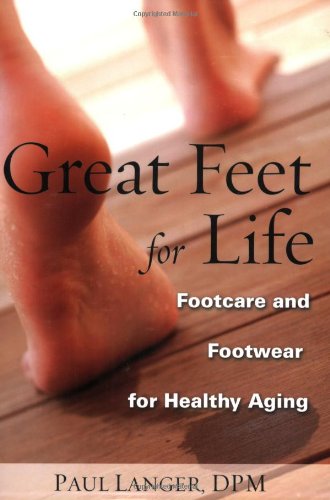
This is the book written specifically for the aging foot — and it fills a gap that most other foot health titles ignore entirely. Great Feet for Life by podiatrist Paul Langer addresses the very real changes that happen to your feet as you get older: skin thinning, fat pad loss, reduced circulation, increased stiffness, and greater risk of conditions like bunions, hammertoes, and neuropathy (nerve damage that causes tingling or numbness in the feet). Rather than treating these as inevitable miseries to endure, Langer gives you concrete strategies to slow their progression and maintain both function and comfort well into your later years.
The footwear section alone makes this book worth owning if you're over 50. Langer breaks down exactly what to look for in a shoe as your foot shape and structural needs change over time — something that's rarely covered in meaningful depth anywhere else. He also addresses orthotics (custom or over-the-counter shoe inserts designed to correct alignment or cushion specific areas), diabetic foot care, and how to recognize when a problem warrants professional attention versus home treatment. The writing is approachable and respectful; Langer treats readers as capable adults who can understand their own bodies when given clear, honest information.
This book pairs beautifully with our practical guide on foot care tips for seniors, which covers many of the same day-to-day habits in a more concise format. Great Feet for Life goes deeper into the clinical side, giving you the background to have more productive conversations with your podiatrist and make smarter decisions about footwear and daily self-care.
Pros:
Cons:
Born to Run is in a category of its own on this list. It's not a clinical manual, an exercise program, or a step-by-step guide to fixing your feet. Born to Run is a story — a gripping, beautifully written narrative by journalist Christopher McDougall about the Tarahumara Indians of Mexico's remote Copper Canyon. The Tarahumara are legendary ultrarunners who cover distances that would break most trained athletes, running in sandals made from tire rubber or bare feet, apparently free of the chronic injuries that plague modern runners. McDougall goes to find them — and what he discovers upends everything he thought he knew about running, footwear, and the human body.
McDougall weaves together his own journey to overcome chronic running injuries, the science of human biomechanics and evolutionary biology, the history of running shoe marketing, and the colorful personalities of the eccentric ultra-running world into one of the most compelling reads in sports literature. The book sparked the global barefoot running movement and launched an intense debate about whether modern running shoes do more harm than good. Whether or not you end up agreeing with its conclusions, reading Born to Run will fundamentally shift how you think about feet, footwear, and what the human body is actually capable of when you stop fighting against its design.
This isn't a book you read for a five-step program. You read it for perspective — and for the surge of motivation it delivers to get moving. The Tarahumara's story, set against the dramatic, isolated terrain of Copper Canyon, is as gripping as any adventure fiction. It's the kind of book running friends press into your hands and say "you have to read this." Just keep expectations clear: Born to Run is a narrative first and a how-to guide never. If you need protocols and exercises, use the other books on this list. But if you want to remember why feet matter in the first place, start here.
Pros:
Cons:
The most important step in choosing a foot health book is getting honest about what you actually need from it right now. Are you in pain and looking for relief exercises you can start today? Then Simple Steps to Foot Pain Relief or The Foot Fix will serve you directly. Are you a serious athlete who needs field-ready information about blisters and injury management during events? Fixing Your Feet is built for that. Are you older and worried about what aging is doing to your feet? Great Feet for Life was written for exactly your situation. Reading the wrong book for your circumstances is frustrating — not because the book is bad, but because it's simply not the right match. Thirty seconds of honest self-assessment before you choose can save you real time and money.
The books on this list fall into roughly two camps. Most — Whole Body Barefoot, Simple Steps, Fixing Your Feet, The Foot Fix, Great Feet for Life — are practical clinical guides with exercises, protocols, and actionable information. Born to Run is a narrative. The Foot Book is a children's picture book. Neither format is inherently better than the other, but knowing which one you'll actually absorb matters enormously. If you tend to skim clinical content and only finish books that feel like stories, a narrative might teach you more than a manual you'll set down after chapter two. Be honest with yourself about how you read.
Katy Bowman, author of Whole Body Barefoot and Simple Steps to Foot Pain Relief, is a credentialed biomechanist whose work is grounded in movement science. Paul Langer of Great Feet for Life is a practicing podiatrist — a doctor who specializes in foot and ankle medicine. John Vonhof brings decades of endurance sports and field experience to Fixing Your Feet. Yamuna Zake is a movement therapist whose technique has roots in yoga and bodywork. Christopher McDougall is a journalist and storyteller. Each perspective has genuine value, but understanding where each author is coming from helps you calibrate how much weight to give their specific recommendations — and when to pair their advice with guidance from your own healthcare provider.
The best foot health book is the one that actually leads to a change in your behavior. It's worth thinking ahead about whether you'll act on what a book recommends. If Whole Body Barefoot suggests transitioning to minimalist footwear over several months, are you genuinely prepared to buy new shoes and follow a slow protocol? If Great Feet for Life recommends custom orthotics, do you have access to a podiatrist who can make them? Having a clear, realistic path from reading to action is what separates a book that changes your health from one that just sits on the shelf. The reading is just the beginning — what you do with it is what counts in 2026.
Simple Steps to Foot Pain Relief by Katy Bowman is the most targeted and practical choice for plantar fasciitis specifically. It directly addresses the biomechanical root causes of this condition and walks you through progressive exercises to release tension in the plantar fascia (the thick band of connective tissue running along the bottom of your foot). The Foot Fix is also solid if you prefer a structured week-by-week format. Both books are best used alongside professional care — see a podiatrist or physical therapist if your pain is severe or has been going on for more than a few weeks.
Born to Run made a compelling case for barefoot running, but the picture has gotten considerably more nuanced since the book was published. Some runners genuinely thrive with minimal footwear; others — particularly those with structural foot issues like high arches or fallen arches — do not. Research since the barefoot running boom of the early 2010s suggests that running form matters more than footwear choice, and that any transition to minimal shoes must be gradual to avoid injury. Read Born to Run for the inspiration and the story. If you actually want to transition to minimal footwear safely, pair it with Whole Body Barefoot for the practical guidance.
Great Feet for Life by Paul Langer includes dedicated, thoughtful coverage of diabetic foot care and is the most appropriate choice for people managing diabetes on this list. Diabetes can affect circulation and nerve function in the feet, which means foot injuries can escalate faster and require more careful management than they would in a non-diabetic person. While any of these books can offer general foot health insights, someone with diabetes should treat books as a supplement to — never a replacement for — regular professional care from a podiatrist who understands diabetic foot complications.
Yes — Simple Steps to Foot Pain Relief and Whole Body Barefoot both provide complete exercise programs that require absolutely no equipment. Your feet, some floor space, and a little time are all you need to get started. The Foot Fix requires a small rubber ball for some of its myofascial release techniques, though these are widely available for just a few dollars. Fixing Your Feet occasionally recommends taping supplies and lubricants for athletes competing in events, but all of its educational content is accessible without buying a single extra item. Born to Run and The Foot Book contain no exercises at all.
Great Feet for Life by Paul Langer is the clear answer. It was written specifically for aging feet and addresses the physical changes — thinner skin, reduced fat padding, stiffer joints, and decreased circulation — that make foot care different for older adults than for younger people. Langer covers footwear selection for changing foot shapes, how to evaluate orthotics, diabetic foot considerations, and practical strategies for maintaining comfort and mobility into your seventies, eighties, and beyond. If you're a senior looking for additional day-to-day habits alongside the book, our dedicated guide on foot care for older adults covers the daily routine side in depth.
The Foot Book by Dr. Seuss is the obvious choice for young children — it's a picture book designed for toddlers and early readers, and its rhyming format makes it genuinely fun to read aloud. For older children and teenagers who are active in sports, Fixing Your Feet has useful sections on blister prevention, basic foot hygiene, and sport-specific foot care that translate well to young athletes. Parents interested in foot health for their whole family might start with Simple Steps to Foot Pain Relief for themselves, then naturally share age-appropriate concepts with their children as they grow.
Whether you're a parent, a senior, an endurance athlete, or simply someone who wants to stop ignoring their feet, there's a book on this list that was written with your situation in mind — pick the one that matches where you are right now, commit to actually working through it, and your feet will carry you better for years to come. Your feet support every step you take; in 2026, it's worth giving them a little more of your attention.


About Mehnaz
Mehnaz is the founder and editor of RipPain, a health resource site dedicated to helping readers navigate pain management, recovery, and medical device research. Her work on the site is driven by personal experience caring for seriously ill family members, which led her to study evidence-based guidance from physicians, pain specialists, and published medical research. She curates and summarizes expert medical insights to make credible health information accessible to everyday readers.
You can get FREE Gifts. Or latest Free phones here.
Disable Ad block to reveal all the info. Once done, hit a button below
 Mehnaz