
Picture this: a nurse finishing a 12-hour shift, a traveler stepping off a transatlantic flight, or a pregnant woman heading into her third trimester — all of them dealing with that familiar, uncomfortable puffiness below the ankle. Swollen feet are not just a nuisance. For millions of Americans, they signal a circulation problem that compression socks can actively address. Choosing the right pair, however, means navigating mmHg ratings, calf measurements, open versus closed toes, and material blends that differ sharply from one brand to the next.
In 2026, the compression sock market has expanded significantly, with options ranging from medical-grade stockings recommended by vascular specialists to athletic-style tubes designed for daily commuters. The 20–30 mmHg (millimeters of mercury) compression range sits squarely in the therapeutic zone — firm enough to treat moderate edema (swelling caused by fluid buildup) and early-stage varicose veins, yet wearable for full-day use without a prescription in most cases. According to the CDC's guidance on deep vein thrombosis (DVT), graduated compression garments are a front-line preventive measure for travelers, post-surgical patients, and people who stand or sit for long periods.
This review covers seven of the most-purchased compression socks for swelling feet available on Amazon right now. Each pair was evaluated on compression consistency, fit range, material quality, and real-world use cases. Whether buyers need wide-calf coverage, open-toe relief, or a no-fuss daily option, the right pick is in this list. Readers managing chronic foot issues may also want to browse the broader foot care resource library for complementary guidance.

Contents





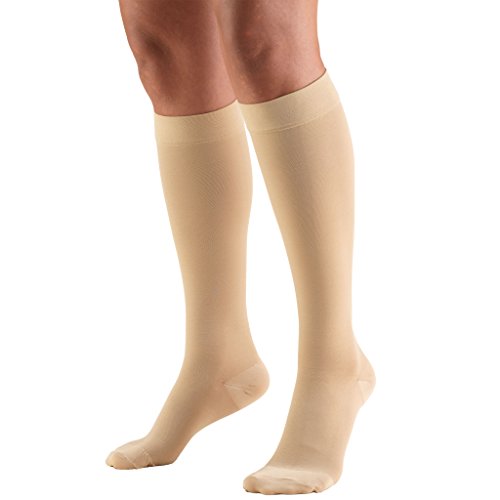


SB SOX has built one of the most consistently reordered compression socks on Amazon, and the reason is straightforward: the sizing system actually works. The brand instructs buyers to measure calf circumference first and cross-reference shoe size second — and to size up if those two measurements point in different directions. That approach alone eliminates the single most common complaint about compression socks, which is a waistband or cuff that either cuts off circulation or slides down by noon. The five size tiers (Small through XX-Large) cover calves from 11 inches up to 24 inches, making this one of the most inclusive size ranges in its price bracket.
At 20–30 mmHg, these socks deliver graduated compression (meaning firmest at the ankle, progressively lighter up the calf) that is sufficient for post-flight swelling, prolonged standing, moderate varicose veins, and recovery after minor procedures. The reinforced heel and cushioned toe add durability without adding bulk. The sock is lightweight and breathable enough that most users report wearing them through full eight-hour shifts without significant heat buildup. For buyers seeking a reliable, versatile everyday option, this is the one to start with.
The fabric blend skews toward athletic construction rather than clinical stocking territory, which means the texture is more comfortable against bare skin than medical hosiery alternatives. Trade-off: the sock has less of the technical knit structure found in purpose-built medical stockings like JOBST or Truform. For general edema management and travel use, that trade-off strongly favors SB SOX.
Pros:
Cons:
Copper Fit describes its Energy Graduated Compression Socks as the first compression sock with a hassle-free on/off design — and the claim holds up on inspection. Traditional 20–30 mmHg compression socks require effort to pull on, particularly for elderly users, individuals with limited hand strength, or anyone with early-morning joint stiffness. Copper Fit's construction addresses that friction point directly. The graduated 10–20 mmHg compression rating (lighter than the 20–30 mmHg clinical tier) is classified as a Class 1 Medical Device, making it appropriate for circulation improvement, swelling reduction, and leg fatigue relief without requiring the exertion of a firmer stocking.
The three-pack format is a notable value differentiator. Buyers get enough pairs to rotate through a full work week without hand-washing every night — a practical consideration that's easy to overlook when comparing single-pair options. The arch and Achilles support band is a standout feature: a targeted compression zone that stabilizes the ankle and midfoot, reducing the lateral wobble that contributes to fatigue during long walking days. Travelers, nurses on shorter shifts, and buyers recovering from mild ankle sprains will find this design particularly effective.
The lighter compression range (10–20 mmHg versus the standard 20–30 mmHg) does mean this sock is better suited for preventive use and mild swelling rather than managing diagnosed edema or severe varicose veins. Buyers with moderate-to-severe conditions should step up to a firmer compression tier. For everyday preventive wear, however, the Copper Fit Energy socks offer a comfortable, accessible entry point.
Pros:
Cons:
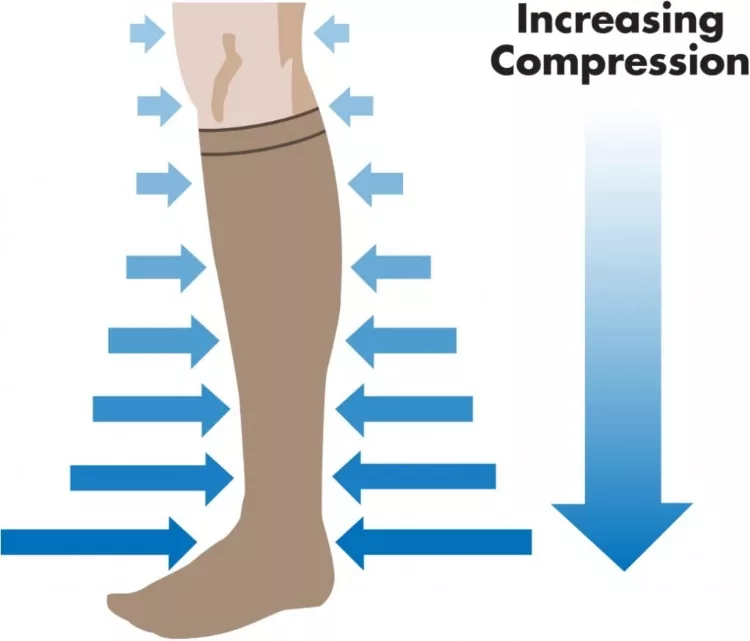
Comrad positions its Nylon Knee High as its firmest compression offering, and the 20–30 mmHg rating delivers true graduated compression — a term the brand emphasizes by printing "True" in its product name. That distinction matters. Not all compression socks labeled 20–30 mmHg actually deliver consistent pressure across the ankle and calf gradient. Comrad's construction is engineered so that compression is strongest at the ankle and progressively decreases up the leg, which is the medically validated pattern for reducing lower-limb swelling and improving venous return (blood flow back toward the heart).
The Large Wide Calf variant fits calves measuring 17–19 inches in circumference, accommodating Women's shoe size 11+ and Men's 10.5–12.5. That coverage bridges a gap that most standard-width compression socks miss entirely. The 91% nylon / 9% spandex blend is notably softer than the traditional elastane-heavy medical stocking, which makes first-time compression sock users more likely to actually wear them consistently. SmartSilver technology — an antimicrobial silver-fiber treatment — inhibits the bacterial growth that causes odor, a meaningful feature for all-day wear. Comrad recommends sizing up when between sizes, consistent with best practice for compression garments.
Buyers dealing with plantar fasciitis alongside leg swelling may find that Comrad's firm 20–30 mmHg rating provides overlapping ankle stabilization — similar to the support discussed in the best plantar fasciitis socks roundup. The Rose/Navy Stripe colorway is atypical for a medical-grade sock, signaling that Comrad is actively targeting buyers who want therapeutic function without sacrificing aesthetics.
Pros:
Cons:
Truform's model 8865 sits in a different category than lifestyle-oriented compression socks. This is a medical support hose engineered for clinical applications: post-surgical recovery, pregnancy edema, chronic venous insufficiency (CVI), and extended travel. The unisex closed-toe design in beige is unremarkable aesthetically by intention — this stocking is built for function, and every structural choice reflects that priority. The defined heel enhances anatomical fit, keeping the stocking correctly positioned on the foot rather than migrating upward or bunching at the ankle.
The roomy comfort toe is a particularly thoughtful feature for buyers with bunions, hammertoes, or general toe sensitivity. Where most compression socks compress the full foot uniformly, the Truform 8865 provides extra volume in the toe box, reducing the pinching that makes other socks intolerable for extended wear. The soft top band deserves specific mention: it eliminates the constriction at the upper calf that causes many wearers to roll down their compression stockings — which defeats the entire purpose of wearing them.
Use cases for the Truform 8865 span a wide population: travelers on long-haul flights, office workers who sit for eight or more hours, pregnant women in their second and third trimesters, and post-operative patients following orthopedic or vascular procedures. For buyers managing diabetic foot complications alongside swelling, proper diabetic foot care protocols recommend pairing compression therapy with daily skin inspection — the Truform's easy-off design supports that routine.
Pros:
Cons:
JOBST is one of the longest-established names in medical compression garments, and the Relief Knee High open-toe model reflects that clinical heritage. The open-toe design addresses a specific and underserved need: buyers with toe deformities, post-operative foot wounds, nail conditions, or extreme heat sensitivity who cannot tolerate a closed-toe compression stocking. The open toe allows full compression along the calf and ankle while leaving the toes unrestricted — a configuration that vascular specialists frequently recommend for patients who cannot wear standard stockings comfortably.
The knit-in anatomical shape is a manufacturing detail that separates JOBST from budget compression socks. Rather than a generic tube that stretches to fit the leg, the seamless circular knit is shaped to match the natural contour of the calf, knee, and ankle. This reduces the bunching, twisting, and pressure-point formation that generic compression socks develop over the course of a day. Skin-friendly, air-permeable materials make this an appropriate option for buyers with sensitive skin or post-surgical incision sites that require airflow.
The reinforced heel adds durability without compromising the sock's ability to conform to the foot. At 20–30 mmHg in the beige medium configuration, this stocking targets the same therapeutic range as the Truform but distinguishes itself through the open-toe construction and JOBST's specific focus on dermatological compatibility. Buyers who experience heel pain alongside leg swelling may want to cross-reference the heel pain treatment options that work alongside compression therapy.
Pros:
Cons:
Nurse Mates is a brand built specifically around healthcare professional footwear, and the 20–30 mmHg Medical Grade Graduated Compression sock reflects deep understanding of that user's specific demands: 10- to 12-hour shifts, hard floors, limited break time, and a clinical environment that punishes bulky or poorly fitting footwear. The sock runs from Small through XX-Large, covering a full range of leg dimensions without requiring buyers to hunt for specialty sizing outside the standard lineup.
The 20–30 mmHg compression level is the therapeutic sweet spot for healthcare workers: firm enough to meaningfully reduce the cumulative leg swelling that builds over a long hospital or clinic shift, but not so aggressive that it causes discomfort during the walking-intensive portions of the day. Nurse Mates specifically addresses varicose vein risk and Economy Class Syndrome (DVT) prevention — two conditions that affect healthcare workers at elevated rates due to prolonged standing on hard surfaces. The Hearts pattern in the XXL size reviewed here adds a small degree of personality to a professional environment where personalization is otherwise limited to accessories.
The Heel and Toe Pocket feature creates anatomically defined zones that prevent the sock from rotating or bunching during movement. That stability is particularly valuable during the rapid directional changes that characterize nursing and clinical work. The snug fit without pinching or constriction distinguishes this from generic compression socks that achieve firmness at the cost of comfort during active wear. For healthcare professionals comparing work-appropriate compression options, the Dagacci scrubs review offers related context on professional-grade medical apparel durability and comfort.
Pros:
Cons:
Doctor's Select fills a gap that most compression sock brands ignore entirely: the XL-to-6XL calf circumference range. Standard plus-size compression options typically stop at XX-Large, leaving buyers with wider calves either squeezing into undersized socks that cut circulation or abandoning compression therapy altogether. This two-pair copper-infused set extends the size range dramatically, with stretchable cuffs engineered to accommodate very wide calves without the constriction that causes pain and marks on the skin.
Copper compression socks have grown significantly in 2026 popularity, and the mechanism behind the trend is real: copper-infused fibers have documented antimicrobial and anti-inflammatory properties that reduce odor and support skin health during extended wear. At 20–30 mmHg, the compression delivers the light pumping effect that stimulates venous return — the process of pushing deoxygenated blood back up from the feet toward the heart — which directly addresses the pooling that causes edema in the lower extremities. The sock targets varicose veins, arthritis swelling, pregnancy edema, and general edema with a single compression specification, making it a versatile option for buyers managing multiple concurrent conditions.
The two-pair format provides rotation flexibility for daily use without requiring frequent washing. The black wide-calf design is understated enough to work under trousers or scrubs, which matters for buyers who need therapeutic compression in professional or semi-professional settings. Buyers considering complementary low-impact exercise to manage circulatory leg issues may find the Schwinn 230 recumbent bike a useful addition to their routine — recumbent cycling elevates the legs while maintaining cardiovascular activity, directly supporting the circulatory goals compression socks address.
Pros:
Cons:
The compression sock market has matured considerably by 2026, but the criteria for selecting the right pair remain grounded in the same fundamentals. The following sections cover the four decisions that matter most.
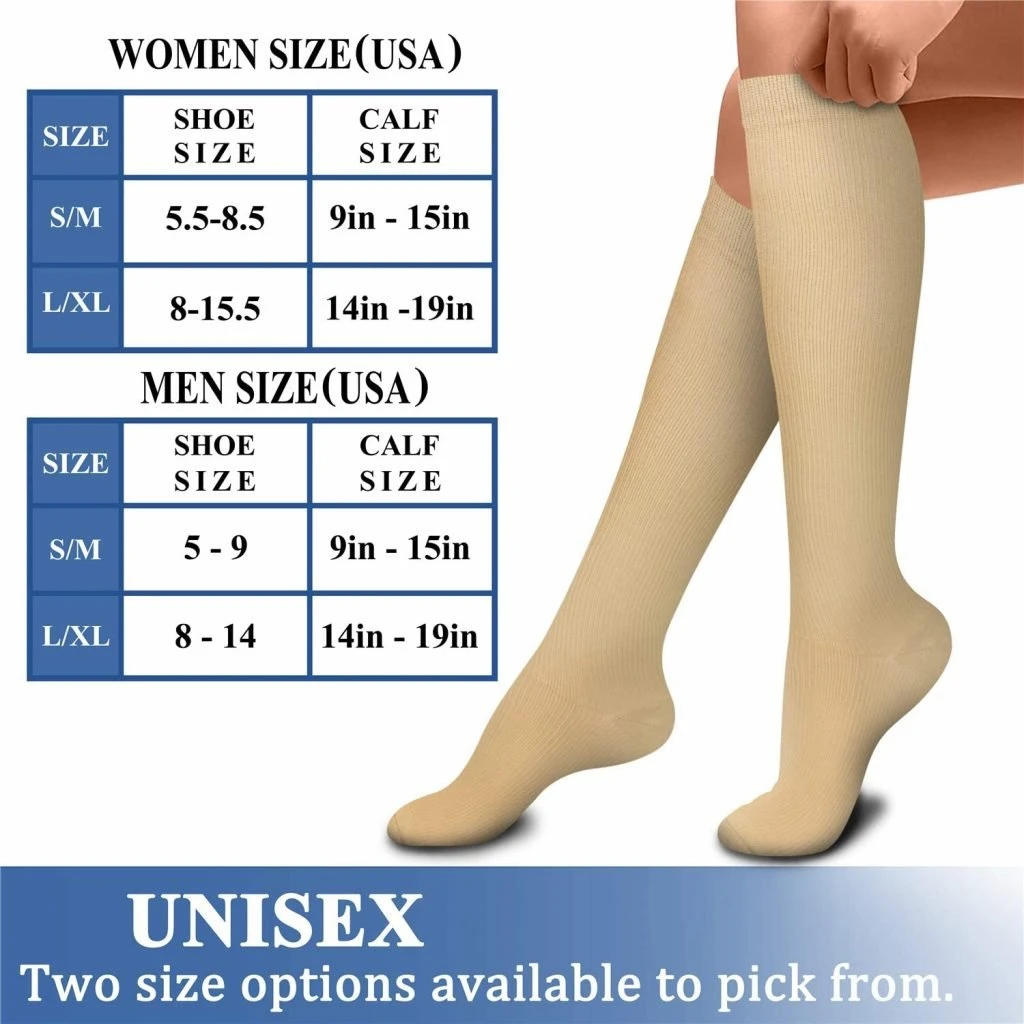
Compression is measured in mmHg — millimeters of mercury — which quantifies how much pressure the sock applies to the leg. The four standard tiers are:
Buyers with a diagnosed vascular condition should confirm the appropriate compression level with a physician before purchasing. For general preventive use and travel swelling in otherwise healthy adults, 20–30 mmHg is the most broadly applicable choice in 2026.
Compression sock sizing diverges from standard shoe or clothing sizing in one critical way: calf circumference is the primary measurement, not shoe size. Shoe size is a secondary check. Buyers should measure the widest part of their calf with a soft tape measure, ideally in the morning before swelling accumulates, and match that number to the brand's specific chart. Most brands also specify a shoe size range per size tier as a secondary reference point.
The consequences of incorrect sizing are significant. An undersized sock applies excess pressure that can impede arterial blood flow and cause pain or tingling. An oversized sock loses its compression gradient and provides no therapeutic benefit. When a buyer's measurements fall between sizes, sizing up is the standard recommendation across all brands reviewed here.
Closed-toe compression socks cover the full foot and are the default configuration for most buyers. Open-toe designs (like the JOBST Relief reviewed here) leave the toes exposed and are indicated for specific situations:
Outside those specific use cases, closed-toe designs provide more complete compression coverage and are generally preferred for swelling management.
The material composition of a compression sock directly affects breathability, durability, and comfort against bare skin. The most common blends in 2026:
Most compression socks should be hand-washed or machine-washed on a gentle cycle in cool water and air-dried. High heat degrades the elastic fibers that create compression, reducing the sock's effectiveness over time. Rotation between multiple pairs — whether a three-pack like Copper Fit offers or a two-pair set like Doctor's Select — extends the therapeutic life of each pair.
Most compression sock manufacturers and medical guidelines recommend putting on compression socks first thing in the morning, before swelling accumulates, and wearing them throughout the day until returning to bed. The typical daily wear window is 8–12 hours for the 20–30 mmHg compression range. Wearing compression socks while sleeping is generally not recommended for most users, as the horizontal position already reduces the gravitational stress that causes daytime leg swelling. Buyers with a specific medical condition should follow their physician's instructions.
Yes. Compression socks are one of the most widely recommended preventive measures for travel-related leg swelling and deep vein thrombosis (DVT). Airplane cabins force passengers into extended periods of immobility, which allows blood to pool in the lower legs. The 20–30 mmHg compression range — as found in most of the socks reviewed here — is sufficient to maintain adequate circulation throughout a long-haul flight. Buyers should put the socks on before boarding, not after swelling has already begun.
For most healthy adults managing travel swelling, tired legs, or mild varicose veins, 20–30 mmHg compression socks are available over the counter and considered safe for self-directed use. However, certain medical conditions — including peripheral arterial disease (PAD), congestive heart failure, and severe peripheral neuropathy — make compression therapy contraindicated (meaning it should not be used). Buyers with these conditions, or those uncertain about their diagnosis, should consult a physician before using therapeutic compression garments.
A properly sized 20–30 mmHg compression sock should feel noticeably firm when first applied — particularly around the ankle — but should not cause pain, tingling, numbness, or visible skin indentation at the cuff. Buyers should be able to slide two fingers under the top band. If the sock is difficult to pull on but does not cause discomfort once on, the fit is likely correct. If the sock slides down during the day, the size is too large. Measuring calf circumference with a soft tape measure before purchase remains the most reliable method.
Graduated compression means the sock applies the greatest pressure at the ankle, with pressure progressively decreasing up the calf and toward the knee. This gradient actively assists venous return — the process by which blood is pushed back up the leg against gravity. Uniform compression applies the same pressure throughout the length of the sock, which does not replicate this pumping effect. All medical-grade compression socks, including all seven products reviewed here, use graduated compression. Buyers should confirm this specification when evaluating any compression garment.
Compression socks should be washed after each use, as body oils and sweat degrade the elastic fibers over time. Most brands recommend hand-washing in cool water with mild detergent, or machine washing on a gentle cycle in cool water inside a mesh laundry bag. High heat — whether from hot water, a dryer, or direct sunlight during drying — accelerates the breakdown of the spandex and elastane that create compression. Air drying flat or hanging is preferred. With proper care, a quality compression sock typically retains its therapeutic compression for 3–6 months of daily use before needing replacement.


About Mehnaz
Mehnaz is the founder and editor of RipPain, a health resource site dedicated to helping readers navigate pain management, recovery, and medical device research. Her work on the site is driven by personal experience caring for seriously ill family members, which led her to study evidence-based guidance from physicians, pain specialists, and published medical research. She curates and summarizes expert medical insights to make credible health information accessible to everyday readers.
You can get FREE Gifts. Or latest Free phones here.
Disable Ad block to reveal all the info. Once done, hit a button below
 Mehnaz