
Which diabetic socks actually protect your feet — and which ones just look the part? If you've been hunting for an answer, you're in the right place. After sorting through dozens of options, the Pembrook Diabetic Socks for Men kept rising to the top for its combination of everyday versatility, non-binding stretch, and multi-pack value. But the right choice really does depend on your specific needs, and this guide covers all the angles.
Living with diabetes means your feet deserve more than standard socks. Reduced circulation, peripheral neuropathy, and heightened sensitivity to pressure and moisture can turn a minor sock irritation into something far more serious. According to the Centers for Disease Control and Prevention, foot complications are among the most common — and preventable — consequences of poorly managed diabetes. The right pair of socks plays a bigger role than most people realize. If you're also dealing with general foot care challenges alongside diabetes management, the overlap between comfort socks and therapeutic footwear is significant.
In 2026, the market for diabetic socks has grown considerably, with options ranging from merino wool crew socks to mild compression ankle styles. Whether you need something for all-day wear, post-surgery recovery, or active outdoor use, this roundup of seven top-rated pairs will help you find the right fit. We've also included a buying guide and FAQ section so you can shop with real confidence.
Contents





Dr. Scholl's has been a trusted name in foot health for decades, and these diabetes and circulatory socks make a solid case for that reputation. Accepted by the American Podiatric Medical Association (APMA), these socks have been independently evaluated for their role in promoting good foot health — which isn't something every sock on this list can claim. For someone managing diabetes who wants a clinically-recognized option, that seal of approval carries real weight.
The cushioning throughout the footbed is genuinely noticeable. It doesn't add excessive bulk, but your feet feel supported whether you're standing at work or walking around the neighborhood. The Invisiseam toe construction is one of the highlights here — the seam is smooth enough that even users with heightened foot sensitivity report wearing these all day without irritation. The navy assorted colorways are also a practical touch, giving you variety without the need to match socks obsessively. At a 4-pack, you're getting decent daily coverage too.
Moisture management is effective for moderate activity, though these socks aren't the best choice if you tend toward heavily sweaty feet. If that's a concern for you, pairing these with the right footwear and checking out tips on how to manage and prevent sweaty feet can help you get more mileage out of them. The non-binding top keeps circulation unrestricted, which is the core requirement for any diabetic sock worth buying.
Pros:
Cons:
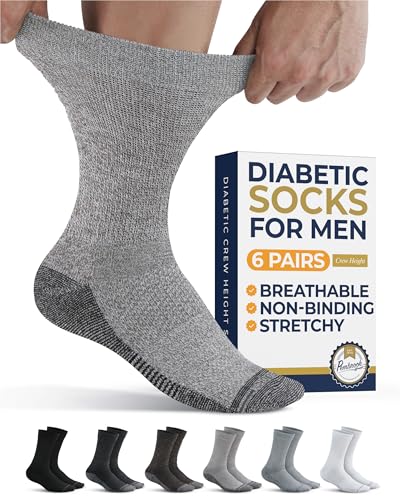
If you're looking to stock your drawer with reliable diabetic socks without making a major investment in any single pair, Pembrook's 6-pair crew set is the practical answer. Six colors in one package — black, white, gray, dark gray, light brown, and brown — means you've got your wardrobe covered for the week without thinking twice. But it's not just a value play; these socks are genuinely well-constructed for the diabetic sock category.
The ultra-soft fabric has a cool, breathable feel that holds up year-round. Where Pembrook really distinguishes itself is in the non-binding elastic design. The extra-stretch top stays put without leaving the red indentation marks that standard socks create. For people dealing with edema, neuropathy, or circulatory issues, that distinction matters a great deal. The socks sit comfortably on the leg all day without migrating down or digging in — two things that are deceptively hard to get right. They're also suitable if you don't have diabetes but simply need a more accommodating sock for swollen feet or sensitive ankles.
Build quality is consistent across the pack, which isn't always the case with multi-pair bundles. Stitching holds up well through repeated washing. These aren't a specialized medical product like the JOBST option below, but for everyday wear they're one of the most sensible choices on this list. If foot discomfort is part of a larger pattern for you, it's worth also reading about how to reduce foot pain through complementary approaches beyond footwear alone.
Pros:
Cons:
Merino wool and diabetic socks might not seem like an obvious pairing, but Facool makes a compelling argument. Natural merino wool offers exceptional temperature regulation — warmth in winter, breathability in summer — while also being naturally moisture-wicking and odor-resistant. For people with sensitive skin who've had reactions to synthetic materials, this is a meaningful alternative that doesn't compromise on the diabetic-specific design requirements.
The seamless toe construction eliminates the friction ridge that standard socks create at the toe box — a critical detail for anyone dealing with neuropathy or reduced sensation, where an undetected blister or pressure sore can escalate quickly. The non-binding top allows healthy circulation without leaving indentations. The loose fit design is a deliberate choice here, not a sizing inconsistency. It's designed to accommodate swelling and reduce pressure throughout the foot and ankle, which also makes these socks appropriate for post-surgery recovery or anyone managing chronic edema.
You get four pairs per pack in black, which is a practical colorway for most wardrobes. The large size fits a range of foot widths comfortably. If you're an older adult managing diabetes alongside age-related foot changes, this sock's gentle fit and natural material make it a particularly thoughtful choice — pairing it with the advice in our guide to foot care tips for seniors gives you a solid foundation for long-term foot health.
Pros:
Cons:
Thorlos is a name that comes up consistently among podiatrists and physical therapists when the conversation turns to cushioned therapeutic socks. The Advanced Diabetic Crew is built around the brand's signature Health Padds system — strategically placed cushioning zones in the ball, heel, and toe areas that absorb impact where feet take the most punishment. This isn't generic all-over padding; it's purposeful placement based on how foot pressure distributes during walking.
Sold as a single pair, the Thorlos sits at a higher price-per-pair than multi-packs like Pembrook or Physician's Choice. But you're paying for a level of construction and cushioning engineering that few competitors match. The crew cut length sits at the calf, offering modest leg coverage. The fit is close enough to be supportive without feeling constrictive, and the non-binding design keeps circulation flowing. White is the classic colorway here, which is functional if not exciting.
These socks shine in situations where you're on your feet for extended periods — standing at a workstation, walking extended distances, or managing a condition that makes foot fatigue especially problematic. The cushioning support under the ball of the foot in particular makes a real difference during prolonged activity. If plantar pressure or general foot fatigue is part of your daily experience, you'll notice the difference.
Pros:
Cons:
Most diabetic socks focus entirely on avoiding compression. JOBST takes a different and medically considered approach: mild graduated compression at 8–15 mmHg — just enough to keep the sock in place and support venous return without creating constriction. This level of compression is widely used in therapeutic settings and is particularly beneficial for people who experience lower-leg swelling or sluggish circulation. If your doctor has mentioned compression socks as part of your foot care plan, this JOBST model bridges the gap between comfort socks and medical-grade compression wear.
The SensiFoot features extra padding in the toe, foot, and heel areas — the zones most vulnerable to ulcer development in diabetic patients. The smooth toe seam is non-irritating and constructed to reduce both pressure and friction on the toes. Moisture management is built in, which helps maintain the dry skin environment that reduces blister and wound risk. At crew length with a closed toe and white finish, it's a clean, clinically appropriate look that works under most footwear.
One thing worth noting: because of the mild compression, getting these on may require slightly more effort than a loose-fit diabetic sock. For people with severe limited hand strength or dexterity, that's a practical consideration. But for anyone who benefits from circulation support alongside diabetic-specific protection, the JOBST SensiFoot is uniquely positioned on this list. It's the only option here that doubles as a therapeutic compression garment.
Pros:
Cons:
Not everyone wants a crew-length sock. If you prefer low-cut styles — for warm weather, athletic footwear, or simply personal preference — the Viasox Diabetic Ankle Socks are one of the better options in this specific niche. Cut just below the ankle, these socks keep the same non-binding, seamless principles as their crew-length counterparts while offering a less covered feel that many users appreciate in summer months or when wearing sneakers.
The ankle design is specifically engineered to prevent the painful sock marks and indentation lines that standard ankle socks leave on swollen or sensitive ankles. The stretchy ankle zone manages swelling and fluid buildup without constricting. The triple-padded footbed is a standout feature — enhanced cushioning at the ankle and underfoot reduces the impact of neuropathy symptoms, including the pins-and-needles sensation that can make walking uncomfortable. That extra layer of underfoot protection is something you don't always find in ankle-length diabetic socks.
Sizing follows Viasox's own guide, and the stretch is forgiving enough to accommodate a range of leg sizes accurately. Both men and women can wear these. If you're transitioning from a standard sock to a diabetic-specific design for the first time, the ankle length also makes the change feel less dramatic while still getting you the core diabetic sock benefits.
Pros:
Cons:
When you need to keep a large supply on hand — for a care facility, a household where multiple people have diabetes, or simply because you go through socks quickly — Physician's Choice offers a 12-pair over-the-calf pack that delivers solid performance at an economical per-pair cost. Made in the USA by Sole Pleasers, these white knee-high socks are a staple in elder care and diabetic specialty supply channels for good reason.
The over-the-calf cut provides the most coverage of any option on this list, keeping the sock in place without a tight cuff at the knee. The seamless non-binding top is the core diabetic design feature here. What makes Physician's Choice a bit different is the inclusion of Neurosocks Technology, which is designed to gently stimulate blood flow through the sock's structural properties — reducing swelling and alleviating neuropathic symptoms during wear. It's a thoughtful addition on top of the standard diabetic sock design baseline.
The fabric blend — 50% cotton, 45% polyester, 5% spandex — is moisture-wicking and breathable, making these practical for full-day wear. The unisex design means both men and women can use them. At twelve pairs per pack, you're well-stocked for weeks at a time. These aren't the most specialized option on this list, but for high-volume everyday use, they're hard to beat on the value-to-quality ratio. Pair them with good footwear and sound foot hygiene practices and you've covered the basics thoroughly.
Pros:
Cons:
These two features are non-negotiable for diabetic socks. A non-binding top means the cuff doesn't constrict blood flow at the ankle or calf — a critical concern when circulation is already compromised. Standard socks with tight elastic bands can leave red marks and restrict venous return; in a diabetic foot, that restriction can worsen swelling or slow healing. Seamless toes eliminate the ridge of a traditional toe seam, which might be harmless on a healthy foot but can cause serious pressure sores or blisters on a foot with reduced sensation. Look for both features working together — one without the other still leaves gaps in protection.
Not all cushioning is equal. Generic all-over padding can add unnecessary bulk; targeted cushioning in the heel, ball, and toe areas — like what Thorlos provides — absorbs impact where it actually matters. Think about how you spend your day. If you're mostly seated, a lightly cushioned sock may be enough. If you walk significant distances or stand for hours, strategic impact absorption in the footbed reduces fatigue and the risk of callus formation in pressure zones. Too much cushioning can also make shoes fit uncomfortably, so match the padding level to your typical footwear and activity.
Moisture is a significant risk factor in diabetic foot complications. A damp environment softens skin, creating conditions favorable for bacterial and fungal growth — both of which can lead to infections that are slow to heal in diabetic patients. Synthetic moisture-wicking blends move sweat away from the skin effectively. Merino wool is naturally moisture-regulating and odor-resistant, making it a premium natural alternative. Cotton alone is not ideal because it absorbs and holds moisture rather than wicking it away. If you're prone to sweaty feet or live in a warm climate, prioritize moisture management features in your sock choice. Our guide on best moisturizing gel heel socks and sleeves also touches on how skin moisture balance affects foot health more broadly.
Most diabetic socks are deliberately non-compressive because tight footwear and socks can impair circulation in already-vulnerable feet. However, there is a category of mild graduated compression — typically 8–15 mmHg — that's been shown to support venous return and reduce lower-leg swelling when properly fitted. The JOBST SensiFoot sits in this category. Before choosing a mild compression option, it's worth discussing with your healthcare provider whether your specific circulation profile benefits from that kind of support. For most people, a standard non-binding diabetic sock is the right choice; compression is an upgrade for specific clinical indications, not a universal improvement.
Diabetic socks are engineered around the foot health risks associated with diabetes: reduced circulation, peripheral neuropathy, and increased susceptibility to skin breakdown and infection. Key design features include non-binding tops that don't restrict blood flow, seamless toes that eliminate pressure ridges, moisture-wicking materials that keep feet dry, and often extra cushioning in vulnerable zones. Standard socks lack most or all of these features, which is why specialty diabetic socks exist as a distinct product category.
Absolutely. The features that make diabetic socks beneficial — non-binding construction, seamless toes, soft cushioning, moisture management — are comfortable and protective for anyone. People with edema, neuropathy from other causes, post-surgical foot sensitivity, wide feet, or simply a preference for non-constricting footwear often find diabetic socks more comfortable than standard options. There's no downside to wearing them if the fit works for you.
Most diabetic socks should be replaced every three to six months with regular daily wear, or sooner if you notice signs of wear like thinning fabric, stretched-out elastic, or visible holes. Worn-out socks lose their cushioning, moisture management properties, and non-binding structure — which means they stop doing the job they were designed for. Having a larger supply (like a 6- or 12-pair pack) makes it easier to rotate pairs and extend the overall lifespan of your sock collection.
Generally, this depends on your individual situation and your doctor's advice. Some people with poor circulation or neuropathy-related cold feet benefit from wearing non-binding diabetic socks to bed. However, tight or compressive socks should not be worn overnight. If you're unsure, check with your podiatrist or primary care provider, as nighttime foot care recommendations vary based on the specific complications present.
In the United States, Medicare Part B may cover therapeutic shoes and inserts for people with diabetes who meet specific criteria, but coverage for diabetic socks alone is generally not included unless prescribed as part of a broader therapeutic footwear program. Some private insurance plans may cover diabetic socks with a prescription. Always check with your insurance provider and ask your doctor if a prescription is warranted for your situation.
The main differences are coverage, warmth, and use case. Ankle socks (like the Viasox) cut just below the ankle and suit warmer weather, athletic shoes, or personal preference for less coverage. Crew-length socks sit mid-calf and offer more warmth and sock stability during the day. Over-the-calf designs like Physician's Choice stay up without any cuff pressure at all. The diabetic-specific features — seamless toes, non-binding tops, cushioning — are present across all three lengths. Your choice should come down to climate, footwear, and comfort preference.


About Mehnaz
Mehnaz is the founder and editor of RipPain, a health resource site dedicated to helping readers navigate pain management, recovery, and medical device research. Her work on the site is driven by personal experience caring for seriously ill family members, which led her to study evidence-based guidance from physicians, pain specialists, and published medical research. She curates and summarizes expert medical insights to make credible health information accessible to everyday readers.
You can get FREE Gifts. Or latest Free phones here.
Disable Ad block to reveal all the info. Once done, hit a button below
 Mehnaz