
Have you ever wondered whether a mobility aid could genuinely change your quality of life — or just signal the end of your independence? That's worth answering honestly. Understanding how walkers improve daily mobility is the first step toward regaining confidence, reducing your fall risk, and moving through your day with less pain and more freedom. Whether you're recovering from surgery, managing a chronic pain condition, or looking for a safer way to stay active, the right mobility aid can be transformative. This guide covers everything from choosing the right walker to getting maximum value from the one you already have.
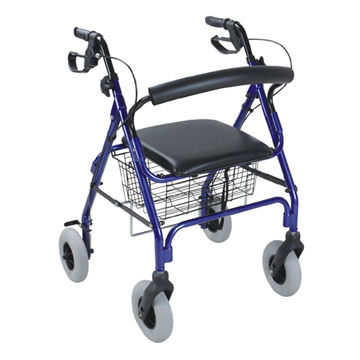
Walkers are among the most widely prescribed mobility aids in physical and occupational therapy. According to the CDC, falls are the leading cause of injury-related deaths among older adults — and correct use of assistive devices like walkers is one of the most effective preventive measures available. Yet many people either delay getting a walker or use it incorrectly, which limits its effectiveness and can even create new problems.
If you're also managing lower back pain or hip weakness, a walker doesn't just support your body weight — it actively redistributes mechanical load away from stressed joints and muscle groups. Pair that with supportive footwear and you've built a solid, layered foundation for safer daily movement. Let's get into what actually matters.
Contents
The benefits of using a walker go well beyond the obvious. Yes, they reduce your fall risk — but that's just the surface. Walkers redistribute body weight, stabilize your gait pattern, and reduce the mechanical load on compromised joints. This is especially significant for people dealing with arthritis, post-surgical weakness, or neurological conditions that affect balance and coordination.
These aren't just theoretical advantages. People who use walkers as prescribed by their therapist typically return to baseline mobility faster than those who try to manage without them. The device isn't a crutch for weakness — it's a tool for strategic recovery.
There's a real mental component to mobility loss that doesn't get enough attention. Fear of falling — sometimes called "fall anxiety" — is a documented psychological condition that leads people to reduce their activity levels, which in turn accelerates physical decline. It becomes a downward spiral fast.
A walker gives you something concrete: a stable platform that reduces that fear and lets you move more freely. When you know you have a reliable base, you're more likely to stay active. Staying active protects muscle strength, cardiovascular function, and mental health. It's a positive cycle that begins with using the right tool consistently.
| Walker Type | Best For | Key Feature | Limitations |
|---|---|---|---|
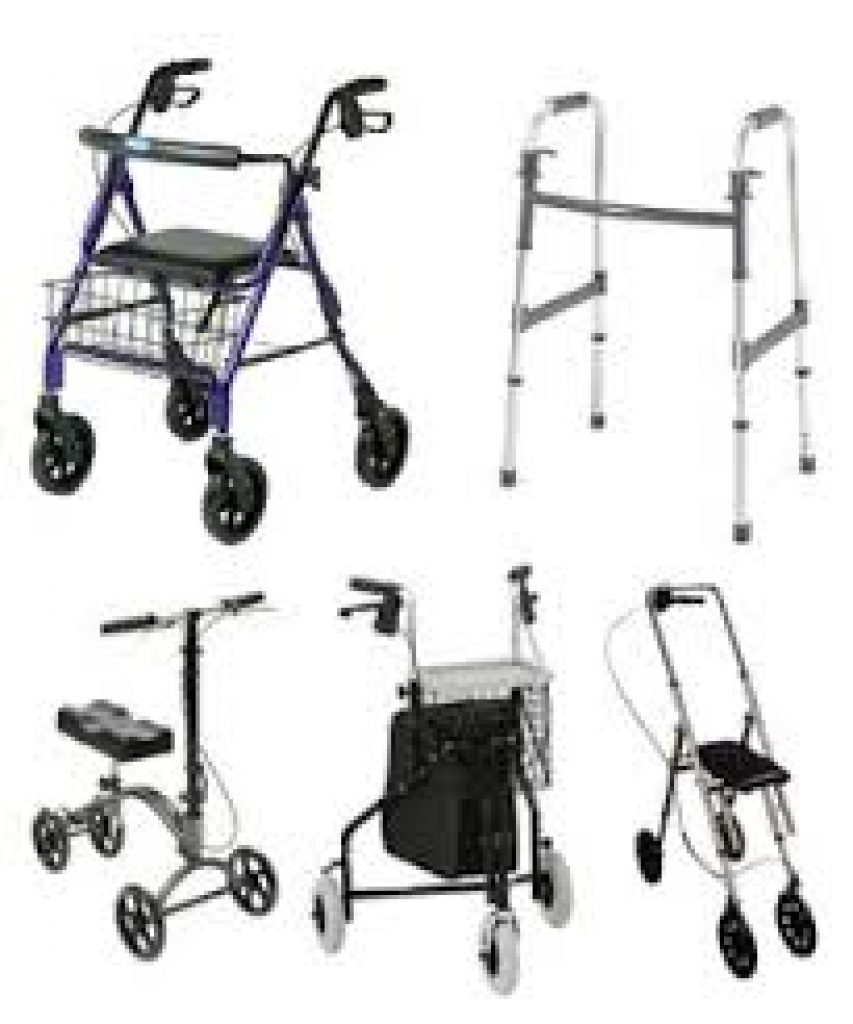
| Standard (Pick-up) Walker | Post-surgery, maximum support needs | Four rubber-tipped legs, no wheels | Slower gait; requires lifting with each step |
| Two-Wheeled Walker | Moderate balance issues | Front wheels for smoother forward movement | Less stable than standard on uneven ground |
| Rollator (4-wheeled) | Active users, outdoor or longer distances | Hand brakes, built-in seat, storage basket | Requires hand strength to operate brakes safely |
| Knee Walker | Lower leg or foot injuries | Kneeling pad, fully wheeled frame | Not suitable for bilateral lower-limb issues |
| Hemi Walker | One-sided weakness (stroke, hemiplegia) | Single-hand operation, wide base | Less overall stability than a full frame walker |
Using a walker incorrectly can increase your injury risk rather than reduce it. These are the errors physical therapists see most often — and they're all fixable once you know what to look for.
This is the single most common mistake. If your walker is too low, you'll hunch forward and strain your lower and mid-back. Too high, and you lose leverage and muscular control over the device. The correct height puts your wrist crease at handle level when your arms hang naturally at your sides — with a slight elbow bend of around 15 to 20 degrees when gripping the handles.
A correctly fitted walker immediately improves your posture and reduces upper-back strain. Most walkers have push-button height adjustments, so there's no excuse for tolerating the wrong setting. Check it every few weeks, especially if your footwear changes.
Hanging your weight on the walker rather than using it for light support shifts too much load forward, strains your wrists and shoulders, and actually destabilizes your gait pattern. Your walker should be beside you and slightly ahead — not something you're draped over.
Pro tip: If your therapist isn't available, ask a trusted person to watch you walk from the side — forward lean is much easier to spot from a lateral view than it is to feel yourself.
A standard walker requires you to lift and place it with every step. If you have upper-body weakness or limited grip strength, that repeated lifting pattern is exhausting and potentially unsafe. A two-wheeled walker or rollator may serve you much better. On the other hand, if your balance issues are significant, a rollator's free-rolling wheels can feel hard to control and create a new set of risks.
There's no one-size-fits-all answer here. Your current strength, balance, environment, and specific diagnosis all factor in. Working with a physical therapist to match device to person is always the most reliable approach.
If you're brand new to using a walker, the learning curve is shorter than you might expect. The key is starting with the right device for your current condition and progressing from there as your strength and balance improve.
Coming out of hip or knee surgery, or managing significant balance problems? A standard four-point walker is almost always your starting point. It offers maximum stability because all four legs stay planted while you step through the frame. Nothing rolls away from you.
Standard walkers can be fitted with glide caps — ski-like rubber attachments — on the rear legs for smoother movement on carpet. This reduces the jarring stop-start motion that tires users out quickly and discourages use.
Once you've rebuilt some baseline strength and walking confidence, a two-wheeled walker or a rollator typically suits you better. Rollators allow a more natural walking pattern because you push rather than lift — this more closely matches normal gait mechanics and feels less disruptive to your rhythm.
Rollators with a built-in seat are especially practical for people who need frequent rest breaks. The seat means you can stop anywhere without needing to find a chair nearby — which actually encourages you to walk further and more often, since the psychological barrier of "what if I get tired" disappears.
Longer-term rollator users often add ergonomic handle grips, forearm platforms, or all-terrain tires for outdoor surfaces. These upgrades extend the distances you can comfortably cover and open up more of your environment to independent navigation.
You don't need a major intervention to see real improvement. Some of the most impactful changes you can make take less than five minutes. Understanding how walkers improve daily mobility is partly about the device — and partly about how you use it day to day.
Beyond the initial setup, check your walker height periodically. Your condition changes. Your shoes change. If someone else borrows your walker, they'll adjust it. A few centimeters in either direction shifts the entire mechanical profile of your gait and can reintroduce the exact problems you're trying to avoid.
Short, frequent walks consistently outperform occasional long ones. Building mobility incrementally is more sustainable and safer than pushing through fatigue or pain to hit an ambitious goal. Your nervous system and musculature respond to consistent, manageable stimulus — not sporadic effort.
If you want to build leg strength during recovery without full weight-bearing, a recumbent bike is an excellent low-impact complement to walker-based mobility work — you get cardiovascular and muscular stimulus while seated.
The right accessories can take a basic walker from purely functional to genuinely comfortable — and in some cases, meaningfully safer. None of these are expensive. All of them are worth knowing about.
Before buying any accessory, confirm it's compatible with your specific walker model. Attachments designed for one frame may not seat correctly on another, and a poorly fitted add-on can compromise the structural integrity of the device.
If you feel frequently unsteady on your feet, have experienced a recent fall, or are recovering from surgery or injury affecting your lower body, a walker is likely appropriate. A physical therapist or your primary care physician can perform a formal gait assessment to give you a clear, personalized answer.
A standard walker has four fixed legs with no wheels and must be lifted and placed with each step. A rollator has four wheels, hand-operated brakes, and usually a built-in seat. Rollators allow a more natural walking rhythm but require more hand and cognitive coordination to operate safely.
Standard walkers and rollators are not designed for stair climbing. On stairs, a cane, handrail, or physical assistance is typically safer. Your physical therapist can teach you specific stair-navigation strategies based on your condition and current strength level.
By offloading weight from painful joints and providing a stable movement base, walkers allow people with arthritis, fibromyalgia, or back pain to move more freely and with less discomfort. That increased activity carries its own pain-reducing benefits through improved circulation and maintained muscle tone.
The handles should align with the crease of your wrist when your arms hang naturally at your sides. When you grip the handles, your elbows should have a slight bend of about 15 to 20 degrees. This position allows efficient load transfer and protects your back, shoulders, and wrists.
In many cases, yes. Medicare, Medicaid, and most private insurers cover walkers when prescribed by a physician as medically necessary. You'll generally need a prescription and documentation of your condition. Contact your insurer directly to confirm your specific coverage and any pre-authorization requirements.
Most people adapt to a properly fitted walker within one to two weeks of consistent daily use. Initial awkwardness usually comes from an incorrect height setting or unfamiliarity with gait technique rather than the device itself. Working with a physical therapist can significantly shorten that adjustment window.
Yes, and the evidence is strong. Walkers significantly reduce fall incidence in people with balance impairments or lower-limb weakness. The broad four-point base of a standard walker and the braking system of a rollator both contribute to safer controlled movement — but only when the device is correctly sized and used with proper technique.


About Mehnaz
Mehnaz is the founder and editor of RipPain, a health resource site dedicated to helping readers navigate pain management, recovery, and medical device research. Her work on the site is driven by personal experience caring for seriously ill family members, which led her to study evidence-based guidance from physicians, pain specialists, and published medical research. She curates and summarizes expert medical insights to make credible health information accessible to everyday readers.
You can get FREE Gifts. Or latest Free phones here.
Disable Ad block to reveal all the info. Once done, hit a button below
 Mehnaz