
The best recumbent bikes for home cardio solve a real problem: how to raise heart rate and build endurance without punishing joints or aggravating chronic pain. Our team recommends recumbent bikes as the first option for home users who need consistent, low-impact cardiovascular training that actually holds up over time. For a thorough look at why these machines deliver, our dedicated guide on recumbent exercise bike benefits covers the physiological case in full.

A recumbent bike positions the rider in a reclined seat supported by a full backrest, with pedals placed forward at roughly hip height. That geometry distributes body weight across the seat and back rather than concentrating it on the tailbone, wrists, and spine. The practical result: most people who struggle with upright bikes — due to lower back pain, hip issues, or general joint sensitivity — find recumbent cycling dramatically more comfortable to sustain for meaningful durations.
Our team evaluated dozens of models across price tiers and use cases. The five machines below represent the strongest options for home cardio specifically — not commercial gym environments where durability requirements differ entirely. Each pick reflects performance data, long-term user feedback, and our direct assessment of what works for home users across months of consistent riding.
Contents
Within two to three weeks of consistent use, most people notice a measurable drop in resting heart rate and improved endurance during ordinary daily activity. Recumbent bikes are particularly effective at building aerobic base because the supported position allows longer sessions without the discomfort that cuts upright workouts short. According to physical activity guidelines reviewed by the CDC, adults need at least 150 minutes of moderate-intensity aerobic activity per week — a target that becomes far more achievable on a machine that doesn't trigger pain mid-session.
The low-impact nature of recumbent cycling means joint stress accumulates far more slowly than with running or upright cycling. For home users managing knee arthritis, hip replacements, or lumbar disc conditions, this is the defining advantage. Our team consistently finds that people who switch from upright stationary bikes to recumbent models report a significant reduction in post-workout soreness within the first few weeks. That reduction in soreness translates directly into more frequent workouts — which compounds into substantially better cardiovascular outcomes over a full training cycle.
The Marcy ME-709 and Xterra SB2.5r both sit comfortably in this range. Build quality is functional rather than premium — frames handle regular sessions well, but resistance systems are manual rather than computer-controlled. For home users on a tight budget who plan three to four sessions per week, this tier is entirely adequate. Expectations around programming variety and seat comfort should be calibrated accordingly.
This is where the quality jump becomes most noticeable. The Sunny Health & Fitness SF-RB4850 and Nautilus R614 fall here, offering smoother resistance systems, better seat padding, and more reliable electronics. Our team considers this the sweet spot for serious home cardio users — enough features to stay engaged without overspending on commercial-grade hardware that most home gyms never fully utilize.
The Schwinn 270 occupies the upper tier of the home cardio market. At this price, home users get Bluetooth connectivity, extensive workout programming, dual displays, media shelves, and significantly more robust frame construction. These machines are built for daily use across many years without degradation in performance.
| Model | Price Range | Resistance Type | Resistance Levels | Weight Capacity | Best For |
|---|---|---|---|---|---|
| Marcy ME-709 | ~$200 | Magnetic (manual) | 8 | 300 lbs | Budget home use |
| Xterra SB2.5r | ~$350 | Magnetic | 8 | 300 lbs | Small spaces |
| Sunny SF-RB4850 | ~$500 | Magnetic | 16 | 300 lbs | Mid-range daily use |
| Nautilus R614 | ~$650 | Eddy current | 25 | 300 lbs | Data-driven training |
| Schwinn 270 | ~$800 | Eddy current | 25 | 300 lbs | Full-featured home gym |
Recumbent bikes are the optimal home cardio machine for people managing chronic lower back conditions, knee or hip joint issues, balance limitations, or significant body weight. The seated position with backrest eliminates spinal compression and wrist strain common on upright bikes, and the step-through frame design makes mounting and dismounting straightforward regardless of mobility level. Our team recommends this category specifically for older adults and anyone in post-surgical rehabilitation who still needs to maintain cardiovascular fitness without re-injuring healing tissue. Anyone exploring sport and fitness solutions for chronic pain will find recumbent bikes one of the most accessible starting points available.
Recumbent bikes are not the right tool for every fitness goal. Anyone primarily focused on building leg strength, improving vertical power, or replicating outdoor cycling mechanics will find upright bikes or manual treadmills more appropriate for their needs. The reclined position also engages core muscles less intensively than standing or upright exercise forms, which matters for athletes training movement-specific functional fitness. The machine serves endurance and rehabilitation — not explosive power development. That distinction is worth understanding clearly before purchasing.
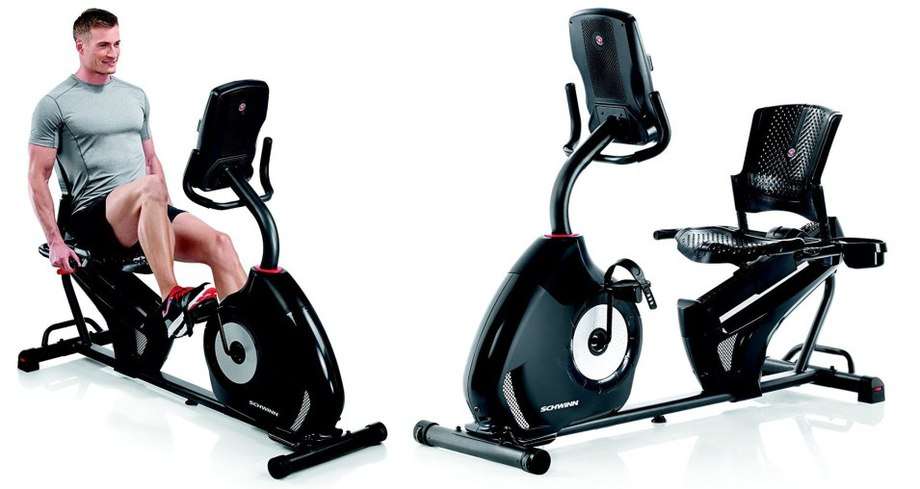
The Schwinn 270 is consistently the top recommendation from our team for home users who want a full-featured machine without stepping into commercial-grade pricing. It offers 25 levels of eddy current resistance, 29 preset workout programs, dual LCD screens, and Bluetooth connectivity for third-party fitness apps. The seat is ventilated and generously padded, and the backrest provides genuine lumbar support rather than a token gesture at it. For home cardio training at serious volume, the Schwinn 270 is the benchmark against which other machines in this category are measured.
The Nautilus R614 matches the Schwinn 270 in resistance levels and programming depth while adding a refined console with a larger display and a USB charging port. Our team found the seat adjustment system smoother than most competitors, which matters considerably in households with multiple users at different heights. The grip heart rate monitors are accurate enough for zone-based training, and the Nautilus companion app integration is among the better implementations at this price point. Anyone who tracks metrics seriously will find the R614 a compelling alternative to the Schwinn.

At roughly $500, the SF-RB4850 punches well above its weight class. Sixteen resistance levels, a clear backlit console, and a wide padded seat make it competitive with machines costing significantly more. Build quality is solid for home use — the frame handles daily sessions without wobble or excessive noise. Our team recommends this model for home users who want real, sustained functionality without the premium price tag of the top two picks. It's the machine that delivers the most cardio value per dollar in this roundup.

The Xterra SB2.5r has a notably smaller footprint than most recumbent bikes in its class, making it a practical pick for apartments or home gyms where floor space is genuinely limited. Eight resistance levels keep the interface simple, and the padded seat and backrest are comfortable for sessions up to an hour. Performance is modest compared to the Schwinn or Nautilus, but for the price and footprint, it represents strong value for home users who need a machine that actually fits their space.

The Marcy ME-709 is the entry point our team recommends for home users who want to try recumbent biking without a large upfront financial commitment. Eight resistance levels via a simple knob dial, a basic LCD display showing time, distance, and calories, and a step-through frame at around $200 make it genuinely accessible. The seat is less padded than higher-end models, so longer sessions may call for an aftermarket cushion — but for 20 to 30-minute daily rides, it delivers honest cardio value at a price most people can justify without hesitation.

Our team recommends starting with 20-minute sessions at a moderate resistance level — enough to raise heart rate noticeably but not enough to cause breathlessness within the first five minutes. Seat position is the most critical setup variable: the leg should be almost fully extended at the bottom of each pedal stroke, with a slight remaining bend in the knee. Most machines use a simple slide rail with numbered positions — finding the right setting takes less than two minutes and prevents unnecessary knee strain from the first session onward.
After the initial two weeks, progressive overload through resistance increases drives the most meaningful cardiovascular adaptation. Our team follows a straightforward protocol: add one resistance level every two weeks, or increase session duration by five minutes when duration-based progression suits the individual better. Interval training — alternating between higher and lower resistance in two to three-minute blocks — is particularly effective for improving cardiovascular efficiency and can be introduced after the first month once a solid aerobic base is established.
The case for a recumbent bike as the primary home cardio machine is genuinely strong. These machines are quiet enough for apartment use, require minimal technical learning curve, and are usable by people across a wide fitness spectrum. The back support means most people can read, watch television, or listen to audio content while riding — which dramatically improves long-term adherence to the routine. Consistency is the single most important variable in any cardio program, and recumbent bikes remove more barriers to it than almost any other machine category.
Recumbent bikes do not replicate the cardiovascular intensity ceiling of upright bikes or rowing machines. The reclined position limits how hard the cardiovascular system can be pushed before muscular fatigue in the legs becomes the limiting factor rather than aerobic capacity. For home users focused primarily on maximum calorie burn per session, an upright bike or a rowing machine under $300 may edge ahead in raw output. The footprint is also considerably larger than folding or upright alternatives, which is a real constraint in smaller living spaces.
A few consistent habits extend the operational life of a recumbent bike significantly. Our team recommends wiping down the seat, backrest, and console after every session to prevent sweat-related corrosion on electronic components and upholstery degradation. Monthly, the pedal threads and seat rail mechanism benefit from a light application of dry lubricant spray. Checking all frame bolts and tightening any that have worked loose prevents the creaking and wobble that develop gradually on machines that are never inspected between uses.
Resistance inconsistency — where the machine feels noticeably easier or harder at the same setting than it did previously — typically indicates a magnetic brake issue or electronics calibration drift. Most manufacturers provide a calibration procedure in the owner's manual, and running it every six months is sound preventive practice. Addressing unusual sounds or resistance irregularities early prevents minor wear from escalating into expensive component failure. The drive belt and flywheel bearings are the two most common failure points; both can be replaced inexpensively when caught before they damage surrounding hardware.
The reclined seat and full backrest distribute body weight across a much larger surface, eliminating the forward lean and spinal compression that upright bikes require. For anyone managing chronic lower back conditions, this ergonomic difference is substantial rather than cosmetic — it determines whether a 30-minute cardio session is possible at all.
Three to four sessions per week of 20 to 30 minutes each produces measurable improvements in cardiovascular fitness within four to six weeks. Our team finds that consistency at moderate intensity outperforms occasional high-intensity efforts for most home users, particularly those returning from injury or inactivity.
Recumbent bikes support weight loss effectively when combined with appropriate nutrition. A moderate-intensity 30-minute session burns roughly 200 to 300 calories depending on body weight and resistance level. The key advantage is that the low-impact nature allows most people to ride more frequently and for longer durations than higher-impact alternatives, which increases total weekly calorie expenditure.
Our team recommends starting at level 2 or 3 on an 8-level machine, or level 4 to 6 on a 25-level machine. The target sensation is a moderate effort — noticeably elevated breathing but still able to carry on a conversation. Staying in this zone builds aerobic base efficiently without overtaxing the cardiovascular system in the early adaptation phase.
Most home recumbent bikes require a footprint of approximately 55 to 65 inches in length and 24 to 27 inches in width. Adding 18 to 24 inches clearance on all sides for safe entry and exit brings the recommended floor allocation to roughly 7 by 5 feet. The Xterra SB2.5r is among the more compact options for tighter spaces.
For most home users, yes. Research consistently shows that sustained moderate-intensity aerobic exercise — regardless of specific modality — produces comparable cardiovascular adaptations. The recumbent bike's advantage is that its comfort profile enables the consistent, frequent use that drives those adaptations. A machine that gets used daily at moderate intensity outperforms one ridden occasionally at high intensity.
The Marcy ME-709 is our team's budget recommendation. At around $200, it delivers functional magnetic resistance, a readable console, and a step-through frame that works for most body types. Anyone willing to spend slightly more will find the Xterra SB2.5r a meaningful step up in seat comfort and build quality for roughly $150 additional investment.


About Mehnaz
Mehnaz is the founder and editor of RipPain, a health resource site dedicated to helping readers navigate pain management, recovery, and medical device research. Her work on the site is driven by personal experience caring for seriously ill family members, which led her to study evidence-based guidance from physicians, pain specialists, and published medical research. She curates and summarizes expert medical insights to make credible health information accessible to everyday readers.
You can get FREE Gifts. Or latest Free phones here.
Disable Ad block to reveal all the info. Once done, hit a button below
 Mehnaz