If you want the best manual treadmills for your home gym, the Sunny Health & Fitness SF-T1407M tops the list for most buyers — it's sturdy, affordable, and delivers a real cardio challenge without a single power cord. Manual treadmills are driven entirely by your own legs, which means zero electricity costs, minimal maintenance, and a natural stride that adapts to you rather than a motor. They're especially worth considering if you're already managing lower back pain or joint sensitivity, since the self-paced movement is far gentler than being locked into a fixed motor speed.
The three picks in this guide cover a range of budgets and fitness levels, so whether you're a complete beginner or someone who works out daily and wants to ditch the gym membership, there's a strong option here. Manual treadmills are genuinely practical — smaller, lighter, and simpler than electric models, with fewer parts that can break down on you over time.
Below you'll find the real benefits, honest drawbacks, a step-by-step setup guide, and the truth about some stubborn myths so you can buy with clear expectations. Let's get into it.
The Real Benefits and Drawbacks of Manual Treadmills
Where Manual Treadmills Genuinely Shine
Manual treadmills have real, measurable advantages that electric models simply can't match, and here are the ones that actually matter to everyday home gym users:
No electricity needed — the belt moves only when you walk or run, so your power bill stays exactly where it is
Stronger lower body engagement — you use your hamstrings and glutes more to push the belt, which burns more calories at the same pace compared to electric models
Compact and lightweight — most manual models weigh under 80 lbs and fold flat for storage under a bed or tucked in a closet corner
More natural gait — since the belt responds to your movement rather than a preset motor speed, your stride stays instinctive and relaxed
Far lower maintenance costs — no motor means far fewer parts to fail, lubricate, or replace over years of use
Great for low-impact rehab — the belt stops the instant you stop, with no motor to fight against when you need to pause suddenly
Pro tip: If you're recovering from a lower body injury, always check with your doctor before starting any treadmill routine — but manual treadmills are generally considered safer for rehab because you remain in full control of pace from the very first step.
Honest Drawbacks to Know Before You Buy
No piece of equipment is perfect, and being upfront about the limitations saves you from a frustrating purchase:
Top speed is limited by how fast you can physically push the belt, which rules out serious sprint training on most flat-belt models
The first few sessions feel genuinely awkward — there's a learning curve before the movement feels fluid and natural
Budget models often have a narrow belt width that feels cramped for taller users with a longer stride
No built-in workout programs on most manual models, so you track your own progress rather than following guided sessions
Not suitable for users above the listed weight capacity — always check the limit and give yourself a 20 lb safety buffer
Here's a clear side-by-side look at how manual and electric treadmills compare on the features that matter most:
Manual Treadmill
Electric Treadmill
It doesn't run on electricity.
It runs on electricity.
Its surface rotates as the exerciser moves his/her legs.
Its surface revolves as the power is connected and you turn the machine on.
The exerciser has to control its speed and intensity.
The electric console regulates the exerciser's running speed, distance, time, etc.
Its resistance works with incline or magnetic force.
Its resistance works with manual or automatic incline.
It's smaller and lighter.
It's considerably larger and heavier.
Its normal or LCD monitor is run by battery.
Its interactive LCD monitor only functions on power connection.
It doesn't have any built-in speaker or Bluetooth.
It comes with Bluetooth, built-in speaker, cooling fan, etc.
How to Set Up and Start Using Your Manual Treadmill
Assembly and Initial Positioning
Most manual treadmills take 20–30 minutes to assemble if you follow the included guide carefully and lay everything out before you start. Here's the right order to do it:
Lay all parts on a clean, flat surface and cross-check the parts list before picking up a single tool
Attach the frame rails first, then secure the handlebars — most models need only a handful of bolts at each joint
Position the assembled treadmill on a flat, stable floor with at least two feet of clearance on both sides and behind you
Check every bolt carefully before stepping on — a loose connection is a safety hazard that takes 30 seconds to prevent
Wear proper footwear from your very first session — supportive, non-slip shoes reduce joint stress on every stride, and our guide to the best shoes for back pain covers exactly what to look for in walking and cardio footwear
Your First Few Sessions
The first week is entirely about getting comfortable with the feel of a self-powered belt — not pushing your limits or breaking records:
Walk at a slow, comfortable pace for 10–15 minutes per session and don't rush past that
Keep a light grip on the handlebars for balance, but don't lean your full weight on them — your core should be doing the stabilizing work
Look straight ahead, relax your shoulders, and let your arms swing naturally at your sides
Increase resistance levels gradually over the first two weeks rather than jumping straight to the highest setting
Aim for three sessions in your first week — consistency matters far more than duration at this stage
Warning: Never step onto a moving manual belt from a standing position — always start with the belt stationary, then use gentle walking steps to get it moving before picking up your pace.
The Top 3 Manual Treadmills for Your Home Gym
These three picks represent the best balance of quality, value, and real-world usability for sport and fitness training at home. All three belong to the Sunny Health & Fitness lineup, which has a solid track record for durable, affordable manual treadmill designs that hold up to daily use.
Sunny Health & Fitness SF-T1407M — Best Overall
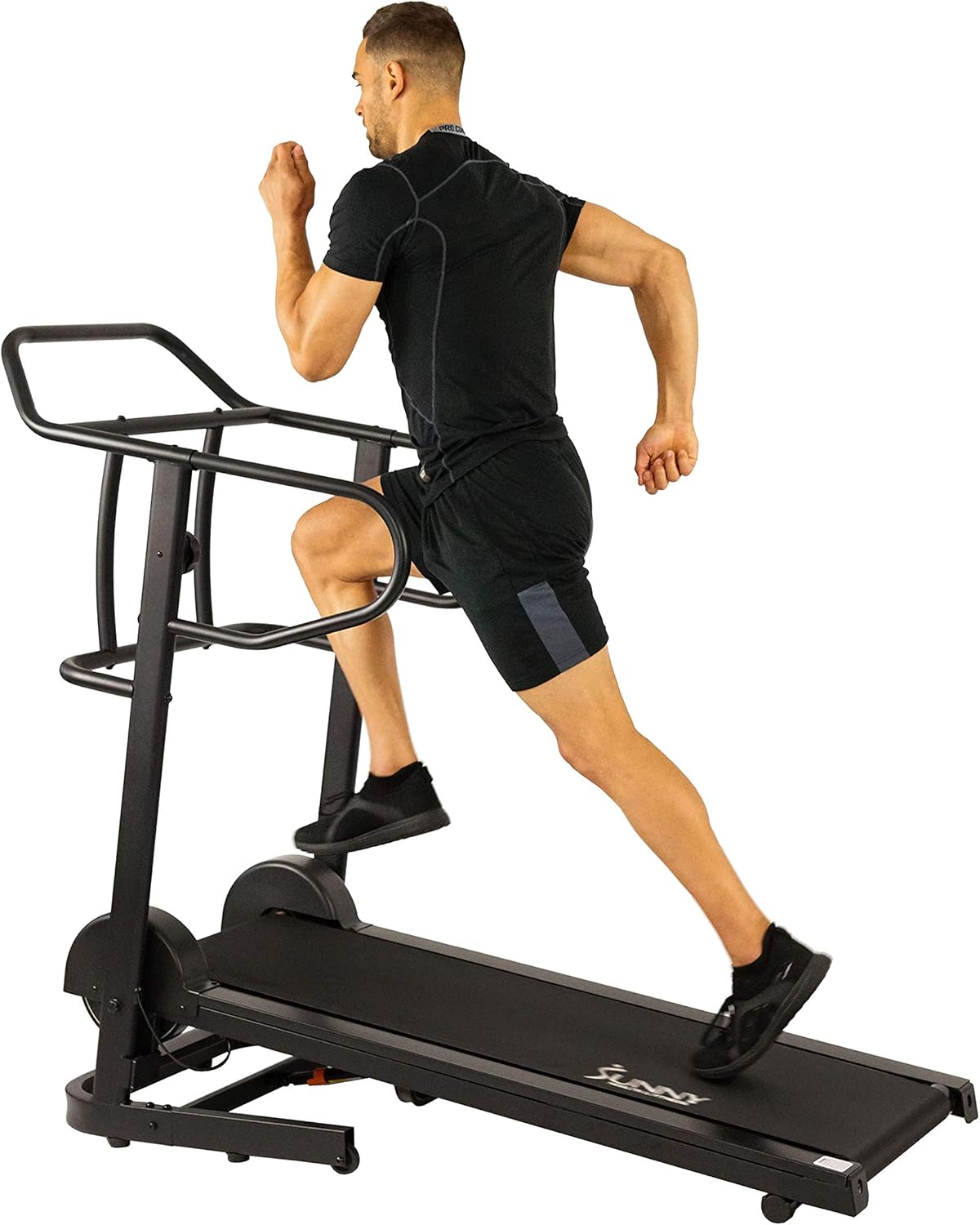
Sunny Health & Fitness Manual Treadmill With 16 Levels Of Magnetic Resistance
The SF-T1407M is our top pick because it hits the sweet spot between price and genuine performance — here's what makes it stand out from the crowd:
16 levels of magnetic resistance — enough range to progress from casual beginner walking to challenging incline-style sessions without buying a new machine
Battery-powered LCD monitor tracks time, speed, distance, and calories burned so you always know your numbers
Folding frame makes storage simple — it tucks under most beds or into a closet corner in under a minute
220 lb weight capacity — adequate for most users, though larger frames should look for a higher-rated alternative
Non-motorized flat belt system delivers a smooth, natural walking feel that most users adjust to quickly
Built-in transport wheels so you can reposition it without straining your back
Sunny Health & Fitness SF-T1411 — Best for Faster Pacing
If you want to push beyond a walking pace and work toward light jogging, the SF-T1411 is designed to handle it:
Wider belt surface than the SF-T1407M, giving you a more comfortable stride at quicker speeds
Higher handlebar placement that supports an upright, natural posture during faster movement
Pulse sensors built into the handlebars let you monitor your heart rate without a separate device
Easy-fold mechanism with a locking safety pin keeps the machine stable in both use and storage position
Heavier flywheel provides a smoother belt transition when you're changing pace mid-session
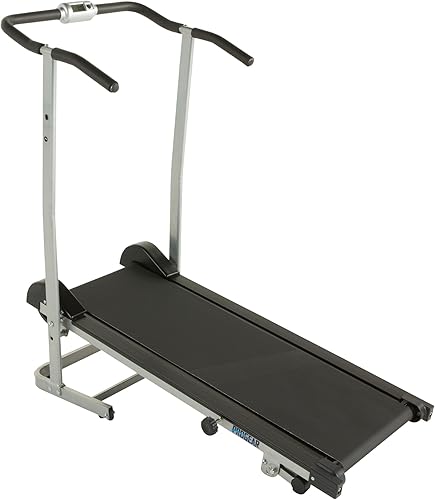
Sunny Health & Fitness T7643 — Best Budget Option
The T7643 is the right call when budget is your primary concern and you simply need a reliable machine to walk on every day:
Lower price point without sacrificing the core manual treadmill experience that makes these machines worthwhile
Compact footprint makes it ideal for small apartments or shared living spaces where every square foot counts
Simple tension knob for resistance adjustment — less sophisticated than a magnetic dial, but equally effective for basic use
Lightweight frame makes repositioning easy between workouts or around other home gym equipment
A smart starter machine to try before committing to a more feature-rich model as your fitness level improves
How to Choose the Best Manual Treadmills for Your Home Gym
If You're Just Starting Out
Don't overthink your first manual treadmill purchase — here's what actually matters for beginners and what you can safely ignore:
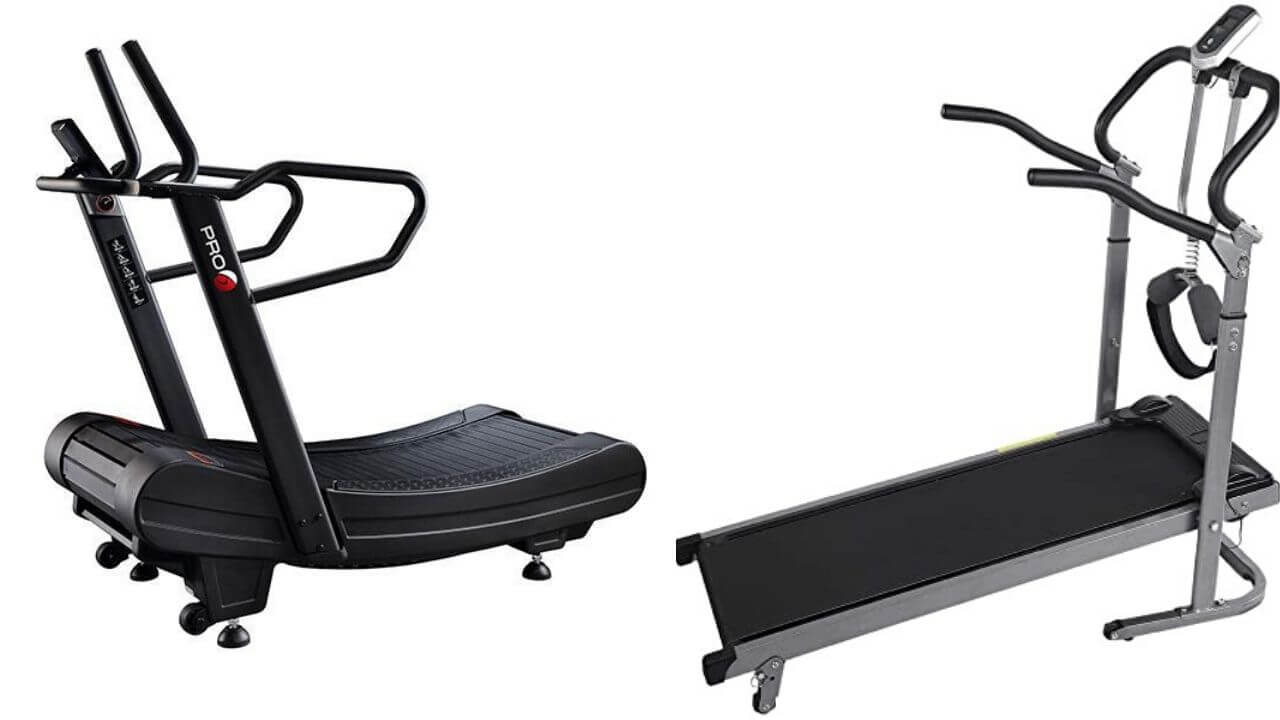
Start with a flat-belt model — curved treadmills are harder to control at lower speeds and have a steeper learning curve
Prioritize frame stability over extra features — a solid, wobble-free build matters more than a fancy monitor when you're new
Look for at least 10 resistance levels so you have room to grow without needing an entirely new machine in six months
Choose a folding design if your home gym doubles as a bedroom or living space
Check the weight capacity and add 20 lbs as a safety buffer — always err toward more capacity, not less
If You Already Train Regularly
Experienced users need different specs than beginners, and your investment should reflect the higher demands you'll put on the machine:
Look for 16 or more resistance levels and a heavier flywheel for smooth, responsive belt movement at higher speeds
Wider belt width — at least 16 inches — for a comfortable jogging stride without your feet drifting toward the edges
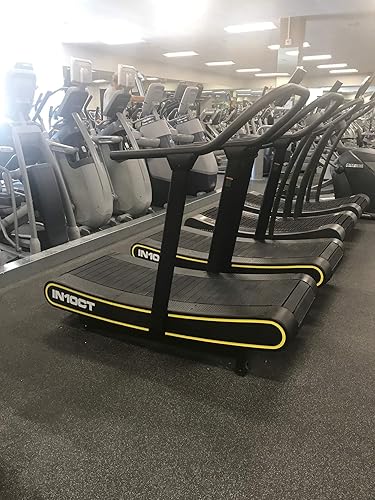
Curved-belt designs let you hit true running speeds and engage more posterior chain muscles per stride
Pair your manual treadmill with a quality rowing machine under $300 for a complete home cardio setup that hits both push and pull movement patterns
Target a weight capacity of at least 250 lbs if you carry significant muscle mass — the listed limit is a hard ceiling, not a suggestion
Pro insight: Advanced athletes often prefer curved-belt manual treadmills because the arc shape naturally encourages a mid-foot strike, which reduces cumulative joint impact and improves running economy across long training sessions.
Manual Treadmill Myths That Need to Go
Myth: Manual Treadmills Don't Give a Real Workout
This one is simply wrong. The CDC's physical activity guidelines for adults consistently emphasize self-propelled movement as a high-value form of moderate-intensity aerobic activity — and manual treadmills are exactly that kind of movement applied in a controlled, trackable format.
Manual treadmills recruit your posterior chain — hamstrings, glutes, and calves — significantly more than electric models at the same walking speed
Your core works harder to stabilize your movement when you're the one controlling the belt, which means more muscles firing per session
Calorie burn is genuinely higher on a manual treadmill at equivalent walking speeds — this is not a small or marginal difference
The effort feels greater because it is greater — that's the whole point, and that's why results come faster for consistent users
Myth: They're Only Good for Walking
This myth comes from people who've only tried basic flat-belt models and never explored what the full range of manual treadmill designs can do:
Curved-belt manual treadmills are actively used by professional athletes and strength coaches for sprint interval training
Even flat-belt models like the SF-T1407M fully support light jogging at higher resistance settings once you've built your base fitness
Physical rehab facilities use manual treadmills precisely because users control every aspect of intensity — that flexibility works for recovery and performance alike
The first 30 days determine whether your manual treadmill becomes a daily fixture or an expensive clothes rack — here's a simple, realistic progression that actually works:
Week 1–2: Three sessions per week, 15 minutes each, at a comfortable walking pace on resistance level 3 or 4
Week 3: Add a fourth session and extend each to 20 minutes — small increases keep you progressing without burning you out early
Week 4: Introduce one higher-resistance session per week to start building leg strength alongside your cardiovascular endurance
Track your sessions in a simple notebook or phone app — seeing your streak grow is a more powerful motivator than most people expect
Schedule sessions like actual appointments in your calendar and treat them as non-negotiable blocks in your day
Staying Consistent After the Honeymoon Phase
Most people fall off after the first four to six weeks — here's how you stay the course while everyone else is quitting:
Alternate easy recovery walks with harder resistance-heavy sessions to prevent both boredom and physical plateaus from setting in
Add variety by pairing your treadmill with other home gym equipment — a foldable exercise bike gives you an excellent low-impact cardio option on off days without taking up much space
Set a concrete three-month goal with a measurable metric — a target weekly step count, total session duration, or a specific resistance level you want to reach comfortably
Reassess your resistance settings every four weeks — if your current level feels easy, that's your cue to move up and keep the challenge alive
Frequently Asked Questions
Are manual treadmills good for weight loss?
Yes — manual treadmills actually burn more calories than electric treadmills at the same walking speed because you're powering the belt entirely with your own effort, which engages more muscle groups simultaneously. Consistent daily use combined with a sensible diet makes them a genuinely effective long-term weight management tool.
What is the weight limit on most manual treadmills?
Most budget and mid-range manual treadmills list a weight capacity between 200 and 265 lbs. Always check the manufacturer's specific limit before purchasing, and choose a model with at least 20 lbs of headroom above your actual body weight for safe, long-term use without stressing the frame.
Can you run on a manual treadmill?
You can jog and run on most manual treadmills, but flat-belt models have a practical top speed limited by how fast you can push the belt with your own stride. Curved-belt manual treadmills are specifically engineered for running at higher speeds and are actively used by serious athletes for sprint interval training.
Do manual treadmills fold up for easy storage?
Most modern manual treadmills include a folding frame with a locking pin or safety mechanism that lets you store the machine upright or flat against a wall. All three Sunny Health & Fitness models covered in this guide feature folding designs, and most include transport wheels for easy repositioning between uses.
Are manual treadmills quieter than electric ones?
Yes — because there's no motor running continuously in the background, manual treadmills are significantly quieter than electric models. The main sound you'll hear is the belt moving under your feet, which is minimal enough that it's unlikely to disturb others in shared living spaces or thin-walled apartments.
How long should I walk on a manual treadmill each day?
Start with 15–20 minutes per session, three to four days per week, and build from there as your fitness improves. Most adults benefit from accumulating at least 150 minutes of moderate-intensity movement per week, which you can easily split across multiple sessions rather than trying to get it all done in one long stretch.
Are manual treadmills safe for people with knee pain?
Manual treadmills are often a good option for people with mild knee discomfort because you control the pace completely and can stop instantly without fighting a motor — that responsiveness is a genuine safety advantage. That said, always consult your doctor before starting any new treadmill routine if you have an existing knee condition, and invest in properly supportive footwear to reduce joint stress on every session.
Key Takeaways
The Sunny Health & Fitness SF-T1407M is the best all-around pick for most home gym users — 16 resistance levels, a folding frame, and a proven track record at an accessible price make it the default recommendation for beginners and intermediate users alike.
Manual treadmills burn more calories than electric models at equivalent speeds because you power the belt yourself, engaging more posterior chain muscles on every single stride.
Beginners should start with three 15-minute sessions per week on a flat-belt model and build gradually, while experienced athletes can upgrade to wider-belt or curved-belt designs for higher-speed training.
Consistency over weeks and months — not intensity in any single session — is what delivers lasting fitness results, so pair your treadmill with complementary equipment and treat your scheduled sessions as non-negotiable.
Mehnaz is the founder and editor of RipPain, a health resource site dedicated to helping readers navigate pain management, recovery, and medical device research. Her work on the site is driven by personal experience caring for seriously ill family members, which led her to study evidence-based guidance from physicians, pain specialists, and published medical research. She curates and summarizes expert medical insights to make credible health information accessible to everyday readers.



 Mehnaz