
Recumbent exercise bike benefits are real, well-documented, and accessible to almost anyone — including people who have been told exercise is off the table. This machine places you in a reclined seat with your legs extended forward, letting you pedal your way to genuine cardiovascular fitness without stressing your spine, knees, or hips. If you're building a low-impact home fitness routine, the sport and fitness section of this site covers more tools worth considering.
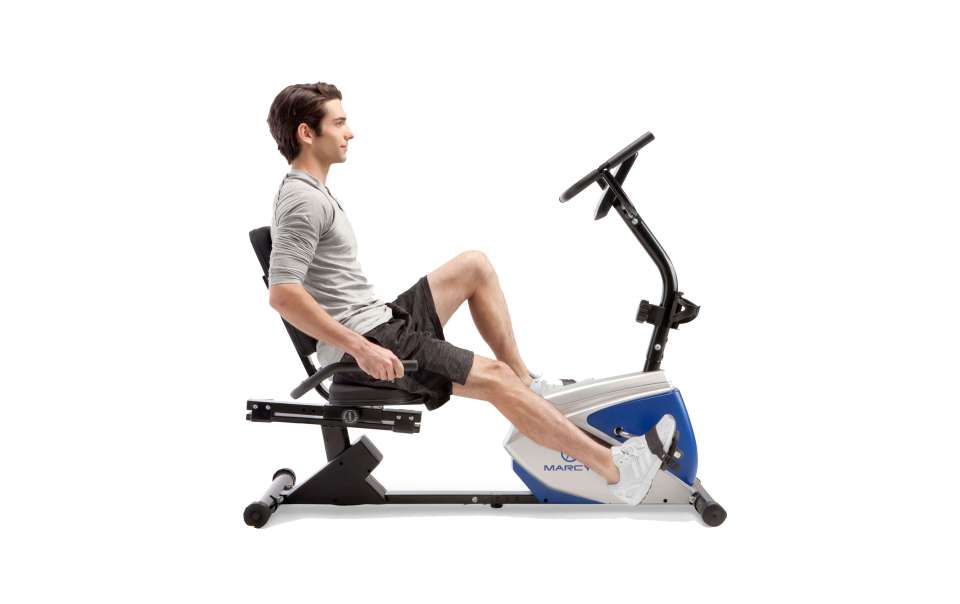
Unlike an upright bike or a treadmill, a recumbent bike supports your entire back throughout the workout. Your body weight distributes across the seat back and glutes rather than concentrating on your sit bones, which dramatically reduces spinal compression. That's not a minor design quirk — it's what makes this machine uniquely suited for people managing lower back pain, arthritis, and other chronic conditions that make traditional cardio painful or impossible.
This guide covers what the research shows about recumbent cycling, who benefits most, how it stacks up against other cardio machines, and what you'll realistically spend to get a solid unit. You'll walk away knowing whether this machine belongs in your home — and how to use it effectively once it does.
Contents
The seat angle on a recumbent bike — typically between 40 and 70 degrees from vertical — fundamentally changes how your body handles the exercise load. Instead of your lumbar spine absorbing the compression that comes with upright sitting and pedaling, your lower back stays in a neutral, supported position throughout the entire session. Spinal discs are not under the same axial load they face on an upright bike.
The forward pedal placement also matters. When your legs extend out in front rather than straight down, your hip flexors operate at a biomechanically favorable angle. You engage your leg muscles through a more complete range of motion with less strain on tendons and connective tissue. This is part of why recumbent cycling is routinely prescribed in cardiac and orthopedic rehabilitation programs — the cardiovascular demand is real, but the joint stress is minimal.
The CDC recommends 150 minutes of moderate-intensity aerobic exercise per week for adults. A recumbent bike is one of the most reliable ways to hit that target when higher-impact options are off the table.
A recumbent bike primarily trains the lower body. Here's what's working with every pedal stroke:
Upper body involvement is minimal unless your bike includes moving arm handles. If full-body conditioning matters to you, it's worth comparing the recumbent bike against equipment like a rowing machine before committing — rowing works your back, arms, and core simultaneously in a way that cycling simply doesn't.
If chronic pain is part of your daily life, the recumbent bike addresses a problem most cardio equipment ignores: how do you exercise consistently when movement hurts? The answer this machine provides is structured, low-impact aerobic work that doesn't load the joints the way walking, jogging, or standing cardio does.
For people with herniated discs, lumbar stenosis, or post-surgical recovery, the absence of spinal axial loading is clinically meaningful. For those managing fibromyalgia or widespread musculoskeletal pain, the ability to control intensity precisely — and stop immediately if symptoms flare — makes this machine far safer than outdoor exercise. The seated position also removes the balance demands that turn many fitness machines into fall risks for people with neurological or vestibular issues.
Post-knee replacement patients, in particular, benefit from the low-impact circular motion that lubricates the joint and builds quad strength without the shear forces of walking on uneven surfaces.
Mounting a recumbent bike requires no high step-over, no balance on a narrow seat, and no complicated technique. You sit down, adjust the seat position, and start pedaling. That accessibility is genuinely important for older adults or anyone returning to exercise after a long break.
You can start at virtually zero resistance and progress at whatever pace your body allows. Week one might be 10 minutes at the lowest setting. Six weeks later, you might be doing 35-minute moderate sessions. The machine accommodates every point on that spectrum without requiring you to change equipment or location.
For beginners intimidated by gym equipment or the learning curve of more complex machines, the recumbent bike builds cardiovascular endurance and leg strength with an immediate sense of comfort and control.
The most direct comparison is between a recumbent and an upright stationary bike. Both deliver cardiovascular benefits and work similar muscle groups, but the experience is meaningfully different. The table below outlines the key distinctions:
| Recumbent Bike | Upright Bike |
| Recumbent bike offers a reclined sitting position. | Upright bike has an erect sitting position. |
| Pedals are set at the anterior. | Pedals are set down below the seat. |
| Seat is larger and cozy. | Seat is smaller and less comfortable. |
| The rider seats in a leaning position on the seat. | The rider seats on the erect seat like most traditional bicycles. |
| Works lower body along with the cardiovascular system. | Works whole body with the cardiovascular system. |
| Recumbent bike helps less in upper body workout. | Upright bike gives an outdoor workout experience while tones the upper body. |
| Recumbent bike is suitable for people who have aged. | Upright bike is suitable for the juveniles. |
| Recumbent bike may take a decent space in your room. | Upright bike may be foldable and kept in a smaller space after use. |
| Reclined workout gives the rider a full back support. | Upright bikes helps keep spine straight but has less upper body support. |
| It saves from body fatigue and bone decay. | It may cause neck and back pain after workout. |
The elliptical offers a more intense full-body workout and burns more calories per session. But it requires you to stand, which eliminates it as an option for many people with back or balance issues. Here's how the two compare:
| Recumbent Bike | Elliptical Trainer |
| Recumbent bike has a leaning seat for exercising. | Elliptical trainer requires a person to stand up while exercising. |
| It's suitable for people with tender back. | It may not be comfortable for people with back pain. |
| Recumbent bikes may or may not have hand-pedals. | Elliptical trainer consists of movable arms for upper arms and body workout. |
| It helps greatly in calorie burning. | Elliptical trainer burns about 30% more calories than a recumbent bike on moderate exercises. |
| Outdoor workouts may be replaced by a recumbent bike. | Elliptical trainers can relieve you from outdoor jogging with low impact on knees and feet. |
| Recumbent bikes are more suitable for older people. | Elliptical trainers are best fit for the young people and those who love to stay physically active. |
| Comparatively found at reasonable prices. | Comparatively found at expensive prices. |
The bottom line: if you can use an elliptical comfortably, it burns more calories. If you can't — or if discomfort causes you to cut sessions short — the recumbent bike will deliver better results simply because you'll actually use it consistently.
A recumbent bike is clearly the right tool when:
Consistency is the most important variable in any fitness routine, and the recumbent bike removes most of the physical barriers that interrupt consistency. Thirty minutes of moderate pedaling elevates your heart rate into the aerobic zone, improves circulation, and builds leg endurance — without leaving you in pain the next day.
The recumbent bike isn't the answer to every fitness goal. Be clear-eyed about what it won't do:
If you're injury-free, younger, and chasing serious athletic performance, a recumbent bike alone won't get you there. Use it as a complement to other training, or explore whether a stair stepper might better match your intensity goals.
A wrong setup causes more knee pain than a hard workout does. Before you ride, adjust three things:
Many new riders skip seat adjustment and pay for it with knee discomfort within the first week. Get the position right from day one and your muscles — not your joints — will do the work.
Here's a straightforward beginner-to-intermediate weekly structure you can start with and build from:
| Day | Duration | Intensity | Goal |
|---|---|---|---|
| Monday | 20 minutes | Easy (RPE 4–5) | Build base endurance |
| Wednesday | 25 minutes | Moderate (RPE 5–6) | Cardiovascular conditioning |
| Friday | 30 minutes | Moderate (RPE 5–6) | Leg strength and stamina |
| Saturday | 20 minutes | Easy recovery | Active recovery, circulation |
RPE stands for Rate of Perceived Exertion on a 1–10 scale. At RPE 5–6, you're working but not gasping. After four weeks, increase session durations by 5 minutes or bump resistance by one level. Progressive overload — even small increments — drives real fitness gains.
Always warm up for 3–5 minutes at minimal resistance before increasing intensity, and cool down the same way. This matters more on a recumbent bike than you'd expect, because the seated position can allow lactic acid to pool in the legs if you stop abruptly.
Entry-level recumbent bikes at this price give you:
The Marcy ME-709 is one of the most purchased options in this range, sitting around $200 depending on availability. Our Marcy Foldable Exercise Bike review breaks down build quality, comfort, and who it actually suits. For light-to-moderate use — three or four sessions weekly — these machines hold up well. Daily intensive workouts may accelerate wear on the components.

Stepping up to the mid-range unlocks meaningful upgrades:
This price range is the sweet spot for most home users. The durability improvement over budget machines is real — welds are cleaner, frames are heavier, and the resistance mechanism is more consistent under daily use. You don't need to spend more than this unless you're building a professional therapy or training setup.
Above $600, you're paying for commercial durability, touchscreen displays, and connectivity features — worthwhile for a gym or clinic setting, but beyond what a home user needs to get full recumbent exercise bike benefits from daily sessions.
Yes — the recumbent bike is one of the safest cardio options for knee pain. The forward pedal position and circular motion put far less shear stress on the knee joint than walking on a treadmill or using a stair stepper. Keep your seat adjusted so your knee stays slightly bent at the bottom of the stroke, and you'll strengthen the surrounding muscles without aggravating the joint itself.
Most people see measurable cardiovascular improvement within four to six weeks of riding three to four times per week for 20–30 minutes at moderate intensity. For weight management, consistency matters more than duration per session — regular shorter rides beat infrequent long ones. Pair your cycling with appropriate nutrition to accelerate results.
It's one of the most recommended tools for managing lower back pain through exercise. The reclined seat and back support eliminate spinal compression during the workout, which means you can build cardiovascular fitness and leg strength without aggravating disc problems or muscle tension. Many physical therapists include recumbent cycling in rehabilitation protocols for exactly this reason. Start at low resistance and short sessions, then build gradually.


About Mehnaz
Mehnaz is the founder and editor of RipPain, a health resource site dedicated to helping readers navigate pain management, recovery, and medical device research. Her work on the site is driven by personal experience caring for seriously ill family members, which led her to study evidence-based guidance from physicians, pain specialists, and published medical research. She curates and summarizes expert medical insights to make credible health information accessible to everyday readers.
You can get FREE Gifts. Or latest Free phones here.
Disable Ad block to reveal all the info. Once done, hit a button below
 Mehnaz