
Picture a nurse wrapping up a grueling 12-hour overnight shift. Her feet are throbbing, her white shoes are splattered with something unidentifiable, and she's already dreading the next shift. The right pair of nursing shoes can change that story entirely.
White shoes remain the standard in many hospitals and clinics. They look clean and professional. But finding a pair that stays comfortable through a double shift — while also surviving spills, bleach wipes, and endless hallway miles — is harder than it sounds. This guide covers seven of the best white nursing shoes available in 2026, with honest reviews, a clear buying guide, and answers to the questions nurses actually ask.
From clogs to sneakers to running-inspired designs, the options below cover different budgets, foot types, and work environments. For anyone dealing with foot pain from long shifts, the foot care resource section is also worth exploring alongside this guide. Nurses, healthcare aides, and anyone on their feet all day will find useful picks here.








clove built these shoes specifically for healthcare workers, and it shows. The fluid-resistant upper means spills — blood, saline, cleaning solution — bead off the surface. A quick wipe is usually enough. That alone sets these apart from most sneakers.
The elastic no-tie lace system is a small but meaningful detail. Nurses rushing between rooms don't have time to re-tie laces. The slip-on entry is smooth and secure. The squeak-free outsole is another thoughtful touch — hospital floors amplify every sound, and squeaky shoes get noticed fast.
Comfort holds up over long shifts. The midsole provides solid underfoot support without feeling stiff. Odor-fighting materials help keep the interior fresher over time. Buyers with wide feet report a comfortable fit across the forefoot. These are designed to do a demanding job in demanding environments, and they deliver on that promise in 2026.
Pros:
Cons:
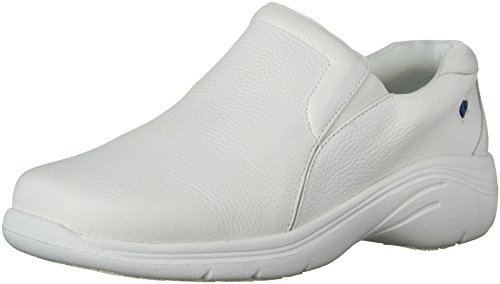
The Nurse Mates Dove is a longtime staple in healthcare footwear. It uses full-grain leather — the highest-quality leather cut — which means durability and a clean, professional appearance that holds up through repeated cleaning cycles. The silhouette is classic and polished, appropriate for settings where appearance standards are strict.
The pillowtop insole (a cushioned footbed layered with soft padding) reduces fatigue during long hours of standing. The full slip-resistant rubber outsole is rated for wet and slick surfaces. That's critical in environments where spills happen constantly. The dual side goring (elastic side panels) allows for quick removal without removing laces.
Fit runs fairly true to size, though buyers with high arches may want to add an aftermarket insole. The leather requires a short break-in period compared to synthetic alternatives — typically a few days of wear. For those curious about that process, this guide on how long it takes to break in shoes covers the timeline in detail. Long-term, the leather upper ages well and resists surface scuffs better than fabric.
Pros:
Cons:
The Hoka Bondi 9 isn't labeled a nursing shoe, but it has become one of the most popular choices among nurses, especially those with foot pain or joint issues. The oversized, maximalist midsole delivers exceptional shock absorption with every step. On hard tile or concrete hospital floors, that cushioning is immediately noticeable.
The engineered mesh upper keeps feet ventilated during long shifts. The textile lining feels soft against the skin. The rocker-style outsole geometry (a curved sole design that promotes smooth heel-to-toe motion) reduces the effort needed with each stride. Nurses who experience knee or hip fatigue often find the Bondi 9 significantly more forgiving than firmer shoes.
Sizing tends to run true to size, though the wide toe box accommodates broader feet well. The all-white colorway maintains a clinical appearance. One trade-off worth noting: the thick sole raises the heel height slightly more than standard sneakers, which some wearers need time to adjust to. The Bondi 9 is an investment, but for nurses who prioritize all-day cushioning above everything else, it consistently ranks among the top choices in 2026.
Pros:
Cons:
The Alegria Keli clog carries the APMA Seal of Acceptance — the American Podiatric Medical Association's endorsement for footwear that supports healthy feet. That certification matters for nurses dealing with foot pain, plantar fasciitis (inflammation of the tissue along the bottom of the foot), or arch issues. The structured rocker-bottom sole and contoured footbed work together to distribute weight evenly.
The soft leather upper is breathable and stain-resistant. The material holds its shape through repeated cleaning without cracking or fading. The slip-resistant outsole performs well on wet floors — important in clinical and food service settings alike. The clog style means fast on-and-off access, which nurses who work in fast-paced wards appreciate.
Fit can be slightly generous, so buyers between sizes may prefer sizing down. The rocker-bottom design works better for walking than standing completely still for extended periods. Anyone managing foot arch pain will find this clog particularly supportive — a helpful companion to reading about curing foot arch pain for a comprehensive approach. Overall, the Keli is one of the most foot-health-conscious picks in this roundup.
Pros:
Cons:
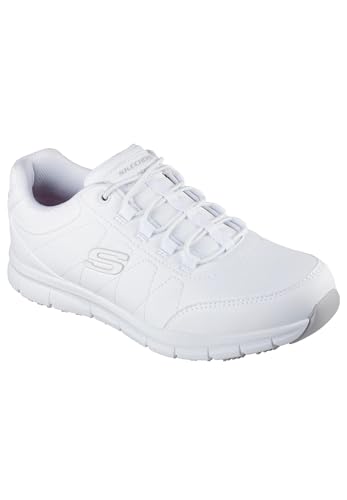
The Skechers Sure Track Trickel is a straightforward work shoe that hits the essentials at an accessible price. The non-slip outsole is the headline feature — tested and rated for slippery workplace surfaces. The bungee toe slip-on design allows quick entry without dealing with laces. For nurses who change shoes between shifts or need to move fast, that convenience adds up.
The memory foam insole (a pressure-sensitive foam that conforms to foot shape under body weight) provides solid initial comfort. It's a softer landing with each step compared to firmer insoles. The synthetic upper is easy to wipe down. The silhouette is clean and white — appropriate for most clinical dress codes.
For honest perspective: this shoe is built for value, not premium performance. The memory foam may compress over time in high-step-count roles. Buyers who are on their feet for 12-hour shifts every day may find the cushioning less supportive after several months. For part-time nurses, aides, or those on a tight budget, however, the Sure Track Trickel offers solid slip-resistance and decent comfort at a price that's hard to argue with in 2026.
Pros:
Cons:
The Brooks Ghost 17 brings certified athletic performance into the clinical setting. It carries both the PDAC A5500 Diabetic shoe certification and the APMA Seal of Acceptance — making it one of the most credentialed shoes in this roundup. For nurses managing their own foot health alongside demanding shift work, those certifications carry real weight.
The DNA LOFT v3 midsole (nitrogen-infused foam that is both lightweight and highly cushioned) now includes an extra millimeter of foam in the heel and three extra millimeters in the forefoot compared to the Ghost 16. That additional cushioning is immediately noticeable during long standing and walking periods. Precise flex grooves in the midsole encourage smooth heel-to-toe transitions without extra effort from the foot. Nurses who struggle with knee pain or hip fatigue often respond well to this type of neutral, smooth-rolling geometry.
The Ghost 17 is certified carbon neutral. It's marketed as a running shoe, and it works for that, but it's equally at home on hospital floors. The all-white colorway looks clean. The one notable limitation: it's a lace-up, so fast slip-on convenience isn't available here. Buyers who regularly deal with foot fatigue may also want to pair this shoe with strategies from this guide on how to reduce foot pain for additional relief.
Pros:
Cons:
Arch support is one of the top complaints nurses have about standard work shoes. The Skechers Arch Fit Arcade addresses that directly. The Arch Fit insole system — developed from over 120,000 foot scans — is podiatrist-certified and targets the underside of the arch specifically. For nurses with flat feet, plantar fasciitis, or general arch fatigue, that targeted support makes a noticeable difference.
The no-tie slip-on design is one of the most convenient in this roundup. Laces are tied off permanently during manufacturing, so the shoe behaves like a slip-on without the look of one. The removable insole allows buyers to swap in custom orthotics (custom-fitted shoe inserts made by a podiatrist) if needed. The lightweight cushioned midsole disperses weight across the foot rather than concentrating impact at specific pressure points.
The white sneaker silhouette is clean and low-profile. The fit tends to run true to size. Buyers with especially high arches should check whether the standard insole meets their needs or whether a custom orthotic swap is necessary. The Arch Fit Arcade is among the most accessible arch-support options in the Skechers lineup and holds up well under daily shift wear. According to NIOSH workplace ergonomics guidelines, proper footwear is a key factor in reducing musculoskeletal strain for workers who stand all day — the Arch Fit design aligns well with that guidance.
Pros:
Cons:
Hospital floors get wet. Spills happen constantly. A shoe without a rated slip-resistant outsole is a workplace hazard. Look for shoes that specifically state "slip-resistant" or "non-slip" on the product page — not just "rubber outsole." The Nurse Mates Dove and Skechers Sure Track both carry explicit slip-resistance ratings. The clove Classic is built for clinical environments where this is a baseline requirement. Slip resistance should be the first filter applied, before cushioning, price, or anything else.
An 8-hour or 12-hour shift involves thousands of steps. Inadequate cushioning leads to foot pain, leg fatigue, and even knee and back problems over time. There are two main cushioning approaches in this guide. Maximalist midsoles — like the Hoka Bondi 9 — deliver the most shock absorption per step. Targeted arch support designs — like the Skechers Arch Fit Arcade — address the underside of the foot specifically. Neither is universally better. Buyers with joint issues or flat feet often prefer maximalist cushioning. Those with arch pain often respond better to targeted support systems. Anyone experiencing ongoing foot pain may also benefit from reading about plantar fasciitis treatment, as nursing footwear choices directly impact this condition.
White shoes show every stain. In a clinical setting, spills are part of the job. A shoe that can be wiped down quickly — and that resists absorbing fluids in the first place — saves time and extends the life of the footwear. The clove Classic is specifically fluid-resistant. Full-grain leather shoes like the Nurse Mates Dove wipe clean with a damp cloth. Fabric uppers, including mesh running shoes, absorb liquids more readily and require more effort to clean. Buyers in high-spill environments should prioritize fluid-resistant or leather uppers over mesh.
Nursing shoes must fit correctly from day one. A shoe that's too narrow creates pressure points that worsen over a long shift. A shoe that's too loose causes the foot to slide, increasing fatigue and blister risk. Most shoes in this guide run true to size, with the exception of the Alegria Keli, which runs generous. Buyers with custom orthotics should look for removable insoles — the Skechers Arch Fit Arcade explicitly offers this. Buyers with wide feet should check width availability before purchasing. A proper fit is foundational — it doesn't matter how cushioned a shoe is if it doesn't fit right from the start.
Requirements vary by employer and healthcare facility. Many hospitals and clinics allow any professional, clean footwear. Some older institutions or specific departments still maintain white shoe dress codes. Buyers should check their facility's policy before purchasing. Even where white shoes are not required, many nurses prefer them for their clean, professional look.
Regular wiping with a damp cloth or disinfectant wipe after each shift helps prevent stain buildup. For fabric or mesh shoes, a soft brush with mild soap and water works well. Leather shoes benefit from occasional conditioning. Shoes with fluid-resistant uppers — like the clove Classic — are the easiest to maintain. Bleach-based cleaners should be used sparingly and only on compatible materials, as they can yellow some synthetics over time.
Slip-resistant shoes use outsole rubber compounds and tread patterns specifically designed to grip wet or slick surfaces. Look for shoes that meet ASTM F2913 or equivalent workplace slip-resistance standards. A shoe marketed as "rubber outsole" is not the same as one rated as "slip-resistant." For clinical settings, the distinction matters — wet floors and spills are constant hazards.
Yes, and many nurses prefer running shoes for their cushioning and comfort. The Brooks Ghost 17 and Hoka Bondi 9 in this guide are both running shoes that translate well to clinical environments. The trade-off is that running shoes are generally not fluid-resistant and may not carry specific workplace safety certifications. They are a strong choice for comfort-focused buyers in lower-spill environments.
Most nursing shoes should be replaced every six to twelve months under heavy daily use. High step-count shifts compress midsoles faster than everyday casual wear. When the cushioning feels noticeably flatter, when the outsole tread wears down visibly, or when foot and leg fatigue increases despite no other changes — those are signs the shoes are due for replacement. Rotating between two pairs can extend the total life of both.
It depends on the individual and the work environment. Clogs — like the Alegria Keli — offer easy on-and-off access, strong arch support, and a professional appearance. They suit nurses in slower-paced or procedure-focused settings. Sneakers offer more stability for fast movement, better heel lockdown, and often more cushioning variety. Buyers in fast-paced wards or emergency settings often prefer sneakers for their secure fit. Both styles appear across this guide because both work well in the right context.
The best white nursing shoe is the one that keeps feet healthy through a 12-hour shift — prioritize slip resistance and fit first, then everything else will follow.


About Mehnaz
Mehnaz is the founder and editor of RipPain, a health resource site dedicated to helping readers navigate pain management, recovery, and medical device research. Her work on the site is driven by personal experience caring for seriously ill family members, which led her to study evidence-based guidance from physicians, pain specialists, and published medical research. She curates and summarizes expert medical insights to make credible health information accessible to everyday readers.
You can get FREE Gifts. Or latest Free phones here.
Disable Ad block to reveal all the info. Once done, hit a button below
 Mehnaz