
The Dansko Women's Professional Slip-On Clogs earn the top spot for nurses with plantar fasciitis in 2026 — the rocker sole geometry and deep heel cup do more biomechanical work per step than almost anything else at this price point. If you're pulling 12-hour shifts on hard tile and stepping out of bed in the morning with sharp, stabbing heel pain, you already understand what's at stake with your footwear choice, and you need honest recommendations, not vague hedging.
Plantar fasciitis is the inflammation of the thick fibrous band connecting your calcaneus to your metatarsals, and it's disproportionately common among healthcare workers because hard floors, sustained standing, and constant directional changes put relentless cumulative stress on that tissue. The right shoe addresses the condition on three fronts: a firm, contoured arch support that offloads the fascia, a deep heel cup that controls calcaneal pronation, and sufficient forefoot cushioning to reduce peak impact at toe-off. Get one of these wrong and the other two don't save you.
Every shoe on this list was selected for nurses specifically — slip resistance, fluid resistance or easy cleanability, and an all-day wear profile are non-negotiable in clinical settings. You should also look at the foot care category if you're managing broader foot health issues alongside your plantar fasciitis, and if your facility requires white footwear, the best nursing shoes in white guide covers color-compliant options. Pairing any of these picks with an aftermarket insole can also significantly amplify arch support — the best plantar fasciitis insoles review has detailed comparisons worth reading before you commit.
Contents







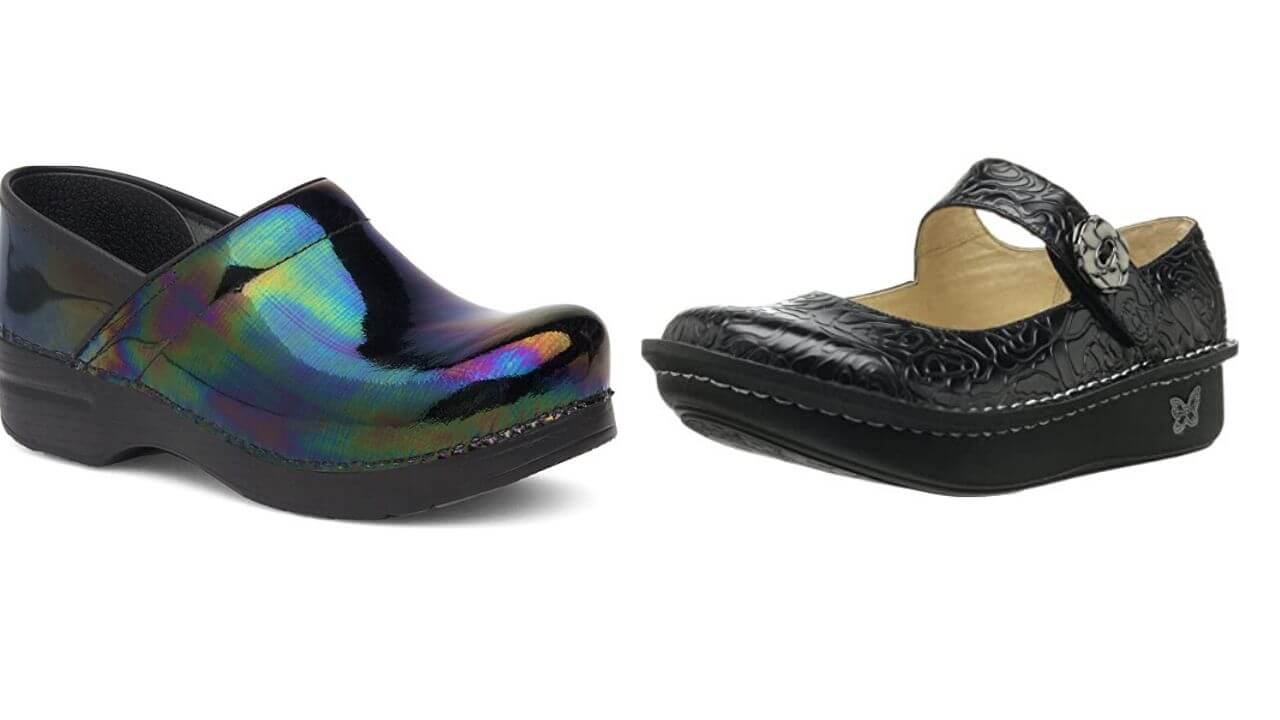
The Dansko Professional has been the de facto standard in nursing footwear for decades, and in 2026 it still earns that reputation for anyone managing plantar fasciitis. The rocker sole profile is the key differentiator — it shifts propulsion work away from your heel and forefoot, dramatically reducing the tensile load on the plantar fascia with every step you take across hard hospital floors. The heel counter is reinforced and deep enough to hold your calcaneus in neutral alignment, which is exactly what you need when your fascia is already inflamed and every degree of pronation compounds the pain.
The padded instep collar makes a real difference during extended wear, keeping the fit snug without creating pressure points at the ankle, and the roomy reinforced toe box gives your forefoot genuine room to splay naturally rather than getting compressed into a narrower profile that exacerbates forefoot load. The leather upper is easy to wipe down between patients, and the slip-resistant outsole meets clinical standards. This is not a shoe that wins on stylistic grounds — it's a tool built for a specific job, and it does that job better than almost anything else in this category.
The fit runs large for many users, so size down half a size if you're between sizes, and understand that there is a break-in period of a few days before the footbed conforms to your foot shape. Once broken in, though, the Dansko Professional delivers a level of all-day comfort that genuinely justifies its price premium over cheaper nursing clogs.
Pros:
Cons:
The Hoka Bondi 9 is the choice you make when cushioning volume is your primary priority and you need maximum impact absorption across an entire shift's worth of steps. The oversized CMEVA midsole delivers what Hoka calls "maximal cushioning" — a thick, highly compressible foam stack that significantly reduces ground-reaction force at heel strike, which is exactly the mechanism that aggravates plantar fasciitis most acutely in heavy walkers. The engineered mesh upper is lightweight and breathable, keeping your feet cooler and drier during long clinical hours than most leather or synthetic alternatives can manage.
The meta-rocker geometry — Hoka's version of a rocker sole — promotes a smooth heel-to-toe transition that, like the Dansko's rocker, reduces the peak tensile load on the plantar fascia at push-off. The difference is that the Hoka does this with far more foam underfoot, so it's the better choice if you're heavier, if you're on your feet for the entire 12-hour duration rather than alternating sitting and standing, or if your plantar fasciitis is in an acutely inflamed state rather than a managed chronic phase. The Bondi 9 is the nuclear option for cushioning, and for some nurses with severe plantar fasciitis, nothing else comes close to providing this level of impact mitigation.
The listed version is the men's Bondi 9, so women should size down approximately 1.5 sizes from their standard women's size to find the right fit. The wide toe box and accommodating last translate well across genders, and the lightweight textile lining keeps internal friction low even during extended wear.
Pros:
Cons:
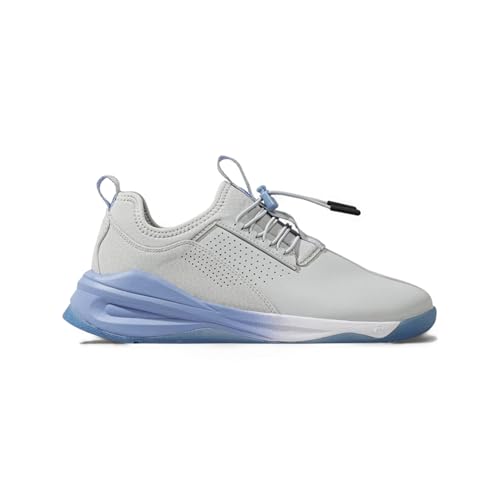
Clove built the Classic specifically for healthcare workers, and that focus is evident in every design decision. The fluid-resistant upper is engineered to repel blood, urine, and other clinical fluids rather than absorbing them, which keeps your feet dry during messy procedures and dramatically simplifies end-of-shift cleaning. The elastic no-tie laces mean you're not fussing with shoelaces in a clinical environment where cross-contamination risk is real, and the slip-resistant outsole provides reliable traction on the wet floors that are a constant presence in hospital settings.
For plantar fasciitis specifically, the Clove Classic delivers all-day comfort through a cushioned insole and a last designed for extended standing rather than athletic performance. The comfort profile won't match the Dansko's rocker sole mechanics or the Hoka's maximal foam volume, but it offers a genuinely comfortable all-day experience for nurses whose plantar fasciitis is in a managed, low-to-moderate pain state rather than an acute flare. The real value proposition is the combination of clinical functionality and wearable comfort — you're not sacrificing infection control standards for foot comfort or vice versa.
The grey colorway shown here is also available in several other colors, and the shoe accommodates both men and women with a unisex sizing approach. If your plantar fasciitis symptoms are severe, you might want to pair these with a dedicated aftermarket insole to get more structured arch support than the stock footbed provides.
Pros:
Cons:
The Alegria Keli carries APMA (American Podiatric Medical Association) certification, which matters for plantar fasciitis sufferers because it signals that the footwear design has been evaluated and approved by podiatric medicine professionals as genuinely beneficial for foot health. The cork and latex footbed is the star of the show — it molds to your individual foot shape over time, creating a customized contour that provides consistent arch support specific to your anatomy rather than a generic orthopaedic profile that may or may not match your foot structure.
The full-grain leather upper in black nappa is both stain-resistant and breathable, two properties that clinical workers need simultaneously and rarely find together. The slip-resistant outsole meets the standards expected in healthcare, food service, and other professional environments, so you're covered on safety compliance while also addressing your biomechanical needs. The Keli's design bridges the gap between traditional nursing clogs and modern podiatric recommendations more effectively than many competitors that claim one without delivering the other.
Alegria sizing runs a bit wide, which is actually beneficial for plantar fasciitis patients since a wider toe box reduces the forefoot compression that can aggravate the condition. The colorful print options available in this line are a bonus for nurses who want some personality in their footwear, though the classic black nappa shown here is appropriate for virtually any clinical dress code. The rocker-style outsole contour further assists with smooth gait mechanics, reducing heel strike impact similarly to the Dansko Professional.
Pros:
Cons:
The Skechers Work Arch Fit 2.0 SR is the value leader in this lineup, and it doesn't deserve to be dismissed because of its price point. The Arch Fit insole system is the result of 20 years of biomechanical research and 120,000 individual foot scans — Skechers has published the methodology, and the resulting insole geometry is legitimately effective for plantar fasciitis sufferers who need reliable arch support without spending premium clog money. The insole is also removable, which means you can replace it with a custom orthotic if your podiatrist has given you a prescription insert.
The SRO-rated slip-resistant outsole combined with Electrical Hazard (EH) safe construction under ASTM-F2892 standards means this shoe is overbuilt for most clinical environments, which is a feature rather than a liability — you know it's going to grip wet tile reliably. The shock-absorbing midsole and removable insole system give you the most customization flexibility of anything in this roundup, since you can upgrade the arch support component independently of the rest of the shoe. The well-cushioned midsole works effectively even with the stock Arch Fit insole in place, so you're not buying a mediocre base and hoping aftermarket insoles rescue it.
The listed version is the men's Work Arch Fit 2.0, so women will need to size down. The athletic silhouette looks more like a traditional sneaker than a clinical clog, which suits nurses in settings where athletic footwear is preferred or required. This is the shoe you buy when you need serious arch support, slip resistance, and workplace safety certifications without paying the premium prices commanded by Dansko or Alegria.
Pros:
Cons:
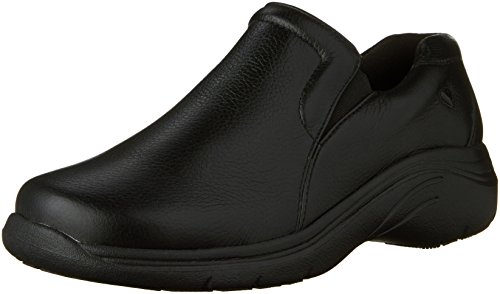
Nurse Mates built the Dove specifically for the nursing profession, and the design reflects that singular focus. The pillowtop insole is the comfort feature that will matter most to plantar fasciitis sufferers — it provides dedicated cushioning underfoot throughout an entire shift, reducing fatigue accumulation in the plantar fascia that worsens pain progressively as your shift continues. The dual side goring gives the slip-on a secure, glove-like fit that doesn't require laces but still maintains lateral stability during quick direction changes on clinical floors.
The full slip-resistance-rated rubber outsole is a genuine clinical-grade feature, not a marketing claim — it delivers consistent traction on wet, waxed, and chemically treated hospital floors where other shoes start to slip. The lightweight design is a meaningful advantage over heavier clogs like the Dansko or Alegria when you're covering significant distances across large hospital campuses or moving quickly between rooms on a busy floor. The full-grain leather upper is the easiest material in this lineup to disinfect with standard clinical wipes without damaging the shoe's surface.
The Dove won't win on arch support depth compared to the Dansko Professional or the Skechers Arch Fit, so if your plantar fasciitis requires aggressive structural support, you'll want to add an aftermarket insole. But for nurses whose condition is well-managed and who prioritize lightweight all-day comfort combined with absolute cleanability, the Dove hits a practical sweet spot that purpose-built clinical footwear should hit every time.
Pros:
Cons:
Vionic built its brand on foot health, and the 23Walk 2.0 reflects that DNA throughout. The VioMotion technology — Vionic's proprietary footbed system — provides structured arch support and heel stabilization directly in the stock shoe, without requiring you to add anything to address plantar fasciitis biomechanics. The premium leather or suede upper sits on a durable rubber outsole with reliable traction, and the moisture-wicking polyester mesh liner with PU foam base reduces internal friction against your skin during extended wear, which matters when you're covering 10,000-plus steps per shift.
Where the Vionic 23Walk 2.0 separates itself in this lineup is its suitability for nurses who use prescription custom orthotics. The removable stock insole leaves ample depth in the shoe to accommodate an orthotic device without the upper becoming too tight across the dorsum — a problem that kills orthotic compatibility in many otherwise good nursing shoes. If your podiatrist has prescribed custom orthotics for your plantar fasciitis, the Vionic 23Walk 2.0 is the right frame to put them in from this list. The lace-up design also gives you the fit adjustability that orthotic users need to fine-tune tension across the forefoot.
The white and silver leather colorway shown here reads as clean and professional in most clinical environments, and the sneaker silhouette is increasingly accepted in modern healthcare settings as the culture around nursing footwear has evolved. If your facility still mandates a more formal clog profile, consider the Dansko or Alegria instead, but if a clean sneaker is acceptable, the Vionic 23Walk 2.0 delivers superior foot health engineering in a contemporary format.
Pros:
Cons:
In 2026, the nursing footwear market is saturated with options that claim to address plantar fasciitis without actually understanding the condition's biomechanical requirements. These are the criteria that actually matter when you're evaluating a shoe for full-shift clinical use with plantar fasciitis.
Arch support is not a binary feature — the geometry, firmness, and position of the support structure relative to your navicular bone determines whether it actually offloads your plantar fascia or just adds foam volume underfoot with no meaningful structural effect. You need a shoe where the arch support makes firm, consistent contact with your medial longitudinal arch rather than hovering beneath it. The heel cup depth matters equally because a shallow heel cup allows your calcaneus to pronate outward under load, which increases the tensile strain on the fascia at its calcaneal insertion point where the pain originates. Deep, firm heel cups paired with a contoured medial arch profile is the structural combination you're looking for, not soft foam volume everywhere.
A rocker sole changes your gait mechanics in a way that meaningfully reduces the peak load on your plantar fascia at two critical moments: heel strike and push-off. At heel strike, the curved profile absorbs the initial impact without transmitting the full ground-reaction force through your heel. At push-off, the toe rocker reduces the degree of metatarsophalangeal joint extension required, which in turn reduces the windup tension on the fascia at its distal attachment. Not every nursing shoe has genuine rocker geometry — many have slightly curved soles that provide none of the biomechanical benefit. Look at the Dansko Professional or the Hoka Bondi 9 meta-rocker as benchmark examples of how real rocker sole geometry should look in cross-section.
Slip resistance in clinical shoes is tested against specific standards, and a shoe that meets SRO or Mark II test criteria performs consistently on the wet, waxed, and chemically treated floors common in hospital environments. A shoe that simply says "slip-resistant" without referencing a specific test standard may be rated only for dry conditions. Every shoe in this review meets meaningful slip-resistance standards, but when you're shopping beyond this list, demand specificity on the rating. Slip resistance failure on a wet hospital floor is not recoverable in the way that a worn-out insole is — it's a safety event with serious consequences.
Your shoes are exposure vectors in clinical settings, and the material of your upper determines how effectively you can decontaminate them between patient interactions. Full-grain leather is the easiest traditional material to wipe clean with standard clinical disinfectants. Engineered mesh breathes better but absorbs fluids and is significantly harder to decontaminate. Purpose-built fluid-resistant uppers like the Clove Classic are the most clinically appropriate for high-exposure environments. Consider the specific nature of your work — an ICU nurse with frequent fluid exposure has different cleanability requirements than an outpatient clinic nurse whose exposure is more limited — and match your upper material choice to your actual clinical environment rather than accepting marketing generalizations.
The three non-negotiables are a deep heel cup to control calcaneal pronation, genuine arch support that contacts your medial longitudinal arch firmly rather than floating beneath it, and either a rocker sole or maximal cushioning to reduce peak impact at heel strike and push-off. Slip resistance and cleanability are clinical requirements that also matter, but the biomechanical features are what determine whether the shoe actually helps your plantar fasciitis during a 12-hour shift.
The right clogs are excellent for plantar fasciitis — specifically rocker-sole clogs like the Dansko Professional and cork-footbed designs like the Alegria Keli. The rocker sole geometry reduces fascia load at heel strike and push-off, and deep heel cups in quality clogs provide the calcaneal stabilization that plantar fasciitis patients need. Not all clogs are equal, and cheap flat-soled clogs without meaningful arch contour can actually aggravate the condition. Choose clogs with documented rocker geometry and APMA certification where possible.
If your podiatrist has prescribed custom orthotics, they are more precisely calibrated to your foot geometry than any stock insole, and you should absolutely use them — but you need a shoe with a removable insole and sufficient interior depth to accommodate the orthotic without creating a tight fit across the dorsum. The Skechers Work Arch Fit 2.0 and Vionic 23Walk 2.0 are the best picks in this lineup for orthotic compatibility. Over-the-counter insoles can also provide meaningful improvement; the best plantar fasciitis insoles guide covers the top aftermarket options in detail.
Most nursing shoes lose meaningful midsole cushioning and arch support effectiveness between 500 and 800 hours of wear, which for a nurse working three 12-hour shifts per week translates to roughly 14-22 months of actual use. The visible outsole condition is not a reliable indicator — midsole compression happens internally and invisibly. A practical test is the thumb-press test on the midsole: if you can compress it easily with light thumb pressure, the foam has already degraded past its effective support range. Plantar fasciitis patients should be more conservative with replacement intervals than nurses without foot conditions.
Zero-drop footwear is a contested topic for plantar fasciitis management, and the answer depends on your Achilles tendon flexibility and the chronicity of your condition. For most plantar fasciitis patients accustomed to standard heel-elevated footwear, zero-drop designs increase Achilles and calf load and can aggravate the condition during the transition period. Traditional nursing shoes with a modest heel elevation of 10-15mm are generally better tolerated. If you're interested in transitioning to minimal-drop footwear for longer-term foot health, do so gradually over several months and under podiatric guidance — not mid-flare.
Chronic repetitive stress on the plantar fascia without adequate footwear support can progress from manageable inflammation to chronic degenerative plantar fasciosis, where the tissue undergoes collagen breakdown rather than simple inflammation. This is significantly harder to treat than acute plantar fasciitis and can require extended physical therapy, corticosteroid injection, or in severe cases extracorporeal shockwave therapy. The right footwear, combined with calf stretching protocols and load management strategies, is your primary prevention tool. If your heel pain has persisted beyond 6-8 weeks despite shoe changes, consult a podiatrist rather than continuing to manage it independently.
Your shoes are not a comfort accessory — they are a clinical intervention, and the right pair is the single most controllable variable standing between your plantar fascia and a condition that ends nursing careers.


About Mehnaz
Mehnaz is the founder and editor of RipPain, a health resource site dedicated to helping readers navigate pain management, recovery, and medical device research. Her work on the site is driven by personal experience caring for seriously ill family members, which led her to study evidence-based guidance from physicians, pain specialists, and published medical research. She curates and summarizes expert medical insights to make credible health information accessible to everyday readers.
You can get FREE Gifts. Or latest Free phones here.
Disable Ad block to reveal all the info. Once done, hit a button below
 Mehnaz