
After a long day hunched over a keyboard, your mid-back can feel like a compressed spring — tight, stiff, and stubbornly resistant to every stretch you try. A colleague once handed me something that looked like an oversized yoga wheel and said, "Roll on this for five minutes." Within a few days, I was reaching for it every evening. If you've been exploring back relief options, you've likely asked: how does the Chirp Wheel work, and can it actually help with real back pain?
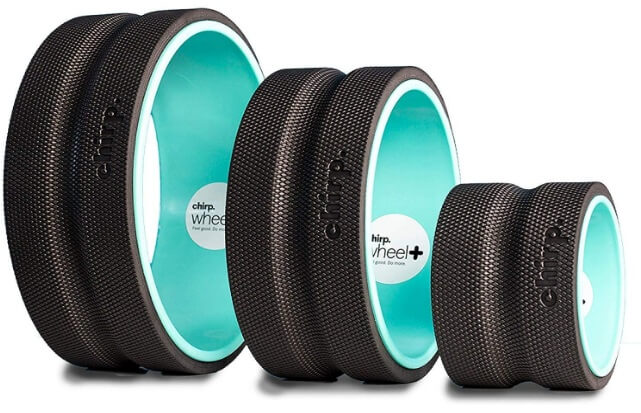
The Chirp Wheel — originally called the Plexus Wheel — is a circular spinal decompression device with a narrow groove running along its circumference. That groove, called the spine channel, lets your vertebrae sit safely inside while the raised edges press into the paraspinal muscles on either side. It comes in three sizes: 10-inch (gentle), 6-inch (moderate), and 4-inch (intense), each targeting a different curvature and pressure level.
Whether you deal with chronic lower back tension, mid-back stiffness from desk work, or simply want a practical daily mobility tool, this guide covers the mechanics, proper technique, benefits, limitations, and best practices — everything you need to make an informed decision.
Contents
The Chirp Wheel started as a Kickstarter project under the name Plexus Wheel, created by a college student dealing with persistent back pain who wanted something more targeted than a standard foam roller. The campaign gained significant traction, and the product has since been refined through multiple iterations. Today it's one of the more recognizable names in the sport and fitness recovery space, particularly among desk workers and athletes looking for accessible spinal care tools.
The design draws from the yoga wheel concept — a hollow circular prop used for backbends and chest opening — but adds the spine channel groove as its defining feature. That single design choice transforms the tool's entire function: instead of applying pressure uniformly across your back, it separates the tissue on either side of your vertebral column and works those muscles specifically.
A standard foam roller applies broad, even pressure across the full width of your back. That's useful for general muscle recovery, but it also means pressure lands directly on your vertebral spinous processes — the bony projections you can feel running down the center of your back. The Chirp Wheel's spine channel avoids those bones entirely, sitting them inside the groove while the raised edges do the work on the surrounding musculature.
According to Wikipedia's overview of spinal decompression, traction-based approaches that reduce intervertebral pressure can provide temporary symptomatic relief. The Chirp Wheel applies a passive, non-motorized version of this principle through spinal extension and targeted compression — no clinic visit required.
Tip: If you've had discomfort using foam rollers directly on your spine, the Chirp Wheel's spine channel may feel noticeably more comfortable from the very first session.
When you lie back over the wheel, your vertebrae settle into the groove while the raised outer edges make contact with the paraspinal muscles — primarily the erector spinae — running alongside your spine. As you roll forward and backward, or simply hold a static position, those muscles receive sustained compression and a controlled stretch. Understanding how does the Chirp Wheel work at this level makes it easier to use the device with intention rather than just hoping it helps.
This differs from lying on the floor and doing a passive back extension. The wheel maintains consistent contact along a controlled arc throughout the movement, reaching tight spots that static floor stretches often miss. The hollow core keeps the device lightweight, while the firm outer edge delivers enough resistance to genuinely mobilize stiff tissue.
The circular shape creates an arching motion as your body drapes over it. This spinal extension opens the posterior spaces between vertebrae, temporarily counteracting the compression your spine accumulates from hours of sitting, driving, or forward-bending postures. Think of it as the structural opposite of the flexed, compressed position your spine holds for most of the day.
The combination of arch-induced extension and targeted muscle compression is what produces the characteristic "release" sensation most users describe after a session. It isn't a medical treatment, but as a daily mobility tool it can meaningfully complement a broader back care strategy — especially when used consistently.
Warning: Don't roll your lumbar spine (lower back) until you've built comfort and control with the thoracic (mid-back) region first — the lower back is more vulnerable to overextension injuries.

The three available sizes each target a different intensity and body region. Picking the wrong one at the start is one of the most common reasons people give up on the tool early.
If you're unsure, default to the 10-inch. Working down in size over weeks gives your back time to adapt without triggering unnecessary soreness.
Follow these steps for a safe first session:
Keep your first sessions to 2–3 minutes. Sharp or radiating pain means stop immediately. If you have a diagnosed spinal condition, our guide on lower back pain causes and treatments is worth reading before you begin.
Most users report a noticeable sensation of lengthening or "opening up" in the back immediately after rolling. That's the temporary decompression effect at work — your spinal discs and surrounding tissues get a brief reprieve from the compressive forces they're under throughout the day. Some people describe feeling like they're standing taller for an hour or two afterward.
You may also experience mild muscle soreness in the 24 hours following your first few sessions, similar to the soreness after any new physical activity. This is a normal adaptation response and typically resolves quickly as your paraspinal muscles adjust to the stimulus.
With regular use over several weeks, users commonly report:
Consistency matters more than session length. Short, daily sessions of 3–5 minutes tend to produce more lasting changes than one long session every few days.
The Chirp Wheel attracts a wide range of users. Here's a practical breakdown of common scenarios, goals, and recommended approaches:
| User Type | Primary Goal | Recommended Size | Suggested Frequency |
|---|---|---|---|
| Desk worker (8+ hrs/day) | Relieve thoracic compression and posture-related stiffness | 10" or 6" | Daily, 3–5 min |
| Fitness enthusiast / gym-goer | Post-workout recovery and thoracic mobility for lifting | 6" or 4" | 4–5x per week |
| Chronic back pain patient | Symptom management between physical therapy sessions | 10" (with provider approval) | 2–3x per week, as tolerated |
| Yoga or Pilates practitioner | Backbend preparation and spinal extension warm-up | 6" or 4" | 3–4x per week |
| Older adult with general stiffness | Gentle daily mobility and decompression | 10" | Daily or every other day |
The Chirp Wheel works best as one component of a broader routine rather than a standalone solution. Rolling loosens the paraspinal muscles and temporarily improves range of motion, but strengthening the surrounding core provides the lasting structural support your spine needs. Pairing it with resistance band exercises, targeted stretching, or low-impact cardio gives you a more complete approach.
If you want equipment that complements spinal care without loading the vertebral column, our overview of recumbent exercise bike benefits covers how that type of cardio supports back health in a low-stress way.
Pro insight: Roll before your workout to warm up thoracic mobility, and again afterward for recovery — the Chirp Wheel earns its keep at both ends of a training session.

The Chirp Wheel offers several genuine advantages over generic foam rollers and passive stretching tools:
The spine channel design genuinely differentiates it from conventional foam rollers, and for many users that specificity makes a meaningful difference in how targeted the relief feels compared to broad-surface rolling.
Balanced expectations matter. The Chirp Wheel isn't the right tool for every situation:
Being clear-eyed about these limitations helps you integrate the Chirp Wheel appropriately — as a useful, affordable mobility aid with real but defined benefits.
Rolling in the evening — after the day's cumulative compression has built up — tends to feel most satisfying and provides the most noticeable decompression relief. Morning sessions work too, especially for shaking off overnight stiffness, but your muscles are colder and less pliable first thing. Keep morning sessions shorter and limit yourself to the larger wheel until your back has warmed up through normal movement.
Avoid rolling immediately after heavy spinal loading — like deadlifts or loaded carries. Give acute muscle tension 15–20 minutes to settle before introducing the wheel's compression.
Rolling opens up range of motion temporarily, and that window is the ideal time to reinforce the new mobility with movement. After each Chirp Wheel session, do 2–3 thoracic extension or rotation stretches to lock in the gains. Over time, pairing this with core strengthening work — dead bugs, bird dogs, planks — teaches your spine to maintain better positioning throughout the day without depending on the wheel alone for relief.
Think of the Chirp Wheel as the opener and your exercise routine as the follow-through. Together they build a more durable result than either does alone.
The Chirp Wheel targets the paraspinal muscles flanking your lumbar spine through a combination of localized compression and passive spinal extension. It doesn't treat the structural causes of lower back pain, but it can relieve muscle tightness and reduce the sense of compression that builds from prolonged sitting or standing. Start with the 10-inch wheel for the lower back, move slowly, and consult a doctor if you have a diagnosed spinal condition before using it.
For most healthy adults, daily use is safe — especially with the 10-inch wheel and sessions kept to 3–5 minutes. Listen to your body: if you notice accumulating soreness or any new symptoms, scale back to every other day and reassess. People with spinal conditions should follow their healthcare provider's specific guidance on frequency and positioning.
Size determines both the curvature intensity and the pressure level. A larger wheel produces a gentler arch and more gradual, distributed pressure — ideal for beginners or sensitive backs. A smaller wheel creates a sharper curve and more concentrated contact, targeting specific tight spots with greater precision. Most users start with the 10-inch and progress to smaller sizes as comfort and technique improve over weeks of use.
No. The Chirp Wheel is a passive mobility tool, not a substitute for professional treatment. Physical therapy addresses underlying biomechanical problems, movement dysfunction, and muscle imbalances in ways a rolling device cannot. The wheel can complement PT home exercises effectively between appointments, but it should not replace a structured treatment plan that has been prescribed by a qualified provider.
Many users notice an immediate sense of decompression and loosening after their very first session. Longer-term changes — reduced morning stiffness, improved posture awareness, and better range of motion — typically become noticeable after two to four weeks of consistent daily use. Results depend on session frequency, whether you pair rolling with strengthening exercises, and the nature of your back tightness.


About Mehnaz
Mehnaz is the founder and editor of RipPain, a health resource site dedicated to helping readers navigate pain management, recovery, and medical device research. Her work on the site is driven by personal experience caring for seriously ill family members, which led her to study evidence-based guidance from physicians, pain specialists, and published medical research. She curates and summarizes expert medical insights to make credible health information accessible to everyday readers.
You can get FREE Gifts. Or latest Free phones here.
Disable Ad block to reveal all the info. Once done, hit a button below
 Mehnaz