
You lace up your favorite flip-flops on a warm morning, take three steps toward the kitchen, and the familiar stabbing sensation shoots through your heel. That is plantar fasciitis doing its job — reminding you that not all sandals are created equal. If that scenario sounds familiar, you are in exactly the right place.
Plantar fasciitis is one of the most common causes of heel pain, affecting an estimated one in ten people at some point in their lives. According to the National Institute of Arthritis and Musculoskeletal and Skin Diseases, it stems from inflammation of the plantar fascia — the thick band of connective tissue running along the bottom of your foot from heel to toes. Wearing sandals without proper arch support and heel cushioning puts direct, repetitive stress on that tissue every single step. The result is pain that peaks first thing in the morning or after long periods of sitting.
The encouraging news is that in 2026, you no longer have to choose between supportive footwear and sandals that look presentable in public. Brands like OOFOS, Vionic, Hoka, and Birkenstock have spent years engineering sandals specifically designed to reduce plantar fascia strain. This guide reviews the top picks across different budgets, foot types, and use cases — so you can get back on your feet without dreading every step. For even more foot health tips, visit our foot care hub, and if you need insole upgrades to pair with your new sandals, our best plantar fasciitis insoles review has you covered.
Contents







If you are an athlete, runner, or anyone who spends hours standing on hard surfaces, the OOFOS OOlala is arguably the gold standard in recovery footwear. OOFOS built this sandal around their proprietary OOfoam technology, which absorbs 37% more impact energy than standard EVA foam. That difference is not marketing fluff — you feel it the moment your foot hits the footbed. The foam responds to your body heat, gently conforming to your arch and heel without bottoming out over time.
The OOlala features a streamlined, low-profile silhouette that works with casual outfits, making it more versatile than clunkier recovery options. The closed-toe design of some OOFOS styles is great for added protection, but the OOlala's thong-style strap keeps things breathable for warmer weather. Sizing runs true to standard for most wearers, though OOFOS recommends that women wearing a half size go up and men go down — follow that guidance and you will get the right fit on the first try.
This sandal is not built for trail hiking or wet environments where grip is critical. But for around-the-house recovery, post-gym use, light errands, and everything in between, it delivers consistent heel and arch relief that you will notice within the first few minutes of wear.
Pros:
Cons:
Vionic built its reputation on one clear idea: podiatrist-designed biomechanical support does not have to look clinical. The Tide II delivers on that promise with a genuine leather upper, a slim profile, and an Orthaheel footbed engineered to realign the foot back to its natural position. The deep heel cup is the key feature here — it cradles your heel and prevents the excessive pronation that puts strain on the plantar fascia. Most fashion sandals offer zero heel containment, which is exactly why they make plantar fasciitis worse.
The Tide II's heel height sits just above one inch, giving you a slight lift that reduces tension on the Achilles tendon and plantar fascia simultaneously. The leather upper breaks in quickly and molds to the contours of your foot, so the initial stiffness you may notice on day one disappears within a few wears. This is one of the few supportive sandals you can wear to a casual lunch or afternoon errands without drawing attention to the fact that it is, essentially, a medical-grade footbed wrapped in a stylish thong sandal.
For those dealing with both heel pain and general arch fatigue, the Vionic Tide II is a consistent recommendation from podiatrists for a reason. It addresses the root mechanical cause of plantar fasciitis rather than just masking the symptoms with extra padding.
Pros:
Cons:

The Birkenstock Arizona needs very little introduction — it is one of the most recognized sandals on the planet. But if you have plantar fasciitis, the standard Arizona's firm cork footbed can feel punishing at first. The Soft Footbed version adds a layer of foam cushioning beneath the contoured cork, giving you Birkenstock's legendary anatomical arch support with a more forgiving feel underfoot. This is the version you want if you are new to Birkenstocks or if you find the classic footbed too rigid.
The cork and latex midsole gradually molds to the exact shape of your foot over time, creating what feels like a custom orthotic. The suede upper is soft and breathable, and the two adjustable buckle straps let you dial in the fit across different widths. Birkenstock also offers this model in narrow and regular widths — a distinction that matters enormously for people with narrower feet who have struggled with sandals sliding around.
There is a meaningful break-in period with any Birkenstock. Plan for one to two weeks of gradual wear before the footbed fully molds to your foot and the cork softens to your gait. After that, the support you get from these sandals is exceptional — a contoured arch that actually matches your foot's anatomy, a deep heel cup, and a raised toe bar that encourages your toes to grip naturally and strengthens the foot's intrinsic muscles. For those dealing with arch pain alongside plantar fasciitis, our guide on curing foot arch pain offers complementary strategies that work well alongside supportive footwear like this.
Pros:
Cons:
Hoka has become synonymous with maximalist cushioning in running shoes, and the Ora Recovery Slide 3 brings that same philosophy to post-workout recovery footwear. The dual-density foam construction uses Hoka's geometric cushioning technology to deliver a ride that feels plush without being sloppy. This is the sandal you reach for after a hard training day, a long shift on your feet, or any activity that leaves your heels and arches screaming for relief.
The slide design makes it effortless to slip on and off, which matters when you are tired after a workout. The single wide strap sits across the midfoot and holds your foot in place without pressure points. The outsole has just enough texture for indoor and light outdoor use, though it is not designed for trails or wet outdoor surfaces. As a unisex style, sizing is available across a broad range, and the fit is consistent with Hoka's running shoe sizing.
The Ora Recovery Slide 3 leans heavily into cushioning over rigid arch support, which makes it a better fit for those who need impact absorption rather than rigid correction. If your plantar fasciitis is primarily aggravated by hard impacts and standing fatigue rather than severe overpronation, this slide is an excellent choice. Pair it with structured daytime footwear and reserve the Hoka for your off-hours recovery windows.
Pros:
Cons:
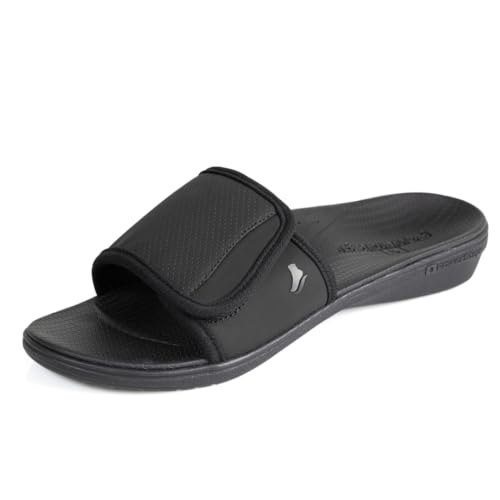
PowerStep is best known for their insoles, which have earned a strong reputation among podiatrists and physical therapists for their reliable arch support geometry. The Archwear Slide brings that same engineering directly into a sandal — meaning you get a built-in orthotic footbed without the need to source and insert a separate insole. For anyone already familiar with how much difference a good insole makes to heel pain, wearing one permanently integrated into your sandal is a clear upgrade.
The contoured neutral arch support and deep heel cradle work together to distribute your body weight more evenly across the foot, taking direct pressure off the plantar fascia insertion point at the heel. Shock-absorbing cushioning beneath the heel and forefoot reduces fatigue during prolonged standing or walking — a quality you will appreciate if you use these around the house for extended morning or evening wear. The adjustable hook-and-loop strap lets you customize the fit over the course of a day, which is useful if your foot swells during long periods of use.
The perforated mesh lining keeps feet cooler than solid EVA options, and the non-slip outsole provides better traction than most recovery slides at this price point. If you are budget-conscious or want a no-fuss daily-wear slide that delivers legitimate orthotic support, the PowerStep Archwear is a standout value pick in 2026.
Pros:
Cons:

Most plantar fasciitis sandals are designed for recovery, errands, or casual daily wear. The Chaco Z1 Classic occupies a different category entirely — it is the sandal for people who want supportive footwear they can actually take on a trail, across a creek, or through a campsite. The LUVSEAT footbed is a firm, contoured platform that provides meaningful arch support and a solid heel cup, delivering structural support similar to what you would expect from a sport orthotic insert.
The high-tensile polyester jacquard webbing wraps around and under the foot in Chaco's signature style, allowing you to adjust the fit independently across the toe strap, arch, and heel. This multi-point adjustment system is genuinely useful for plantar fasciitis sufferers because you can tighten the arch strap to increase midfoot support while keeping the toe area relaxed. The injection-molded ladder lock buckle holds every adjustment firmly in place through miles of hiking, rafting, or walking uneven terrain.
The outsole is Chaco's durable rubber compound, rated for wet surfaces and trail conditions. These sandals can be submerged, dried, and worn again without structural degradation — a significant advantage over leather or foam options that suffer in wet conditions. If your summer plans involve anything beyond the sidewalk, the Chaco Z1 is the most capable outdoor performer on this list.
Pros:
Cons:
Orthofeet specializes in footwear for people with foot conditions that standard brands do not adequately accommodate — and the Sahara three-strap slide is a direct answer to the question: what do you wear when you have plantar fasciitis AND bunions AND flat feet AND diabetic foot sensitivity? Every padded strap opens completely, allowing you to step directly into the sandal without bending or folding anything — an invaluable feature for people with limited mobility or significant foot swelling.
The three-strap design gives you independent adjustment at the toe, midfoot, and ankle, which produces a level of custom fit that single-strap slides cannot match. The footbed integrates cushioning and arch support tuned specifically for plantar fasciitis relief, with features that also address overpronation, flat feet, and the increased sensitivity associated with diabetes and neuropathy. If you are managing multiple foot conditions simultaneously — as many people do — this is the sandal that addresses all of them without compromise.
The foot-hugging design keeps you securely in the sandal during walking, eliminating the shuffling gait that often develops when people try to grip loose slides with their toes. That toe-gripping habit actually worsens plantar fasciitis by overtaxing the plantar fascia from above, so a sandal that stays put without effort is a meaningful clinical benefit. For a broader understanding of how to keep your feet in good health year-round, our guide on how to keep your feet healthy covers prevention strategies that complement wearing the right supportive sandal.
Pros:
Cons:
Arch support is the single most important feature to evaluate in any sandal for plantar fasciitis. Without it, every step concentrates stress directly on the plantar fascia insertion at the heel. What you are looking for:
For moderate to severe plantar fasciitis, look for sandals explicitly marketed as orthopedic or podiatrist-designed. Brands like Vionic and Orthofeet engineer their footbeds around biomechanical correction, not just surface comfort.
Cushioning and arch support are not the same thing, and confusing them leads to poor purchasing decisions. Cushioning absorbs impact energy and reduces fatigue. Support holds your foot in proper alignment. You need both — but the ratio depends on your specific problem.
Be skeptical of sandals that lead with "cushioning" as their primary selling point. Soft, flat footbeds often compress quickly and leave you with less support than you started with after a few months of daily use.
How a sandal holds your foot matters as much as the footbed itself. A loose sandal that lets your foot slide encourages toe-gripping, which pulls on the plantar fascia from above and compounds your pain. Key considerations:
Plantar fasciitis sandals are a health investment — and like any investment, the return depends on how long they hold up. A foam footbed that bottoms out after three months has effectively delivered zero value. Prioritize:
As a general rule, sandals marketed specifically for plantar fasciitis from reputable brands will outlast generic "comfort" sandals on a cost-per-wear basis, even when they carry a higher upfront price.
Standard flat sandals with no arch support are bad for plantar fasciitis because they leave the plantar fascia unsupported with every step. However, sandals specifically engineered with contoured footbeds, deep heel cups, and adequate cushioning are not just acceptable — they are recommended by many podiatrists for warm-weather use. The key is choosing a sandal built for foot health, not just aesthetics.
Prioritize contoured arch support, a deep heel cup, shock-absorbing cushioning, and a secure strap configuration. Avoid flat, unsupported footbeds regardless of how soft they feel. A heel cup that cradles and contains the heel prevents overpronation — the mechanical problem that places excessive stress on the plantar fascia at the heel insertion point.
Yes. Walking barefoot or in flat, unsupportive sandals — especially on hard floors — is one of the most common ways people aggravate plantar fasciitis. The repeated micro-trauma to the plantar fascia with each unsupported step prolongs healing and can worsen the underlying inflammation. Switching to supportive sandals immediately, even at home, is one of the first interventions podiatrists recommend.
Supportive sneakers generally offer more structured arch support and cushioning than sandals, making them the better choice for high-activity periods. However, a high-quality orthotic sandal — such as the Vionic Tide II or Orthofeet Sahara — can match or exceed the support of many casual sneakers. For recovery and light daily use, a plantar fasciitis-specific sandal is an excellent and practical option.
Most cases of plantar fasciitis show meaningful improvement within six to twelve weeks of consistent treatment, which typically includes proper footwear, stretching, and rest. Switching to supportive sandals alone can produce noticeable pain reduction within the first two weeks. Severe or chronic cases may take six months to a year for full resolution, particularly if supportive footwear was delayed or the underlying biomechanical cause was not addressed.
Yes — in fact, wearing them consistently throughout the day is more beneficial than only putting them on when pain is severe. The goal is to minimize unsupported steps, which means wearing supportive sandals from the moment you get out of bed. Many podiatrists specifically advise against walking barefoot in the morning, when the plantar fascia is tightest after a night of rest, as this is when micro-tears are most likely to occur.


About Mehnaz
Mehnaz is the founder and editor of RipPain, a health resource site dedicated to helping readers navigate pain management, recovery, and medical device research. Her work on the site is driven by personal experience caring for seriously ill family members, which led her to study evidence-based guidance from physicians, pain specialists, and published medical research. She curates and summarizes expert medical insights to make credible health information accessible to everyday readers.
You can get FREE Gifts. Or latest Free phones here.
Disable Ad block to reveal all the info. Once done, hit a button below
 Mehnaz