
What if the mental fog you've been battling — the forgetfulness, the low-grade anxiety that won't quit — had a biochemical fix hiding in plain sight? The answer points to a compound your brain already depends on. Uridine monophosphate for memory and anxiety has become one of the most discussed topics in the nootropics space, and with good reason. This naturally occurring nucleotide plays a foundational role in how your brain builds, repairs, and communicates — and getting more of it can change how you think and feel. If you're exploring evidence-based options, the supplements section on RipPain is a solid place to start.
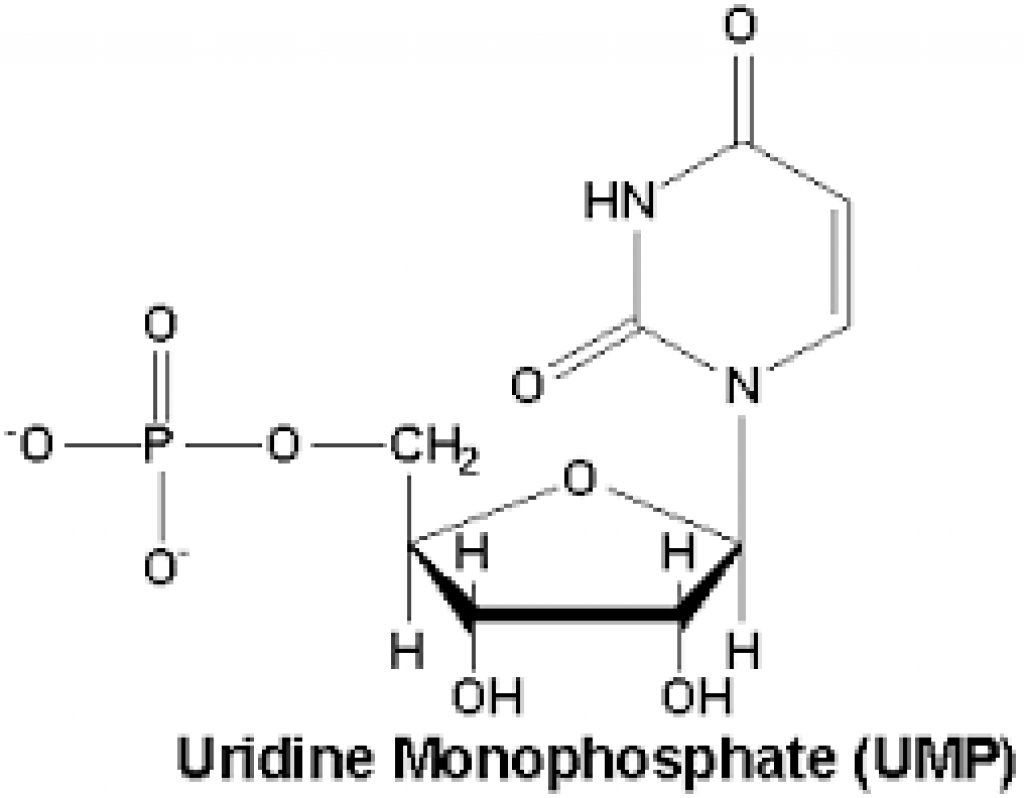
Uridine monophosphate (UMP) is a pyrimidine nucleotide found naturally in foods like brewer's yeast, tomatoes, and organ meats. Your liver synthesizes it too, but dietary and supplemental sources can push brain levels meaningfully higher. Once UMP crosses the blood-brain barrier, it converts into CDP-choline — a precursor that fuels phosphatidylcholine production, the structural backbone of neuronal cell membranes. That process is directly tied to synaptic strength, mood regulation, and cognitive resilience.
What makes UMP particularly compelling is its multi-pathway impact. It doesn't just nudge a single neurotransmitter. It supports structural brain health, dopamine signaling, and neural plasticity simultaneously. That combination is why researchers and experienced users consistently return to it when optimizing for both memory and anxiety management. Learn more about the biochemistry of uridine monophosphate on Wikipedia.
Contents
Your brain is essentially a communication network. Every thought, memory, and emotional response depends on neurons firing signals to each other across synaptic gaps. That process is only as good as the structural integrity of your neurons — and that's where uridine monophosphate does its most important work.
When you take UMP, your body converts it to CDP-choline (citicoline), which then becomes phosphatidylcholine — the primary phospholipid in neuronal membranes. Healthy cell membranes mean stronger synaptic connections and faster signal transmission. Think of it as reinforcing the wiring in your brain rather than just turning up the voltage.
This is also why UMP pairs so well with choline sources. Without adequate choline, the CDP-choline pathway stalls. Most people eating a standard diet are already choline-deficient, which makes UMP supplementation even more impactful when combined with an Alpha-GPC or CDP-choline source. Getting that foundational chemistry right is what separates users who see dramatic results from those who notice almost nothing.
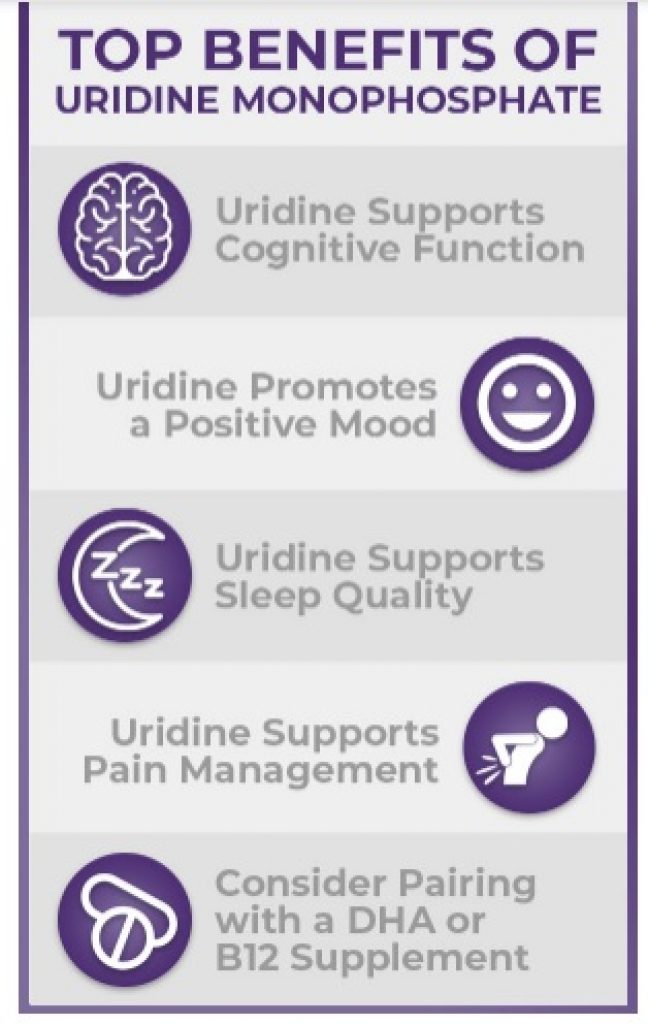
Synaptic plasticity is your brain's ability to strengthen or weaken connections based on activity — it's the mechanism behind learning and memory consolidation. UMP directly supports this process by upregulating neurotrophic factors and promoting dendritic spine growth. More dendritic spines mean more synaptic contact points and, in practical terms, better recall and faster learning.
Studies in rodent models have shown that UMP supplementation increases brain phospholipid levels within weeks. In human experience, users consistently report sharper focus, improved word retrieval, and a calmer baseline — all consistent with the neurochemical changes UMP drives at the cellular level. The anxiety reduction, specifically, appears to stem from its stabilizing effect on dopaminergic neuron membranes rather than any sedating mechanism.
Not every supplement belongs in every stack. UMP is broadly well-tolerated, but there are specific situations where it makes more sense — and a few where you're better off holding off or consulting a clinician first.
You're a strong candidate for uridine monophosphate for memory anxiety support if you're dealing with any of the following: age-related cognitive decline, chronic stress that's blunting your mental performance, difficulty concentrating, or persistent low-level anxiety that doesn't respond well to lifestyle changes alone. People who notice their memory slipping during high-stress periods are often the ones who see the most dramatic benefit.
UMP is also worth considering if you've already experimented with racetams. Racetams accelerate acetylcholine utilization, which can rapidly deplete choline stores. UMP replenishes the CDP-choline pathway, making it a natural complement. If you're already incorporating aerobic fitness into your routine — using a rowing machine, for example, which supports neuroplasticity through cardiovascular conditioning — adding UMP creates meaningful synergy between physical and neurochemical optimization.
If you're currently on psychiatric medications — particularly SSRIs, MAOIs, or mood stabilizers — discuss UMP with your prescribing physician before starting. The dopamine-modulating effects aren't fully characterized in the context of existing psychoactive medications, and interactions are theoretically possible. Pregnant or breastfeeding women should also avoid supplementation until more robust human safety data exists.
People with gout or chronically elevated uric acid levels should be cautious. UMP is a purine nucleotide precursor, and higher doses may modestly increase uric acid production in sensitive individuals. Start at the low end of the dosage range, monitor how you feel, and escalate gradually only if well tolerated.
One-week trials don't tell you much about UMP. This is a compound that works gradually — building membrane integrity and modulating dopamine receptor density across weeks of consistent use. Patience and consistency are the entire game here.
The most commonly studied dosage range is 150–500 mg per day, with 250 mg being the practical sweet spot for most people. Take it in the morning or early afternoon with a fat-containing meal — phospholipid synthesis requires dietary fat for optimal absorption. Late-evening dosing occasionally increases dream vividness, which some users find disruptive to sleep quality.
| Experience Level | Starting Dose | Optimal Range | Timing |
|---|---|---|---|
| Beginner | 100–150 mg/day | 150–250 mg/day | Morning with food |
| Intermediate | 250 mg/day | 250–350 mg/day | Morning or split AM/noon |
| Advanced (stacking) | 250 mg/day | 300–500 mg/day | Morning with choline source |
| Anxiety-focused use | 150 mg/day | 150–300 mg/day | Morning, consistent daily |
Unlike stimulants, UMP doesn't cause rapid tolerance or receptor downregulation in the conventional sense. Many experienced users take it daily for 8–12 weeks, then take a 2–4 week break to assess their baseline. Cycling also helps you distinguish genuine cognitive improvement from placebo expectation — when you stop and notice the difference, you have real, personal data supporting continued use.
Keeping a simple weekly log — noting focus quality, anxiety levels on a 1–10 scale, and word-retrieval frequency — transforms what would otherwise be a subjective experiment into actionable information. This is how you make confident decisions about whether to continue, adjust dose, or stack with additional compounds. Regular aerobic exercise like stair stepping amplifies BDNF production, which works synergistically with UMP's neuroplasticity effects and is worth incorporating alongside your supplementation protocol.
The nootropics community runs on enthusiasm — which means it also runs on misinformation. UMP has collected its share of exaggerated claims and unfounded fears. It's worth clearing the record on the most persistent ones.
The most common myth is that UMP is functionally identical to citicoline (CDP-choline). They overlap in the same pathway — UMP converts to CDP-choline as an intermediate — but they're not interchangeable. Citicoline delivers both choline and uridine simultaneously in a single molecule; standalone UMP relies entirely on your existing choline status to complete the conversion. If your diet is already choline-rich, UMP alone may suffice. If not, combining them is the smarter and more reliable play.
Another persistent claim is that UMP causes emotional blunting or serotonin crashes. The pharmacological mechanism for this simply doesn't exist in the literature. What some users interpret as blunting is typically the reduction of anxiety-driven mental noise — your brain getting quieter, not duller. That calm clarity is the intended effect, not a side effect.
Human clinical data on UMP is still building, but the mechanistic and preclinical research is compelling. Landmark work from Dr. Richard Wurtman's lab at MIT demonstrated that uridine combined with DHA and choline significantly increased brain phosphatide synthesis and synaptic protein levels in animal models. Those are the exact biological markers associated with cognitive resilience and reduced anxiety reactivity — the same outcomes users report subjectively.
The anxiety-modulating effect appears to stem from UMP's role in supporting dopaminergic signaling integrity. Dopamine insufficiency is a well-documented driver of both anxiety and anhedonia. By reinforcing D1 and D2 receptor function through improved membrane fluidity in dopaminergic neurons, UMP addresses a root cause rather than suppressing symptoms. For related reading on how vascular and neurological health intersect, managing poor circulation is another evidence-based angle worth exploring — cerebral blood flow has a direct bearing on how effectively any cognitive supplement performs.
UMP taken solo produces noticeable effects, but it reaches its full potential when combined with synergistic compounds. The right stack depends on your primary goal — memory, anxiety reduction, or both.
The most researched and widely recommended combination is sometimes called the "Wurtman stack" after the MIT research. The core components are uridine monophosphate, DHA (from high-quality fish oil), and Alpha-GPC or CDP-choline. Together, they provide the three essential substrates for membrane phosphatide synthesis: the uridine backbone, the fatty acid structural component, and the choline donor.
This trio works because each component fills a gap the others can't cover alone. DHA without choline stalls membrane integration. Choline without UMP limits CDP-choline synthesis. UMP without DHA leaves the structural lipid layer incomplete. Add all three, and you've given your brain the full construction kit it needs for synaptogenesis and synaptic repair.

When sourcing individual components, pharmaceutical-grade or USP-certified products are the benchmark. Alpha-GPC is one of the most bioavailable choline sources available — it crosses the blood-brain barrier far more reliably than choline bitartrate, making it the preferred choline source in any UMP stack.

Pre-formulated UMP stacks are also available for those who prefer not to source components individually. The advantage is standardized ratios and convenience; the trade-off is less flexibility to adjust individual doses as you dial in your personal protocol.

If dopamine support is your primary target — particularly for anxiety reduction — consider adding a dedicated dopaminergic formula. These typically include L-tyrosine, mucuna pruriens (an L-DOPA precursor), and B-vitamins that act as essential cofactors in catecholamine synthesis. This addresses the dopamine pathway from two angles simultaneously: substrate supply through tyrosine and receptor support through UMP's membrane work.

Supplementation is one lever. It works best when the rest of your lifestyle isn't actively working against it. UMP is not a fix for chronic sleep deprivation, poor diet, or complete physical inactivity — but it does amplify the gains you make through those foundational behaviors.
Sleep is non-negotiable. Phospholipid membrane synthesis and synaptic consolidation happen primarily during slow-wave sleep. If you're consistently underslept, you're limiting the window during which UMP can do its most important structural repair work. Seven to nine hours, consistently, is the foundation your supplement stack deserves.
Dietary fat quality matters significantly. UMP's conversion pathway is fat-dependent, and the type of fat you eat influences outcomes. Omega-3-rich foods — salmon, sardines, walnuts, flaxseed — provide DHA that directly feeds the membrane synthesis process UMP supports. If you're managing lower back pain or other chronic inflammatory conditions, the anti-inflammatory effect of omega-3s creates additional compounding benefits beyond cognitive performance alone. Women optimizing hormonal health alongside cognition may also find value in reviewing how fertility supplements interact with broader neurochemical support strategies.
The most common mistake with cognitive supplements is abandoning them before they've had time to work. UMP typically produces measurable subjective improvement at 3–6 weeks of consistent daily use. Don't judge a neurochemical intervention on a one-week trial.
Track three metrics each week: focus duration (how long you work without distraction), anxiety baseline (rate 1–10 each morning before checking your phone), and word-retrieval frequency (how often you experience tip-of-the-tongue moments). These three markers capture the primary effects UMP targets. If all three improve steadily over six weeks, you have clear signal. If only one improves, that tells you something meaningful about which pathway is most limiting in your own neurochemistry.
For anyone tracking their broader health picture, monitoring tools like a pulse oximeter help you keep tabs on cardiovascular parameters that directly influence brain oxygenation — a variable that affects how well any cognitive supplement performs. Good cerebral blood flow is the delivery system your neurochemistry depends on, and supporting vascular health through tools like compression therapy is one more way to stack the deck in your favor.
UMP supports dopaminergic signaling and phospholipid membrane integrity in dopaminergic neurons. Low dopamine function is a well-documented driver of anxiety and low motivation. By reinforcing the structural and biochemical foundations of dopamine pathways, uridine monophosphate for memory and anxiety targets root causes rather than masking symptoms. Most users report a calmer, more stable baseline mood after consistent use over several weeks.
Meaningful cognitive effects typically appear between 3 and 6 weeks of consistent daily use. UMP works by gradually enhancing membrane phospholipid synthesis and synaptic density — processes that take time to accumulate. Some users notice subtle improvements in focus and mood within the first two weeks, but the full effect requires sustained supplementation. Tracking metrics weekly helps you identify when results begin to emerge.
Yes, daily supplementation is the standard protocol. Unlike stimulants, UMP does not cause rapid tolerance or receptor downregulation with consistent use. Many experienced users take it daily for 8–12 weeks, then cycle off for 2–4 weeks to reassess baseline. Long-term continuous use appears safe based on available data, particularly at doses of 150–300 mg per day taken with food.
Both forms are effective, but triacetyluridine (TAU) is significantly more bioavailable and effective at lower doses. TAU crosses the blood-brain barrier more readily, making it the preferred choice for reliable CNS delivery. UMP is more widely available and better studied in the formal research literature. Either form works; TAU simply requires a smaller dose to achieve equivalent brain levels.
Theoretical interactions exist with medications that modulate dopamine or serotonin pathways, including SSRIs and MAOIs. The practical risk is not fully characterized in clinical literature, so if you're currently prescribed psychiatric medications, consult your prescribing physician before adding UMP to your routine. This is a precaution worth taking rather than a prohibition — clinical oversight keeps you protected as you optimize.
Yes, and this is one of the most well-regarded combinations in the nootropics community. Racetams increase acetylcholine utilization, which can deplete choline stores and cause the notorious "racetam headache." UMP replenishes the CDP-choline pathway, directly preventing that depletion. The combination supports both functional demand — racetam-driven acetylcholine activity — and structural supply through UMP-driven membrane synthesis at the same time.
Brewer's yeast, tomatoes, broccoli, organ meats (especially liver), and oats all contain meaningful uridine. However, bioavailability from food is significantly lower than from targeted supplementation, and the quantities required to influence brain phospholipid levels meaningfully are difficult to achieve through diet alone. Food sources support general nucleotide status; supplementation is required for the cognitive and anxiety effects documented in research.
UMP is generally well-tolerated. At higher doses, some users report mild digestive discomfort, vivid dreams with evening dosing, or temporary headaches when choline levels are insufficient. Individuals with elevated uric acid or gout should monitor closely, as UMP is a purine precursor. Starting at 150 mg and incrementally increasing gives your body time to adjust and lets you identify your personal tolerance threshold without overshooting it.
Your brain isn't failing you — it's running on the wrong raw materials, and uridine monophosphate is how you start fixing the supply chain.


About Prof. Raoul Orvieto
Professor Raoul Orvieto is a full professor of Obstetrics and Gynecology at the Sackler Faculty of Medicine, Tel-Aviv University, Israel, where he holds the Tarnesby-Tarnowski Chair for Family Planning and Fertility Regulation. He serves as director of the Division of Reproductive Endocrinology and Infertility at Sheba Medical Center (Tel-Hashomer), one of the largest medical centers in the Middle East. His research spans reproductive endocrinology, infertility treatment, and evidence-based fertility regulation.
You can get FREE Gifts. Or latest Free phones here.
Disable Ad block to reveal all the info. Once done, hit a button below
 Prof. Raoul Orvieto