
You're sitting in the exam room, boot box on the table, and the doctor says: "You'll need to wear this for a while." You nod, but the real question is already forming — how long wear boot broken ankle, exactly? Getting this right isn't just about comfort. Wearing the boot for the correct amount of time is what separates a solid recovery from long-term ankle instability. If you're still figuring out how to move around with the device on, start with our full guide on how to walk in a walking boot for a broken ankle.

A broken ankle — also called an ankle fracture — is one of the most common orthopedic injuries in adults. The walking boot (also known as a CAM boot, short for Controlled Ankle Motion) holds your ankle still so the fractured bone can heal without shifting. Unlike a plaster cast, it's removable and adjustable, which makes managing swelling far easier. But it only works when you wear it consistently for the full prescribed period.
Most people wear an ankle boot for 4 to 8 weeks. Severe fractures can stretch to 10 or 12 weeks. The exact duration depends on fracture type, location, your age, and how well your body heals. Below, you'll find a week-by-week timeline, a fracture-type comparison table, gear recommendations, and a realistic look at costs — everything you need to approach this recovery with clear eyes.
Contents
Your ankle is built from three bones: the tibia (the large shin bone), the fibula (the thinner outer bone), and the talus (the bone that connects your leg to your foot). A fracture can happen in any of these, though the fibula is the most commonly broken. Fractures range from hairline cracks — so small they're easily mistaken for a sprain — to displaced breaks where fragments shift out of alignment.
When a bone breaks, your body immediately starts building new tissue to bridge the gap. That process takes weeks, and during that time the bone needs to stay still. Movement disrupts the healing tissue and can cause the fracture to shift, widen, or fail to unite. That's the boot's entire job: hold your ankle in a safe position while your body does the repair work. It's simple in concept and surprisingly effective when used correctly.
According to the American Academy of Orthopaedic Surgeons, walking boots are now the preferred treatment for many stable ankle fractures because they allow easier swelling monitoring, better skin hygiene, and higher patient compliance than rigid plaster casts. A cast is still used for unstable or surgically repaired fractures. But for the majority of common breaks, the boot handles the job while being far more livable day to day.
You can also manage your foot care routine far more effectively in a boot than in a cast — keeping skin clean, watching for pressure sores, and adjusting fit as swelling changes. These small advantages add up over weeks of recovery.
Pro tip: Never remove the boot just because your pain is gone. Bone healing continues long after discomfort fades — stopping early is one of the most common recovery mistakes.
Not all ankle fractures are treated the same. A hairline crack in the fibula and a trimalleolar fracture (where all three bony points around your ankle break) have completely different healing curves. Your doctor's prescribed timeline reflects the complexity of your specific injury. Here's what the general ranges look like:
Children and younger adults tend to heal faster. People over 50, or those with osteoporosis (low bone density) or diabetes, often need extra time. Your doctor checks progress with follow-up X-rays — typically scheduled every two weeks — and adjusts your timeline based on what the imaging shows.
| Fracture Type | Surgery Required | Typical Boot Duration | Weight-Bearing Status |
|---|---|---|---|
| Hairline / Stress Fracture | No | 4–6 weeks | Often partial, with boot |
| Non-displaced Lateral Malleolus | No | 4–6 weeks | Yes, with boot from early on |
| Displaced Fracture (closed) | No | 6–8 weeks | Partial by week 3–4 |
| Bimalleolar Fracture | Sometimes | 8–10 weeks | Non-weight-bearing initially |
| Trimalleolar / Surgically Repaired | Yes | 10–12 weeks | Non-weight-bearing 4–6 weeks |
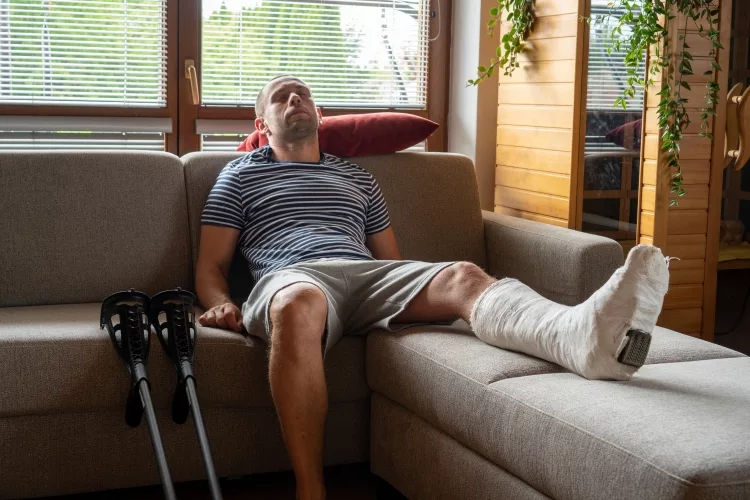
The first two weeks are the hardest. Swelling peaks in the first 72 hours, and pain is at its worst in the first week. Your job during this phase is simple: rest, elevate your foot above your heart, and keep the boot on. Most doctors put you on non-weight-bearing (NWB) status initially — meaning no pressure on the foot at all. Crutches or a knee scooter become essential.
Keep the boot on at all times except when showering or doing any prescribed physical therapy exercises. Sleeping with the boot on is common during the first week or two, especially if you tend to move around at night. It prevents accidental rolling of the ankle during sleep, when you have no conscious control over your movements.
By week three, most people with minor fractures begin transitioning to partial weight-bearing (PWB) — putting some weight on the foot while still wearing the boot. Swelling should be noticeably reduced, and your doctor may adjust the boot's strap tension or switch you to a shorter profile model.
This is also the phase where impatience sets in. Don't rush it. The bone is still actively healing, and the new tissue bridging the gap is fragile. You can begin low-impact seated exercises — ankle circles, toe flexes — but only what your physical therapist specifically approves. How well you manage swelling during this window has a real impact on your long-term range of motion.
Warning: If swelling suddenly spikes or sharp pain returns during weeks 3–6, stop bearing weight and contact your doctor immediately — this can signal a displaced fragment or a re-injury that needs imaging.
Your doctor clears you based on X-ray evidence, not just how your ankle feels. Bone bridging — new bone forming visibly across the fracture line — needs to appear on imaging before the boot comes off. Once cleared, most people transition gradually: wearing the boot outdoors or during longer activity while going sock-footed or in a supportive shoe at home.
Physical therapy typically begins at or just before this stage. Rebuilding ankle strength and proprioception (your body's sense of ankle position in space) is critical for preventing re-injury. Strengthening exercises for your feet and ankles should be a core part of your post-boot plan — ask your PT for a structured progressive program tailored to your fracture type.
Swelling is your biggest obstacle during recovery. When you wear a boot, blood and fluid pool in your foot — especially if you're doing any standing or short-distance walking. Compression socks for swelling feet apply graduated pressure that pushes excess fluid back up the leg, reducing discomfort and improving circulation.
For general recovery support, look for socks in the 15–20 mmHg (millimeters of mercury, a pressure measurement) range. If swelling is severe or your doctor has noted circulation concerns, ask about medical-grade 20–30 mmHg compression. Put the sock on first thing in the morning before the boot goes on — that small habit makes a genuine difference by the end of the day.
If you're on non-weight-bearing status, you need a reliable way to move around. Your main options:
An orthopedic walking boot typically costs between $50 and $200 out-of-pocket. Most insurance plans cover it when prescribed by a physician, classifying the boot as durable medical equipment (DME). Medicare and most private insurers cover approximately 80% of the cost after your deductible. Always verify your coverage before the appointment — some plans require pre-authorization for DME.
Your doctor may provide the boot directly in the office, which is convenient but sometimes more expensive than purchasing through a medical supplier. If you're uninsured, equivalent boots are available through orthopedic retailers and online — just confirm the right size and style (low vs. high top) based on where your fracture is located.
The boot is just one line item. Here's what catches most people off guard:
Planning for these expenses upfront reduces stress — and stress genuinely slows healing. If costs are a concern, ask your care team about community physical therapy programs, telehealth follow-ups, or whether any visits can be consolidated.
Most people wear a boot for 4 to 8 weeks, depending on fracture type and severity. Hairline fractures may clear in 4 to 6 weeks, while complex or surgically repaired fractures can require 10 to 12 weeks. Your doctor confirms the timeline through follow-up X-rays — not based on how the ankle feels day to day.
In the first one to two weeks, most doctors recommend keeping the boot on at night to prevent accidental movement during sleep. After the initial acute phase, your physician may allow removal at night. Never make that change on your own — always get explicit clearance before modifying your boot-wearing schedule.
It depends entirely on the fracture. Some minor breaks allow partial weight-bearing with the boot from the first week. More severe fractures require full non-weight-bearing for several weeks. Your doctor specifies exactly what's permitted, and following those instructions is what prevents the fracture from shifting or worsening.
Taking the boot off too early risks a malunion — where the bone heals in a misaligned position — or a nonunion, where the fracture fails to close at all. Both complications can cause permanent pain and instability, and may require surgery to correct. The pain stopping is not a reliable signal that the bone is fully healed.
Your doctor looks for bone bridging on X-ray — visible new bone tissue forming across the fracture line. That is the objective clearance marker. Most people reach this milestone somewhere between week 4 and week 10, depending on fracture complexity, age, and underlying bone health.
For stable, non-displaced fractures, a boot is generally preferred. It allows better swelling management, easier skin care, and higher compliance over a multi-week recovery. A cast remains the standard for unstable fractures or post-surgical fixation, where the bone requires more rigid immobilization than a boot can provide.
With your doctor's or physical therapist's approval, you can typically do seated ankle circles, toe flexes, and quadriceps (thigh muscle) strengthening exercises while in the boot. Upper body and core work is usually safe throughout. Avoid any movement that loads or twists the ankle until you're formally cleared for progressive weight-bearing.
Now that you know how long to wear a boot for a broken ankle — and why that timeline is set the way it is — you're equipped to follow through on your recovery with confidence. Book your next follow-up appointment, ask your doctor exactly when to expect your clearance X-ray, and in the meantime, revisit our guide on walking correctly in your boot to make sure every step you take right now is working for your healing, not against it.


About Mehnaz
Mehnaz is the founder and editor of RipPain, a health resource site dedicated to helping readers navigate pain management, recovery, and medical device research. Her work on the site is driven by personal experience caring for seriously ill family members, which led her to study evidence-based guidance from physicians, pain specialists, and published medical research. She curates and summarizes expert medical insights to make credible health information accessible to everyday readers.
You can get FREE Gifts. Or latest Free phones here.
Disable Ad block to reveal all the info. Once done, hit a button below
 Mehnaz