
You've been scrolling fitness sites for an hour, comparing machines that all promise the same thing: a full-body cardio burn without the treadmill monotony. Vertical climbers have surged in popularity — and for good reason. But the market is flooded with options that range from genuinely excellent to glorified plastic wobble-boards, and picking the wrong one means it ends up folded in a corner by February.
Vertical climbers simulate the motion of scaling a rock face or a ladder, engaging your arms, shoulders, core, glutes, and legs simultaneously. That compound demand is what makes them so time-efficient — you can torch serious calories in a fraction of the time compared to cycling or walking on a treadmill. Research on high-intensity climbing motion consistently shows superior calorie-burn-per-minute rates versus single-plane cardio equipment. If you're already thinking about joint-friendly footwear to pair with your workouts, check out our guide to best plantar fasciitis insoles — low-impact machines like these climbers are often recommended alongside proper arch support for people managing recurring foot pain.
For 2026, the field has improved meaningfully. Build quality is up, resistance systems are smarter, and the mid-range price point now buys you a machine that won't flex and creak like a folding chair. I've put five of the top contenders through their paces, and below you'll find exactly which one deserves a spot in your home gym — and which ones are worth skipping. Whether you're exploring the broader sport and fitness category or zeroing in on vertical climbers specifically, this guide has you covered.

Contents





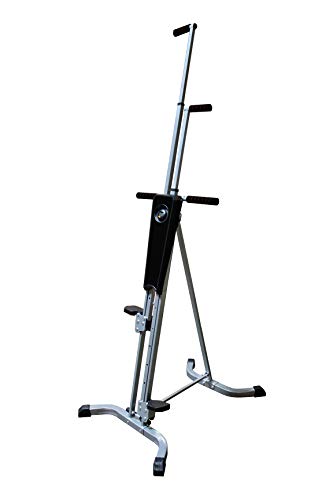

The MaxiClimber 2.0 is the machine that set the benchmark for home vertical climbers, and the updated version earns its spot at the top of this list. The core selling point is still the bilateral arm-and-leg synchronization — you push down with your legs while pulling down with your arms in a fluid, alternating climbing rhythm — but the 2.0 adds an Elastic Resistance System (ERS) that fundamentally changes the training ceiling. Without resistance, you're using your bodyweight to power the motion, which is plenty challenging for most people. Add the elastic bands into the equation and you're building genuine upper-body pulling strength on top of the cardiovascular work. That dual function is rare at this price point.
Build quality on the 2.0 is noticeably improved over the original MaxiClimber. The frame feels solid underfoot, the foldable design is genuinely compact when stored, and the adjustable height column means taller users — up to around 6'4" — can get a full range of motion without hunching. The motion itself is smooth and the glide feels consistent even as you ramp up pace. One important note: this machine rewards good form. Let your core go slack and the workout drops off significantly. Engage your midsection properly and it becomes one of the most complete 20-minute sessions you can do at home.
Where the MaxiClimber 2.0 falters slightly is in the absence of a detailed display — you don't get real-time metrics beyond what a fitness watch would tell you. It's also not rated for heavier users; the weight limit sits on the lower end compared to competitors. But for a moderately-sized user who wants a full-body machine that legitimately works, this is the one to buy. It's been around long enough to have a track record, and the ERS system separates it from every other climber at this price.
Pros:
Cons:
If structural rigidity is your primary concern — and it should be if you're over 200 lbs or if you've had wobble issues with previous machines — the Relife Stair Stepper's 2026 Newer Version is your answer. The standout engineering decision here is the four metal guide rails, a design choice that immediately separates this machine from the two-rail builds most competitors ship. Four rails means the lateral play you feel on cheaper climbers is almost entirely eliminated. The frame doesn't sway when you push hard, and that directional stability lets you focus on the workout rather than compensating for equipment movement. It also carries a 330 lb weight capacity, which puts it squarely in the heavy-duty tier.
The five adjustable intensity levels deserve more credit than the spec sheet suggests. Levels 1 and 2 genuinely simulate a jogging pace — shorter, quicker steps with moderate resistance — while Level 5 makes you work for every rep, replicating the resistance profile of actual rock climbing. That stair-climbing motion at higher resistance levels recruits the glutes and hamstrings far more aggressively than lower-intensity settings, and progressing through the five levels as your fitness improves gives this machine a legitimate long-term use case. The included lubricating grease is a small but smart touch — it keeps the rails smooth and quiet over time, which matters if you live in an apartment or train early in the morning.
The radian pedal design is worth calling out specifically. Most vertical climbers have flat pedals that tend to push your center of gravity outward as you step, leading to that slight outward lean that fatigues the ankles. The Relife's angled pedals tilt your weight back toward the main frame, which feels more natural and reduces the awkward joint loading. This is the machine for users who want commercial-gym stability at home gym prices.
Pros:
Cons:
Sunny Health & Fitness has built a strong reputation in the home cardio space, and the SF-S024035 represents their most thoughtful vertical climber to date. What makes this machine distinctive in 2026 is the SunnyFit app integration — a genuinely functional fitness platform that tracks your sessions, logs progress over time, and provides guided workout programs without requiring a subscription fee. If you're the type who needs accountability metrics to stay consistent, that connectivity changes the value proposition considerably. The machine pairs wirelessly, syncs in real time, and the app interface is clean enough to not feel like an afterthought.
The step height range is impressive: 8.9 inches to 23.5 inches, giving you granular control over intensity in a way that discrete resistance levels can't. A shorter step height means quicker, lighter movement — closer to a brisk walking simulation. Extend the stride to 23.5 inches and the hip flexor and glute recruitment becomes immediately noticeable. The 21.5-inch stride length also accommodates taller users who often find vertical climbers cramped and awkward. There are no external resistance settings, which Sunny positions as a feature — your core has to stabilize every movement, making it a more organic strength-building tool. The absence of resistance bands forces proper postural engagement rather than letting you lean into mechanical assistance.
The 330 lb weight capacity and foldable frame round out a well-engineered package. Assembly is straightforward and the build quality feels premium relative to its price category. One honest caveat: without adjustable resistance, highly conditioned athletes may find the intensity ceiling lower than they'd like. But for intermediate users who want structured data alongside their cardio, this is the most app-forward vertical climber on the market right now. Pair it with proper footwear — especially if you're managing any lower-body joint issues, our guide to choosing workout shoes wisely is worth a read before your first session.
Pros:
Cons:
The Ader Vertical Climber is the no-frills option in this roundup, and it earns its place through honest, functional design rather than feature stacking. Strip away the app integrations, elastic resistance systems, and multi-rail engineering, and what you get here is the foundational climbing motion — the imitation of rock climbing that works all major muscle groups simultaneously and delivers both cardiovascular and strength benefits in a single movement pattern. For buyers who want to try vertical climbing before committing to a premium machine, or who simply have a tight budget, the Ader is where to start.
The machine is straightforward to assemble and the climbing motion is mechanically sound. The bilateral arm-and-leg engagement works as advertised — you're pulling down on the handles while stepping, which creates that full-body chain that distinguishes vertical climbers from standard stair steppers. It handles the core promise of the category competently. Endurance and cardiovascular improvement come with consistent use, and the compact form factor means it doesn't dominate a room. What it lacks in sophistication it compensates for in simplicity. There's something to be said for equipment that doesn't require a manual beyond the first 10 minutes.
Be realistic about the trade-offs, though. The Ader doesn't offer resistance adjustment, there's no display, and the overall construction is more lightweight than the Relife or Sunny machines above. For heavier users or those expecting heavy daily use over multiple years, the durability ceiling will eventually show. But for moderate users treating this as a cardio supplement rather than a primary machine, it's an honest entry point into the vertical climbing category. If you later find yourself wanting more — more resistance, more data, more structural solidity — the step up to the MaxiClimber 2.0 or Relife is a natural progression.
Pros:
Cons:
The Obetuens Home Climber takes the space-saving imperative seriously, and it backs up that commitment with genuinely heavy-duty construction. The high-strength steel frame handles up to 150 kg (about 330 lbs), which means this isn't just a compact machine for small users — it's a compact machine for serious users who happen to live in tight spaces. The folding mechanism is smooth and the machine stands flat against a wall without requiring wall mounts or additional storage hardware. If your gym is a corner of a bedroom or a shared apartment living room, this build earns its position on the list.
The five difficulty levels follow the now-familiar height-adjustment system, giving you a spectrum from lighter stepping to full-effort climbing resistance. Anti-slip grooved plastic pedals are the one design element worth scrutinizing — they're functional and durable, but users accustomed to the rubberized platforms of pricier machines will notice the difference underfoot. The integrated display tracking time, rep count, and calorie estimates is a welcome addition at this price tier, and it's readable without being cluttered. Having basic performance data on-screen changes how you structure your sessions — even simple metrics push most users to train longer and harder than they would without feedback.
For anyone managing lower-body discomfort during workouts, the low-impact motion of this machine is a genuine asset. The smooth vertical stride avoids the jarring heel strikes of treadmills and the knee strain that can accompany cycling at high resistance. Pairing your climbing sessions with proper recovery habits — including the kind of arch support discussed in our tips for a light nature walk — will help you stay consistent without accumulating joint fatigue. The Obetuens doesn't have the resistance sophistication of the MaxiClimber or the structural engineering of the Relife, but as a space-efficient machine with solid construction and a useful display, it justifies its spot in this roundup.
Pros:
Cons:
The most common mistake buyers make is shopping on price without checking the weight limit. A machine rated for 220 lbs that you use at 215 lbs will degrade noticeably faster than one rated for 330 lbs at the same user weight — the structural tolerances are different, and you'll feel it in flex and noise within months. Buy at least 50 lbs above your actual body weight as a minimum buffer. Four-rail systems like the Relife provide meaningfully better lateral stability than two-rail designs, especially during high-intensity climbing where your motion becomes less controlled. If you weigh over 200 lbs or plan to use the machine daily, the structural specification matters as much as any feature list.
Vertical climbers offer intensity through two main mechanisms: height adjustment (changing step depth) and external resistance (bands or elastic systems). Height adjustment alone gives you a serviceable range for most users — the Relife's five-level system covers jogging pace through rock-climbing intensity, which is a wider spread than it sounds. External resistance bands, as seen on the MaxiClimber 2.0, add a strength-training dimension that height adjustment alone can't replicate. If your primary goal is calorie burn and cardiovascular fitness, height adjustment is sufficient. If you want to build upper-body pulling strength alongside cardio, the elastic resistance system is a genuine differentiator worth paying for. Know your goals before you prioritize features.
All five machines in this roundup fold to some degree, but there's a significant practical difference between "folds flat against the wall" (Obetuens) and "folds but still takes up meaningful floor space" (Ader). Measure your available storage area before ordering, not after. Also consider the assembled working footprint — how much clear floor space the machine needs during active use. Vertical climbers are generally more space-efficient than treadmills or rowing machines, but the operating footprint varies by about 30-40% across different models. For apartment dwellers or shared living situations, the foldability of the Obetuens is a practical advantage that outweighs several specification differences.
In 2026, basic display metrics — time, steps, and calorie estimates — are table stakes. What separates the machines now is whether that data goes anywhere useful. The Sunny Health SF-S024035's SunnyFit app integration is the standout in this category: free to use, genuinely functional, and capable of longitudinal progress tracking that a machine display can never provide. If you're motivated by data — and research consistently shows that performance metrics improve training consistency — the app connectivity is worth the price premium over a basic display-only machine. If you train by feel and don't care about logging, any machine with a basic display does the job adequately.
A vertical climber simultaneously engages your calves, quadriceps, hamstrings, glutes, hip flexors, core stabilizers, shoulders, biceps, and triceps. The bilateral simultaneous motion — pushing with your legs while pulling down with your arms — creates a compound full-body chain that very few cardio machines can replicate. The degree of muscle engagement varies by intensity level and form, but the core premise is genuine: vertical climbing is one of the most complete full-body cardio movements available on home equipment.
For most users, 20 to 30 minutes per session is the practical sweet spot for cardiovascular benefit without overloading the joints. Beginners should start at 10 to 15 minutes and build up over two to three weeks. Because vertical climbing is a full-body movement, it accumulates fatigue across multiple muscle groups faster than single-plane cardio — a 20-minute session at moderate intensity is genuinely demanding and sufficient for most fitness goals. Aim for four to five sessions per week rather than daily use, especially in the early adaptation period.
Yes — vertical climbers are among the more calorie-efficient cardio machines available for home use. The full-body engagement means your metabolic demand during a session is higher than it would be on a stationary bike or even a treadmill at a comparable perceived exertion level. Estimates vary by user weight and intensity, but 300 to 500 calories per 30-minute moderate-to-vigorous session is a realistic range. Combined with consistent nutrition habits, regular vertical climbing sessions will produce meaningful fat loss results. The low-impact motion also means you can maintain training frequency without the joint wear that higher-impact alternatives accumulate over time.
The key difference is the arm component. A standard stair stepper only moves your lower body — you step in place while the handles remain stationary or provide passive support. A vertical climber incorporates synchronized arm movement, so your upper body is doing work in opposition to your lower body simultaneously. This doubles the muscle recruitment and significantly increases the calorie burn compared to a stepper at equivalent effort. Some machines in this roundup, like the Relife, are marketed as stair steppers but include the bilateral arm motion that qualifies them functionally as vertical climbers.
Yes, for most users. The vertical motion avoids the heel-strike impact of running and the knee torque that can occur at high cycling resistance. Your feet remain on the pedals throughout the movement with no airborne phase, which is what defines low-impact exercise. This makes vertical climbers a strong option for users managing knee sensitivity, ankle issues, or recovering from lower-body strain. That said, "low-impact" doesn't mean effortless — the joint demand is real, particularly at higher intensity levels, and users with existing orthopedic conditions should check with a medical professional before starting any new exercise regimen.
Absolutely, but start conservatively. The coordination required to synchronize arm and leg movement on a vertical climber isn't immediately intuitive — most new users need two to three sessions to find a comfortable rhythm. Begin at the lowest intensity setting, keep sessions short (10 to 12 minutes), and focus on maintaining consistent form before pushing pace. A useful cue: let your arms pull in opposition to your legs naturally, like walking. Once the motion becomes automatic, increasing intensity levels or adding resistance becomes the natural next step. The machines on this list are all appropriate for beginners; the MaxiClimber 2.0 and Sunny SF-S024035 offer the most gradual learning curves.
The best vertical climber isn't the one with the most features — it's the one you'll actually use consistently, and that means matching the machine's resistance system, weight rating, and footprint to how you genuinely train, not how you plan to train.


About Mehnaz
Mehnaz is the founder and editor of RipPain, a health resource site dedicated to helping readers navigate pain management, recovery, and medical device research. Her work on the site is driven by personal experience caring for seriously ill family members, which led her to study evidence-based guidance from physicians, pain specialists, and published medical research. She curates and summarizes expert medical insights to make credible health information accessible to everyday readers.
You can get FREE Gifts. Or latest Free phones here.
Disable Ad block to reveal all the info. Once done, hit a button below
 Mehnaz